
Chronic Disease Self-Management Tools to Improve Daily Function
Living with a chronic disease doesn’t mean giving up on daily life. It means learning how to take back control-bit by bit, day by day. Millions of people manage conditions like diabetes, arthritis, heart disease, and COPD without letting them dictate every hour. The secret? Chronic disease self-management. Not magic. Not miracle cures. Just practical tools, backed by decades of research, that help you feel stronger, more confident, and more in charge of your own health.
What Chronic Disease Self-Management Really Means
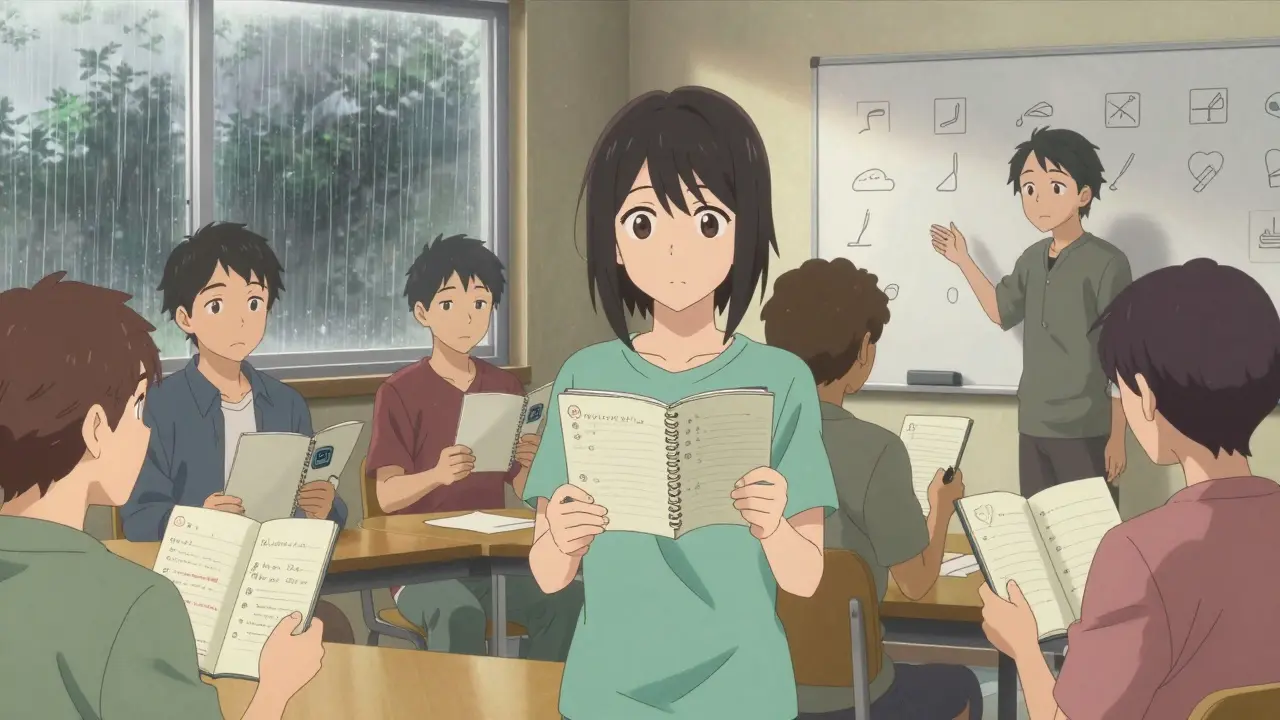
It’s not about curing your condition. It’s about living well with it. Think of it like learning to drive a car with a flat tire-you don’t fix the tire right away, but you learn how to steer, when to slow down, and how to keep going without crashing. That’s what self-management does. It gives you the skills to handle symptoms, make smarter choices, and talk to your doctors like a partner, not a patient. The most proven program out there is the Chronic Disease Self-Management Program (CDSMP), a six-week workshop developed at Stanford University in the 1990s by Dr. Kate Lorig and her team. It’s been used in 45 U.S. states and adapted worldwide. This isn’t a one-size-fits-all lecture. It’s a hands-on group experience where people with different conditions-diabetes, asthma, depression, arthritis-learn the same core skills. Why? Because the challenges are surprisingly similar: fatigue, pain, fear, confusion about meds, and feeling alone.The Six Core Skills You’ll Learn
CDSMP doesn’t just tell you what to do. It teaches you how to do it. Here’s what you’ll walk away with:- Problem solving-not just "my knee hurts," but "what can I try today to move better without making it worse?"
- Decision making-when to call your doctor, when to wait, when to try a new pain relief method.
- Using resources-knowing where to find reliable info, support groups, or low-cost supplies.
- Partnering with your provider-learning how to ask clear questions and speak up when something doesn’t feel right.
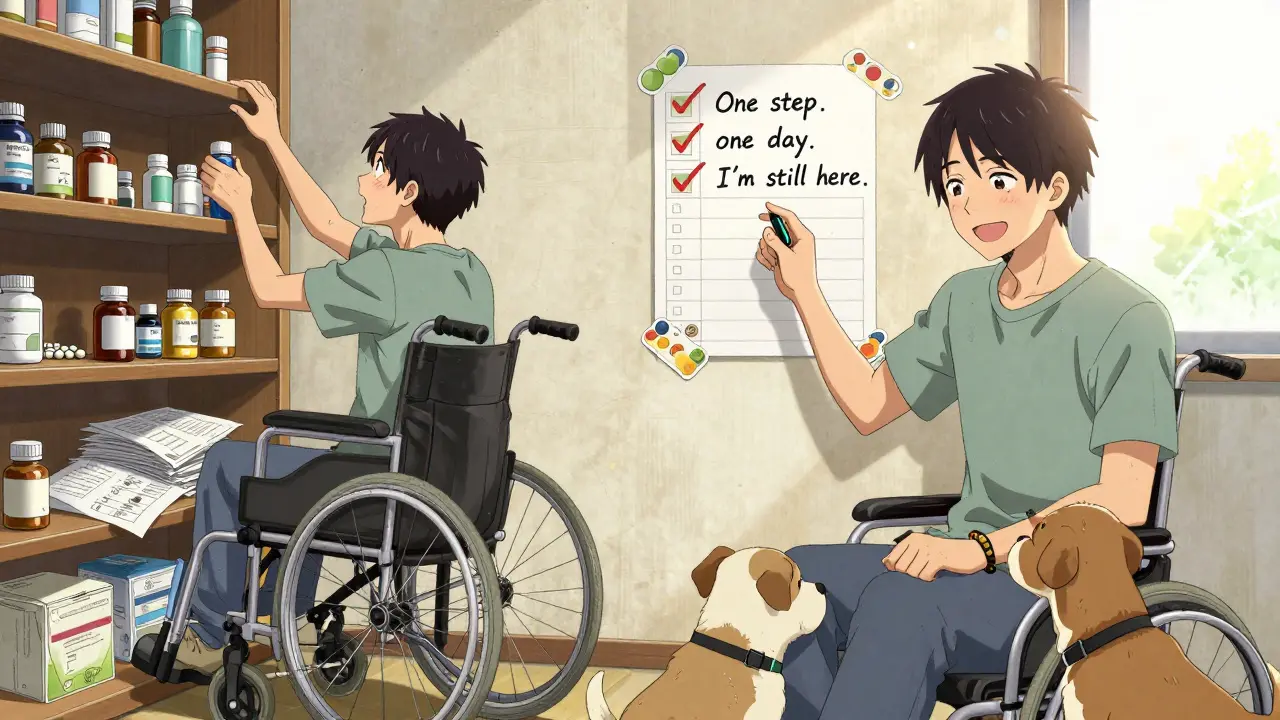
- Creating action plans-small, doable steps like "walk 10 minutes after breakfast, three days this week," written down and tracked.
- Self-tailoring-adjusting what works for someone else to fit your body, your schedule, your limits.
These aren’t abstract ideas. They’re tools you use every day. One participant in Oregon tracked her steps with a Fitbit after writing a simple action plan: "Walk to the mailbox and back, twice." In eight weeks, her daily steps jumped from 1,200 to 5,800. That’s not a cure. That’s a life changed.
In-Person vs. Online: Which Works Better?
You don’t have to sit in a room with strangers to benefit. There are now digital versions of CDSMP, like Better Choices, Better Health®, an online program that delivers the same curriculum through weekly lessons and discussion boards. You log in 2-3 times a week, watch short videos, and post your progress. But here’s the catch: In-person workshops, have a 72% completion rate, while online versions hover around 58%. Why? Because human connection matters. When you hear someone else say, "I felt the same way," it changes everything. That’s why rural participants report 78% feeling less isolated after attending a group session-compared to 63% in cities. Online programs win in reach. If you live far from a clinic, can’t drive, or have mobility issues, digital tools are a lifeline. But if you’re struggling with complex meds or motivation, the peer-led group setting gives you accountability you can’t get from a screen.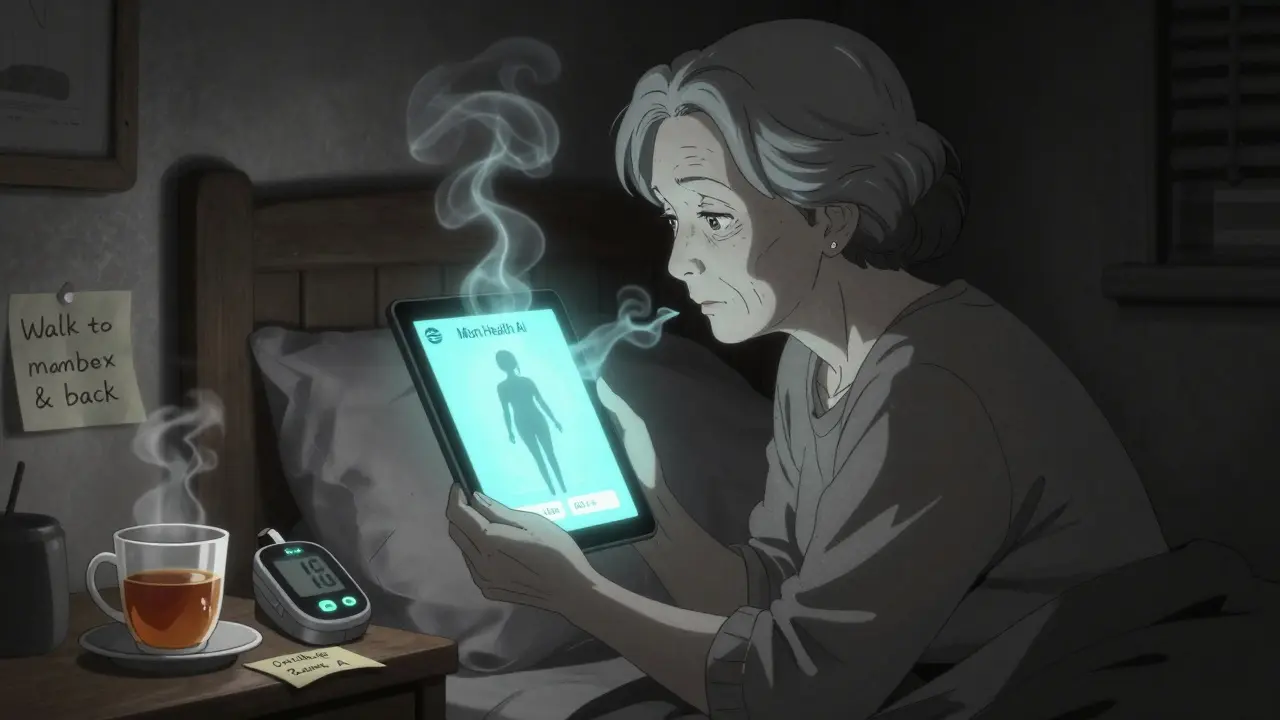
Digital Tools Are Evolving-Fast
Technology is stepping up. Platforms like ProACT, a digital health system with mobile apps, clinician dashboards, and IoT sensors, are helping older adults juggle multiple conditions. One study showed a 28% improvement in self-management behaviors after 12 months. Then there’s Mun Health, an AI-powered companion launched in early 2023 that talks you through emotional ups and downs. It doesn’t replace your doctor, but it’s there at 2 a.m. when you’re anxious about your breathing. Early users gave it 85% satisfaction ratings. But here’s the problem: 41% of adults with chronic conditions struggle to understand basic health info, according to Dr. Sarah Vinson in the Journal of Medical Internet Research. Fancy apps with tiny text, confusing menus, or medical jargon won’t help. That’s why the best digital tools now offer content at a 6th-8th grade reading level and include audio options.What You Need to Get Started
You don’t need a fancy gadget or a perfect schedule. Here’s how to begin:- Assess where you are. Take 10 minutes. What’s the one thing that drains you most? Pain? Fatigue? Forgetting meds? Pick one.
- Write one tiny action plan. Not "I’ll exercise more." Try: "I’ll sit in my chair and lift my legs 10 times after lunch, Monday, Wednesday, Friday."
- Track it simply. Use a notebook, a sticky note, or a free app like Google Keep. Just check it off.
- Reach out. Look for a local CDSMP workshop. Or try Better Choices, Better Health® online. Both are free or low-cost.
Most people feel overwhelmed at first. One woman in Tennessee said learning to check her blood sugar, adjust meds, and care for her feet all at once felt impossible. But she did one thing a week. By week six, she was sleeping better, walking farther, and calling her doctor with questions instead of waiting until she was scared.
Common Hurdles-and How to Beat Them
It’s not easy. Here’s what trips people up-and how to get past it:- "I forget to track my symptoms." 45% of new users struggle here. Fix it: Link tracking to something you already do-like brushing your teeth. "After I brush, I write down how my joints feel."
- "I’m scared to change my meds." 28% worry about making mistakes. Fix it: Ask your doctor for a "medication check-in"-a 15-minute call every month just to review what you’re taking.
- "I don’t have time." 32% miss sessions because of flares. Fix it: Start with 10 minutes a day. One action plan. One small win.
- "I feel alone." Fix it: Join a group-even online. You’re not the only one tired of being the "sick person."
Some clinics, like Sarah Bush Lincoln Health Center in Illinois, added "medication coaching" to their program. Result? A 31% drop in medication errors among COPD patients in just one year.
Who Covers the Cost?
Good news: Medicare now pays for Diabetes Self-Management Training (DSMT), a type of self-management education that covered 1.2 million beneficiaries in 2022. Many state health departments also offer free CDSMP workshops. Private insurers are starting to follow. Check with your provider or visit your state’s health website. You might be eligible without knowing it.The Bigger Picture
By 2030, over 170 million Americans will have two or more chronic conditions. We can’t rely on doctors alone to manage this. The future of care is in your hands-literally. Tools like CDSMP, digital coaches, and peer support aren’t optional extras. They’re essential.The CDC calls self-management education an "essential component" of chronic care. And the data backs it up: participants show a 23% improvement in symptom management compared to those who don’t use these tools. That’s not just numbers. That’s more time with family. Fewer ER visits. Better sleep. Less fear.
You don’t need to be perfect. You just need to start. One small step. One action plan. One day at a time.
Can I do self-management if I have trouble reading or understanding medical terms?
Yes. The best programs, like CDSMP, use plain language at a 6th-8th grade reading level. Many include audio versions, large print, or live facilitators who explain things in simple terms. If you’re unsure, ask if the program offers literacy support. You’re not alone-41% of adults with chronic conditions face the same challenge.
Do I need to be tech-savvy to use digital self-management tools?
Not at all. Apps like Better Choices, Better Health® are designed for people who aren’t tech experts. You just need to be able to open a website, click a button, and type a short message. Many programs offer phone support to help you get started. If a tool feels confusing, try a different one. There are options for every comfort level.
What if I miss a session or fall behind in my action plan?
That’s normal. Self-management isn’t about perfection-it’s about progress. If you miss a week, just restart where you left off. Many people take breaks due to flares, travel, or fatigue. The goal isn’t to do everything perfectly. It’s to keep trying. One small step today is better than waiting for the "right time."
Are these programs only for older adults?
No. While many participants are seniors, these tools work for anyone with a chronic condition-whether you’re 25 with lupus, 40 with asthma, or 65 with heart disease. Programs are designed to be flexible. The skills you learn-problem solving, action planning, communication-are useful at any age.
How long until I see results?
Most people notice small changes within 2-4 weeks: sleeping better, feeling less anxious, walking a little farther. Big changes-like fewer hospital visits or improved energy-usually show up after 3-6 months. The key is consistency, not speed. Even one small action plan completed each week builds momentum.
Can I use these tools if I have multiple chronic conditions?
Yes. In fact, tools like ProACT were built for people managing diabetes, arthritis, and heart disease at the same time. The program teaches you to prioritize-pick one thing to focus on each week. You don’t need to fix everything at once. Just learn how to manage the most pressing issue, then move to the next.
Is there a free option?
Yes. Many CDSMP workshops are free through state health departments, community centers, or hospitals. Online versions like Better Choices, Better Health® are also free. Medicare covers Diabetes Self-Management Training. Check with your local health agency or visit the Self-Management Resource Center website for a list of free programs near you.
What if my doctor doesn’t know about these programs?
That’s common. Doctors are busy, and not all are trained in self-management resources. But you don’t need their permission to join. You can sign up on your own. Many programs even send a summary of your progress to your doctor if you want them to be involved. Some patients find that after completing the program, their doctor starts asking them questions they never asked before-because they see the change.
Next Steps: Where to Go From Here
Start today. Don’t wait for the perfect moment. Pick one thing:- Search for "CDSMP near me" or "Living Well with Chronic Conditions" in your state.
- Visit selfmanagementresourcecenter.org to find free workshops or online options.
- Download the Better Choices, Better Health® app or website and try the first lesson-it takes less than 20 minutes.
- Write down one small goal for tomorrow. Something you can do in five minutes.
Chronic disease doesn’t have to mean giving up. It can mean learning how to live-fully, confidently, and on your own terms. The tools are here. You just have to start.
You might like
Sangeeta Isaac
so like… i tried one of these ‘self-management’ thingies and ended up with 17 sticky notes on my fridge, a Fitbit that thinks i’m a penguin, and a therapist who now calls me ‘the overachiever with arthritis.’ but hey, i walked to the mailbox twice this week. that’s basically a marathon in my world. 🏃♀️
Alex Carletti Gouvea
why are we paying for this? we got free healthcare. if you can’t manage your own body, maybe you shouldn’t be allowed to vote. or drive. or breathe without a permit.
Rod Wheatley
THIS. THIS RIGHT HERE. I’M A NURSE WHOSE MOM HAS DIABETES, HEART DISEASE, AND A TERRIBLE ATTITUDE-AND SHE DID THIS PROGRAM. SHE NOW WALKS 10,000 STEPS A DAY, CALLS HER DOCTOR BEFORE PANICKING, AND EVEN STARTED A GROUP IN HER APARTMENT COMPLEX. IT’S NOT MAGIC. IT’S NOT A CURE. IT’S JUST… WORKING. AND IT WORKS. IF YOU’RE READING THIS AND THINKING ‘I DON’T HAVE TIME,’ THEN YOU’RE THE EXACT PERSON WHO NEEDS THIS THE MOST. START SMALL. ONE STEP. ONE DAY. ONE BREATH. YOU GOT THIS.
Jerry Rodrigues
the part about feeling alone hit me. i’ve been silent about my COPD for years. didn’t want to be the ‘sick guy.’ but after joining an online group, i realized half the people there were just as scared as i was. didn’t fix my lungs. but it fixed my head a little. thanks for saying that.
Barbara Mahone
While the CDSMP framework is empirically validated and widely disseminated, I would caution against conflating accessibility with efficacy. The digital adaptations, while commendable in reach, often lack the nuanced peer feedback inherent in in-person facilitation. Furthermore, the assumption that low-literacy populations are adequately served by ‘6th–8th grade’ content overlooks cognitive load and health literacy as multidimensional constructs. A more robust solution requires co-design with affected communities-not just translation.
Roisin Kelly
they’re selling you a ‘program’ while the pharma companies are still charging you $400 for insulin. this is all just a distraction. they want you to think you’re in control so you stop demanding real change. ‘walk to the mailbox’-yeah, right. try walking when your meds cost more than your rent.
lokesh prasanth
self management is capitalism’s way of making you fix your broken body without fixing the system. you’re not lazy. the system is. but hey, at least you can track your steps.
Malvina Tomja
Let me be clear: this is not a ‘tool.’ It’s a band-aid on a hemorrhage. People who are told to ‘just walk more’ while being denied affordable care are being gaslit. The fact that Medicare covers this but not insulin? That’s not progress. That’s cruelty dressed up as empowerment. If you’re proud of yourself for ‘tracking your meds,’ you’ve already lost.