
Alcohol and Blood Thinners: Understanding Bleeding Risk and INR Changes

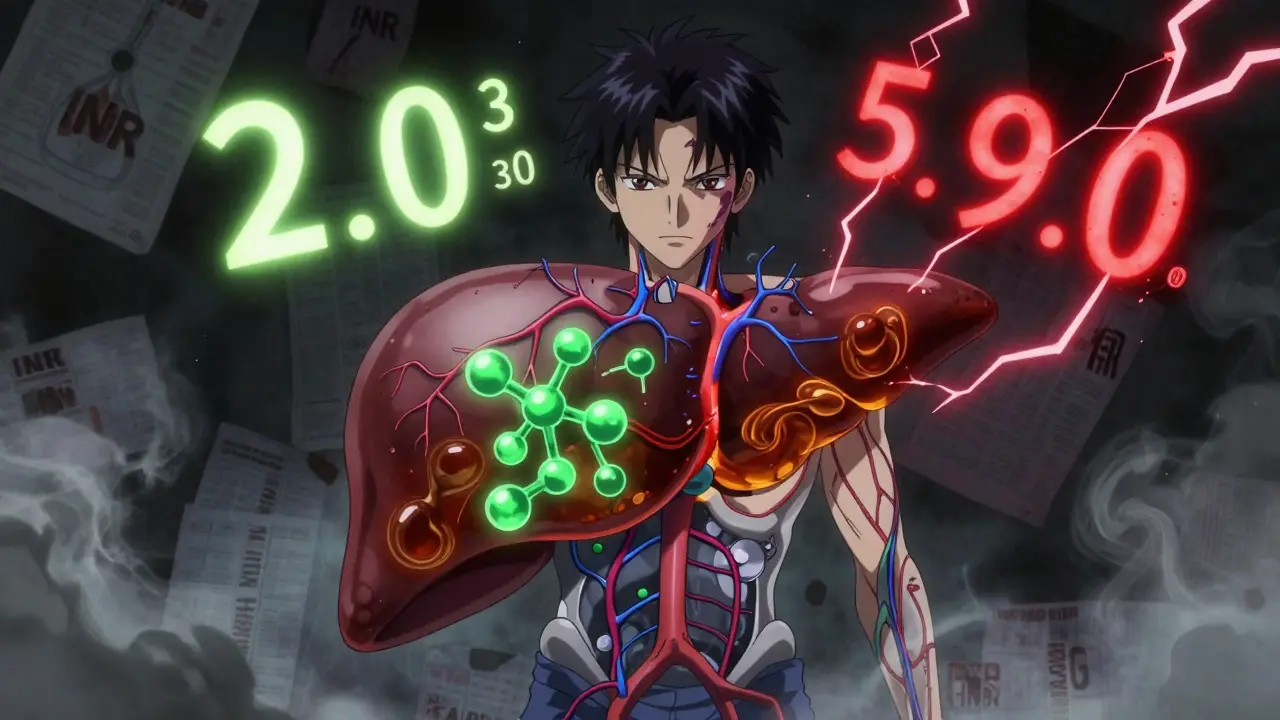
When you're on a blood thinner like warfarin, even a weekend drink can throw your blood’s clotting balance off-kilter. It’s not about being perfect-it’s about knowing how alcohol affects your body when you’re already on a medication with a razor-thin safety margin. The INR is your real-time warning system. It tells you how long your blood takes to clot. For most people on warfarin, the target range is 2.0 to 3.0. Go above 3.5, and your risk of dangerous bleeding starts climbing. Go above 9.0, and the chance of a life-threatening bleed jumps to over 30% in hospitalized patients. Alcohol doesn’t just add to that risk-it makes it unpredictable.
How Alcohol Messes With Your INR
Warfarin works by blocking vitamin K, which your liver needs to make clotting proteins. Alcohol doesn’t directly thin your blood. Instead, it messes with how your liver processes warfarin. When you drink, especially in large amounts, your liver prioritizes breaking down alcohol over warfarin. This causes warfarin to build up in your system, making your INR spike. But here’s the twist: if you drink heavily over time, your liver gets used to it and starts breaking down warfarin faster. That can make your INR drop. So one week, you drink a few beers and your INR goes from 2.6 to 4.1. Next week, you drink the same amount and your INR drops to 1.8. No one can predict it. That’s why doctors tell you to keep alcohol intake consistent-if you drink, drink the same amount, every time.
Why INR Matters More Than You Think
Your INR isn’t just a number on a lab report. Every 0.5-point increase above your target range means a 30% to 50% higher chance of bleeding. If your INR is 3.8 instead of 3.0, you’re not just slightly at risk-you’re significantly more likely to bleed internally. A 62-year-old man in New Zealand reported going from a stable INR of 2.8 to 5.2 after drinking six pints of beer over two days. He ended up in the hospital with gastrointestinal bleeding. That’s not rare. Studies show that among patients with INR above 9, 11% of outpatients had bleeding events. In hospitals, that number jumps to 35%. And 17% of those patients died. Alcohol doesn’t cause bleeding on its own. But when your INR is already high, alcohol pushes you over the edge.
Alcohol vs. Warfarin: The Genetic Wild Card
Not everyone reacts the same way. Some people have genetic variants that make them extra sensitive to the alcohol-warfarin combo. If you carry the CYP2C9*2 or *3 gene, or the VKORC1 1173G>A variant, your body breaks down warfarin slower. Add alcohol, and your INR can skyrocket even with just one or two drinks. A 2015 NIH study found that patients with these genes had a much higher risk of major bleeding when drinking alcohol regularly-especially if they’d been on warfarin for over a year. If your doctor hasn’t mentioned genetic testing, ask. It could explain why your INR keeps jumping even when you think you’re being careful.
What About Newer Blood Thinners?
If you’re on apixaban, rivaroxaban, or dabigatran, you might think alcohol isn’t a problem. And for the most part, you’re right. These newer drugs-called DOACs-don’t interact with alcohol the same way warfarin does. They don’t require INR checks. But that doesn’t mean they’re safe with heavy drinking. Alcohol still increases your risk of stomach bleeding and can worsen liver damage. Plus, if you have a major bleed, there’s no easy way to reverse DOACs like there is with vitamin K for warfarin. So even if you’re not on warfarin, drinking too much is still risky. The difference? You won’t get a warning from your INR. You might not know you’re in danger until it’s too late.
How Much Alcohol Is Safe?
The British Heart Foundation says you can drink while on warfarin-as long as you stick to the limits. That means no more than 14 units per week, spread over three or more days. One unit is about half a pint of beer, a small glass of wine, or a single shot of spirits. Binge drinking-even once-is dangerous. One night of heavy drinking can spike your INR faster than your next blood test can catch it. A Reddit user shared that after four glasses of wine over a weekend, her INR jumped from 2.4 to 3.8. Her doctor had to lower her warfarin dose. That’s a common story. If you drink, keep it consistent. Don’t go from zero to six drinks on Friday, then nothing all week. That rollercoaster is what messes with your INR.
Signs You’re Bleeding-Don’t Ignore Them
Internal bleeding doesn’t always look like a cut. Watch for these red flags:
- Red or brown urine
- Tar-like or bright red stools
- Nosebleeds or bleeding gums that won’t stop
- Unusual bruising without injury
- Heavier than normal menstrual bleeding
- Brown or bright red vomit
- Sudden headaches, dizziness, or weakness (could mean brain bleed)
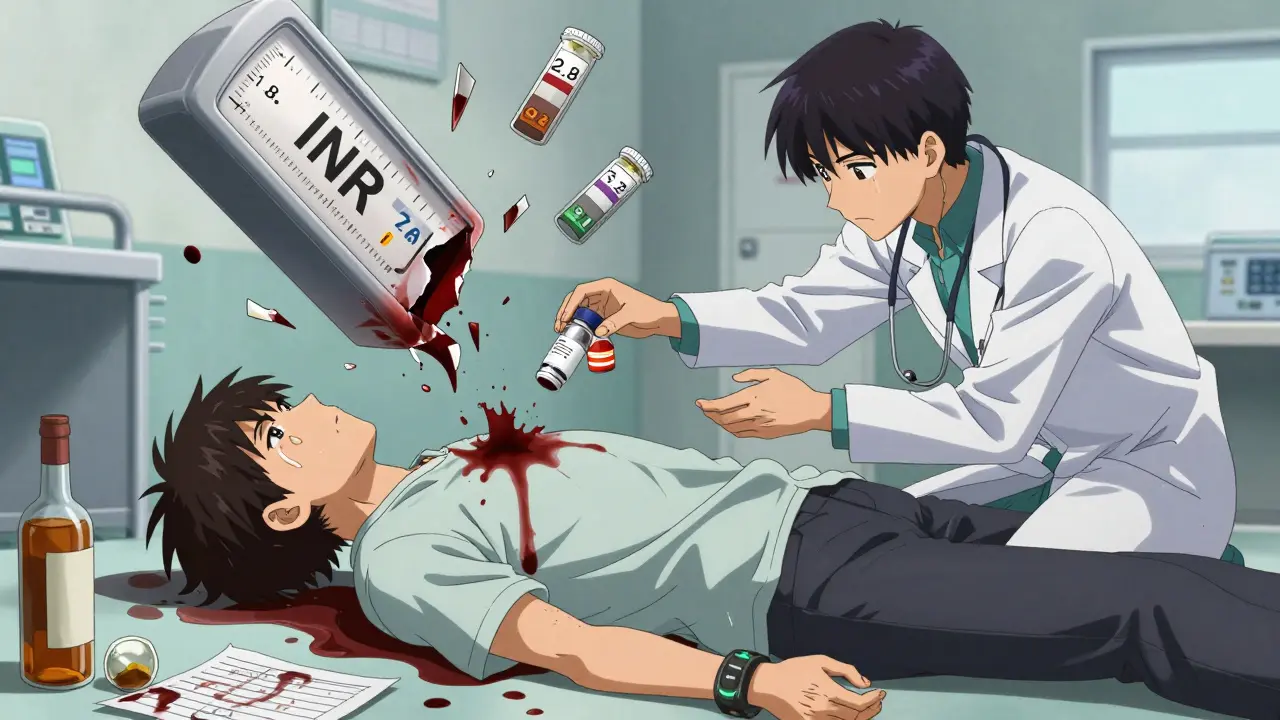
If you notice any of these after drinking, call your doctor or go to the ER. Don’t wait. Your INR could be dangerously high, and you might need plasma or vitamin K right away.
What to Do If You’ve Been Drinking
If you had a few drinks and you’re due for an INR test, don’t skip it. Tell your clinic you drank. They’ll know what to look for. If you binge drank, even if you feel fine, get your INR checked within 24 to 48 hours. Plasma infusion can bring a dangerously high INR down fast-vitamin K and stopping warfarin alone won’t work quickly enough in severe cases. Some hospitals now offer telemedicine programs that include alcohol counseling. Patients in these programs see a 25% drop in INR-related emergencies. It’s not about cutting out alcohol entirely-it’s about managing it smartly.
Real-Life Tips for Staying Safe
- Keep a drink log: Note how much and when you drink. Bring it to appointments.
- Never mix alcohol with other medications-especially painkillers like aspirin or ibuprofen. They also increase bleeding risk.
- Wear a medical alert bracelet. In an emergency, responders need to know you’re on warfarin.
- Ask your pharmacist to review all your meds. Even herbal supplements like ginkgo or garlic can boost bleeding risk when combined with alcohol and warfarin.
- Plan ahead: If you know you’ll be drinking at a wedding or event, schedule your INR test the day before.
Warfarin isn’t going away. About 2.5 million Americans still take it every year. It’s cheap, effective, and works well-if you manage the risks. Alcohol isn’t the enemy. Unpredictable drinking is. Consistency, awareness, and communication with your care team are your best tools.
Can I have one drink while on warfarin?
Yes, one standard drink occasionally is usually safe if you drink consistently and your INR is stable. But never make it a daily habit, and never binge. Always tell your doctor if you’ve had alcohol before your INR test.
Does alcohol make warfarin less effective?
It can-depending on how much and how often you drink. Heavy, long-term drinking can make your liver break down warfarin faster, lowering your INR and making the drug less effective. That puts you at risk for clots. The key is consistency: drink the same amount every time, or don’t drink at all.
How long after drinking should I wait to take warfarin?
You don’t need to delay your dose. The issue isn’t timing-it’s the total amount you’ve consumed over days or weeks. Taking warfarin right after a drink won’t make it safer. What matters is your overall alcohol intake and how it affects your liver’s ability to process the drug.
Can I drink alcohol if my INR is already high?
No. If your INR is above 3.5, avoid alcohol completely until your doctor brings it back into range. Drinking at this point can push you into a dangerous zone where bleeding becomes life-threatening. Your doctor may hold your warfarin dose and give you vitamin K-but alcohol will only make it harder to stabilize.
Do I need to avoid alcohol if I’m on a DOAC like apixaban?
You don’t need to avoid alcohol entirely, but moderation is still critical. DOACs don’t interact with alcohol the way warfarin does, but heavy drinking increases your risk of stomach bleeding and liver damage. There’s no INR test to warn you, so you’re flying blind. Stick to the same limits: no more than 14 units a week, spread out.
Why does my INR go up after drinking even if I haven’t changed my warfarin dose?
Alcohol affects how your liver metabolizes warfarin. When you drink, your liver slows down warfarin breakdown, causing it to build up in your blood. This raises your INR. The effect isn’t immediate-it can take 24 to 72 hours to show up on a blood test. That’s why you might feel fine but still have a dangerously high INR.
You might like
Lauren Warner
This post is exactly why people shouldn't touch alcohol while on warfarin. One drink isn't 'safe'-it's a gamble with your life. The liver doesn't care if you're 'responsible'. It just processes what it's given, and warfarin doesn't get priority. INR spikes don't announce themselves. They just show up in the ER.
Craig Wright
I find it alarming how casually some Americans treat this. In the UK, we're taught from day one that anticoagulants demand discipline. Drinking is not a right-it's a privilege that requires monitoring. The NHS doesn't sugarcoat it: consistent intake or zero. No middle ground. This isn't about freedom, it's about survival.
Lelia Battle
There's a quiet tragedy in how we frame this-as if it's a matter of personal choice rather than biological vulnerability. Warfarin doesn't care about your social life, your celebrations, or your weekend rituals. It only responds to chemistry. Maybe the real question isn't 'can I drink?' but 'am I willing to live with the consequences of my liver's unpredictable calculus?'
Rinky Tandon
Let me be crystal clear-this isn't about moderation. It's about molecular warfare. CYP2C9 polymorphisms + alcohol + warfarin = biochemical chaos. You're not just 'having a drink', you're triggering a cascade of hepatic enzyme suppression, vitamin K antagonism, and uncontrolled thrombin generation. And don't even get me started on DOACs-no INR monitoring means you're playing Russian roulette with a blindfold. Genetic testing isn't optional-it's mandatory for anyone on anticoagulants. Period.
Ben Kono
I had a friend who drank 3 beers every Friday and his INR was always perfect until one weekend he had 6 and ended up in the hospital with a GI bleed. No warning. No symptoms. Just blood everywhere. Don't be him.
Konika Choudhury
In India we dont have this problem because we dont drink much and our liver is stronger anyway. Why are you making it so complicated. Just dont drink. Simple.
Darryl Perry
The data is clear. Alcohol + warfarin = increased bleeding risk. No nuance needed. Stop overthinking it. Don't drink.
Windie Wilson
So let me get this straight. I can't have a glass of wine at my cousin's wedding because my liver might 'decide' to slow down warfarin metabolism? Meanwhile my friend on apixaban is sipping cocktails and laughing. I feel like I'm being punished for being cheap and having good insurance.
Daniel Pate
What's interesting is how this reflects a deeper tension in modern medicine-we're given tools to extend life but told to live within absurdly narrow boundaries. Warfarin saves lives, yes, but at the cost of autonomy. The INR is a digital leash. And alcohol? It's the one variable we can't control, even if we try. Maybe the real issue isn't alcohol. It's that we've outsourced our physiological safety to a lab number. What happens when the machine fails?