
Aminoglycoside Antibiotics and Kidney Damage: Nephrotoxicity Warning

Aminoglycoside Nephrotoxicity Risk Estimator
This tool estimates the likelihood of developing acute kidney injury (AKI) while taking aminoglycosides like gentamicin, tobramycin, or amikacin. It is for educational purposes only and does not replace professional medical advice.
Fill in patient details to see estimated risk level.
You’re fighting a nasty infection. The doctor prescribes gentamicin, a powerful antibiotic known for wiping out stubborn bacteria. But there’s a catch. This same drug can quietly attack your kidneys while it saves your life. It’s not rare, either. Between 10% and 25% of patients treated with this class of drugs develop some form of kidney damage. That’s a high price to pay for clearing an infection. If you or someone you know is on these meds, understanding the warning signs isn’t just academic-it’s critical for protecting your long-term health.
The Silent Threat: Why Aminoglycosides Hurt Your Kidneys
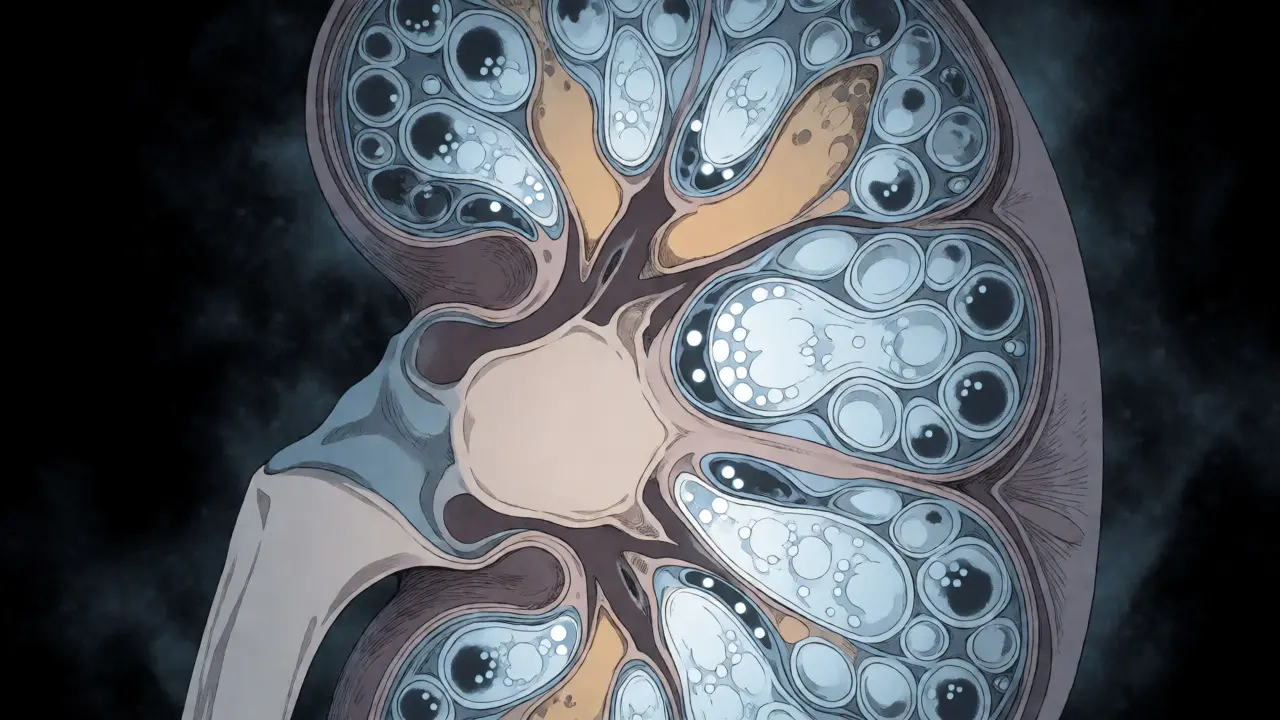
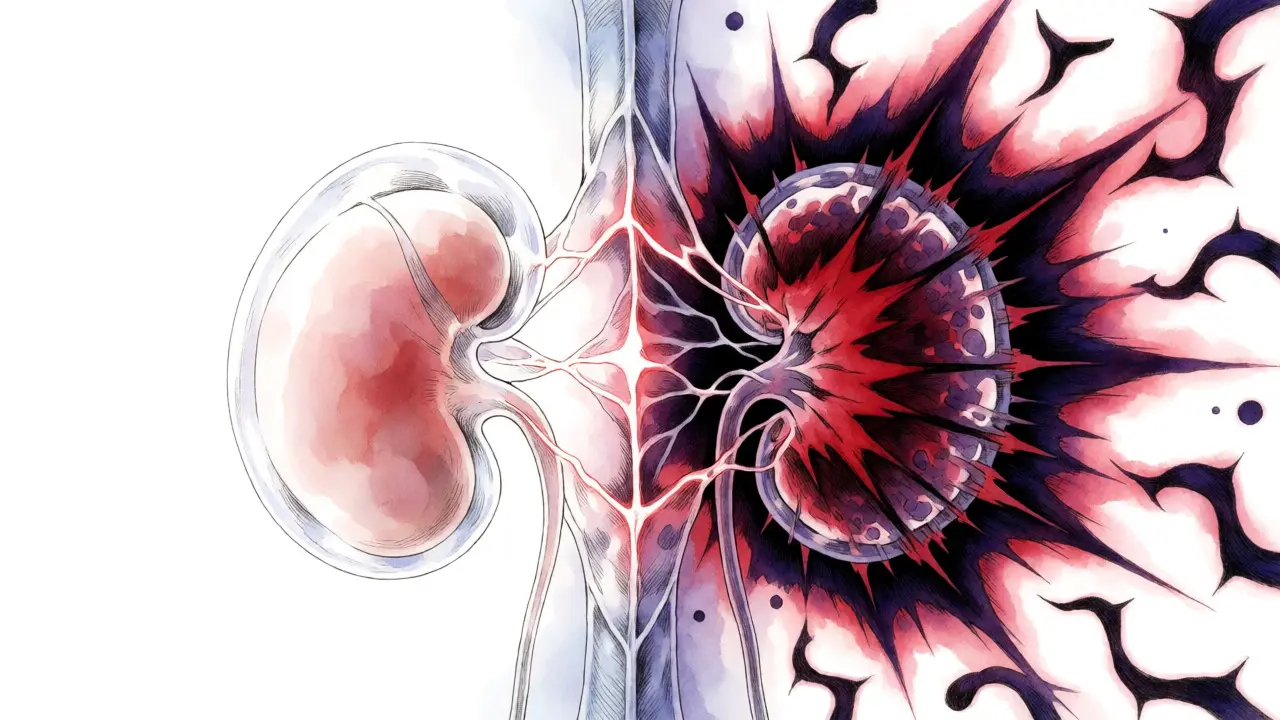
Aminoglycosides are a specific family of antibiotics that includes gentamicin, tobramycin, and amikacin. They are old-school drugs, first widely used in the 1970s, but they remain essential today because few other options work against certain multidrug-resistant bacteria. The problem lies in how your body processes them. When you take an aminoglycoside, about 5% of the dose gets trapped in the cells lining your kidney tubules. Specifically, it accumulates in the S1 and S2 segments of the proximal tubule, which are responsible for filtering waste from your blood. Once inside these cells, the drug doesn’t just sit there. It builds up in tiny structures called lysosomes and endosomes, causing cellular chaos. Think of it like clogging a drain until the water backs up and floods the basement. In your kidneys, this leads to swelling, inflammation, and eventually cell death. Researchers have identified that this isn’t just a simple blockage; it also triggers blood vessel constriction within the kidney, reducing blood flow and further stressing the organ. This dual mechanism-cellular toxicity plus vascular restriction-is why the damage can be so severe if left unchecked.
Spotting the Signs Before It’s Too Late
Kidney damage from aminoglycosides is sneaky. Unlike other types of acute kidney injury where urine output might drop dramatically, aminoglycoside-induced damage often presents as "nonoliguric" failure. This means you might still pee plenty, even though your kidneys aren’t filtering waste effectively. Because of this, relying solely on how much you urinate won’t tell you if something is wrong. The earliest clues usually show up in lab tests rather than symptoms. Doctors look for a slow rise in serum creatinine levels, a waste product that accumulates when kidney function declines. A significant increase is typically defined as a rise of ≥0.5 mg/dL or a 50% jump above your baseline. Other early markers include changes in urine composition, such as increased loss of electrolytes like magnesium and calcium, or the presence of specific proteins and enzymes that shouldn’t normally leak into urine. These biomarkers can appear before you feel any physical pain or fatigue, making regular blood work absolutely vital during treatment.
Risk Factors: Who Is Most Vulnerable?
Not everyone faces the same level of risk. While anyone taking these drugs needs monitoring, certain factors significantly raise the chance of kidney injury. Age is a major one; patients over 65 are more susceptible due to naturally declining kidney reserve. Pre-existing kidney issues are another huge red flag. If your baseline estimated glomerular filtration rate (eGFR) is already below 60 mL/min/1.73m², your risk of further damage increases by more than three times compared to those with healthy kidneys. Other medications play a role too. Combining aminoglycosides with other nephrotoxic drugs, particularly vancomycin, creates a dangerous synergy. Studies suggest that using these two together can nearly triple the risk of acute kidney injury compared to using either alone. Dehydration is another common culprit. Since these drugs concentrate in the kidneys, low fluid volume means higher concentrations of the toxin hitting the tubule cells. Prolonged therapy matters as well; the risk climbs steeply after five to seven days of continuous use.
| Risk Factor | Impact Level | Why It Matters |
|---|---|---|
| Pre-existing CKD (eGFR <60) | High (3.2x risk) | Reduced functional reserve makes recovery harder. |
| Concomitant Vancomycin | High (2.7x risk) | Additive toxic effect on tubular cells. |
| Age >65 Years | Moderate-High | Natural decline in renal blood flow and mass. |
| Therapy Duration >7 Days | Moderate | Cumulative accumulation exceeds clearance capacity. |
| Dehydration/Hypovolemia | Moderate | Higher drug concentration in renal tubules. |
Dosing Strategies That Save Kidneys
How the drug is given matters almost as much as the total amount. For years, doctors split daily doses into multiple smaller injections throughout the day. However, research has shifted toward once-daily dosing, and for good reason. Giving the entire daily dose at once allows the kidneys time to clear the drug between exposures. This "peak-and-trough" strategy reduces the time the kidney cells are exposed to toxic levels, lowering the incidence of damage without compromising effectiveness against bacteria. Timing also plays a subtle but real role. Some studies suggest that administering the drug in the afternoon, around 1:30 p.m., may result in lower nephrotoxicity compared to morning doses. This hints at circadian rhythms influencing kidney susceptibility, though clinical practice varies on strict timing protocols. Regardless of the hour, the key takeaway is consistency. Switching from thrice-daily to once-daily regimens has been shown to produce less rapid onset of damage and faster recovery when injury does occur.
Recovery and Long-Term Outlook
The good news is that aminoglycoside-induced kidney damage is often reversible. If caught early and the drug is stopped, most patients see improvement within three to five days. Full recovery of kidney function typically takes one to three weeks. However, "full recovery" doesn’t always mean returning to 100% of previous function. Some patients, especially those with pre-existing conditions or severe initial injury, may experience a permanent reduction in kidney capacity. A large study at Mayo Clinic found that while 18.7% of patients developed acute kidney injury, about 82% recovered partially or completely within a month of stopping therapy. This highlights the importance of vigilance. Catching the issue early prevents the transition from temporary stress to permanent scarring. The kidneys have a remarkable ability to heal themselves through regeneration of tubular cells, but this process requires rest-meaning no further exposure to the offending agent.
Protective Measures and Future Directions
Can we do better than just monitoring? Scientists are actively looking for ways to shield the kidneys from aminoglycoside toxicity. One promising candidate is polyaspartic acid. In animal studies, co-administering this compound with gentamicin prevented the buildup of toxic substances in kidney cells and reduced signs of damage. It works by interfering with how the antibiotic binds to cell membranes, essentially blocking its entry into the vulnerable spots. While polyaspartic acid hasn’t yet become a standard part of human treatment protocols, clinical trials are underway. Current guidelines emphasize what we *can* control: strict therapeutic drug monitoring. Keeping trough levels (the lowest concentration of the drug in your blood before the next dose) below 1 μg/mL for gentamicin is a standard safety threshold. Avoiding other nephrotoxins, staying hydrated, and limiting therapy duration to the shortest effective course remain the best defenses we currently have.
How quickly does kidney damage happen with aminoglycosides?
Damage typically begins to manifest after 5 to 7 days of continuous therapy. Early biochemical changes, such as elevated creatinine, may appear slightly earlier, but clinically significant acute kidney injury is rarely seen in the first few days unless the patient has severe pre-existing risk factors.
Is kidney damage from gentamicin permanent?
In many cases, it is reversible. About 82% of patients who develop acute kidney injury recover partial or complete function within 30 days of stopping the medication. However, patients with prior kidney disease or severe dehydration may suffer permanent reductions in kidney function.
Why is once-daily dosing recommended for aminoglycosides?
Once-daily dosing maximizes bacterial killing power (concentration-dependent killing) while minimizing kidney exposure. It allows a longer period where drug levels in the kidney tissue fall below toxic thresholds, giving renal cells time to recover between doses compared to multiple daily administrations.
What should I avoid while taking aminoglycosides?
Avoid other nephrotoxic medications whenever possible, especially NSAIDs (like ibuprofen), ACE inhibitors, and vancomycin. Also, maintain adequate hydration to help flush the kidneys, unless your doctor restricts fluids for other medical reasons.
Do all aminoglycosides cause the same level of kidney damage?
They share the same mechanism, but potency varies. Gentamicin is generally considered more nephrotoxic than amikacin at equivalent clinical doses. Tobramycin falls somewhere in between. Choice of drug often depends on the specific bacteria being targeted and individual patient risk profiles.
You might like
Aurelio Haney
Finally, someone explains this without drowning us in useless jargon. The point about once-daily dosing is crucial and often overlooked by junior residents who just want to follow old protocols. :)
Jim Bisesi
ugh another medical article trying to scare people into buying supplements or something
i read the first paragraph and got bored so i stopped reading honestly
probably fine if you are young and healthy right?
anyway thanks for the info i guess
Shu Chowdhury
this was really helpful to read because my mom had to go on gentamicin last year and we were both terrified but didn't know what to look for specifically other than 'kidney pain' which apparently isn't even a common symptom at first
the part about nonoliguric failure was eye opening for me since she kept peeing normally and we thought that meant her kidneys were fine when they actually weren't filtering properly
it's comforting to know that catching it early through blood tests can lead to recovery though because I felt so helpless watching her suffer through the side effects
I hope more doctors explain these specific risks clearly like this instead of just handing over a pamphlet and walking out of the room
thank you for sharing this information it feels very necessary for patients to understand their own bodies better during treatment
Kimberley Odish
The assertion that aminoglycosides are merely "old-school" drugs undersells their critical role in treating multidrug-resistant organisms, yet the author correctly identifies the nephrotoxicity as a significant clinical burden. It is frustrating to see how often therapeutic drug monitoring is neglected in practice, leading to preventable acute kidney injury. The data regarding concomitant vancomycin use is particularly alarming and should be standard knowledge for any prescribing physician. One must also consider the economic impact of prolonged hospital stays due to renal complications, which this article touches upon only superficially. Furthermore, the mention of circadian rhythms influencing toxicity is an intriguing area that requires further validation before widespread protocol changes are implemented. Patients with pre-existing chronic kidney disease require meticulous dose adjustments, not just general caution. The reversibility statistics are hopeful but potentially misleading for those with severe baseline impairment. Ultimately, vigilance remains the cornerstone of safe administration.
Adam Viruet
Actually, the claim about afternoon dosing being superior is largely anecdotal and lacks robust large-scale randomized controlled trial evidence...
Also, saying 10-25% develop damage is misleading because most of those cases are subclinical and resolve spontaneously without changing management...
Why does nobody talk about the ototoxicity risk which is often permanent unlike the reversible kidney issues??
This feels like fear-mongering disguised as education...
Evelyn Reed
agreed on the tdm point
the mechanism involving lysosomal phospholipidosis is fascinating from a cellular bio perspective though
once daily dosing exploits the post-antibiotic effect nicely too
good overview overall
Somnath Thombre
Hey everyone! This is such important info!!
We need to spread this awareness especially here where self-medication is common and people don't realize antibiotics aren't candy!!
Stay hydrated friends and always check your creatinine levels if you feel off!! You've got this!!! 💪🏽💊
Pramay Dattani
Western medicine always comes up with these toxic poisons then acts surprised when they destroy organs.
In India we have been using turmeric and neem for infections for thousands of years without destroying our kidneys like this.
These pharma companies just want to sell you more pills to fix the damage caused by the first pill.
Wake up sheeple and stop trusting these chemical bombs blindly.
Our ancestors knew better than these modern doctors playing god with our health.
Gentamicin is basically poison and we should avoid it whenever possible unless absolutely desperate.
Natural remedies do not have these horrible side effects listed in bold red text.
Why are we still taking these dangerous drugs when safer natural options exist?
It is all about profit margins for big pharmaceutical corporations targeting vulnerable patients.
I am done with this system that treats symptoms instead of curing root causes naturally.