
Black Box Warnings on Antidepressants for Youth: What Parents and Doctors Need to Know

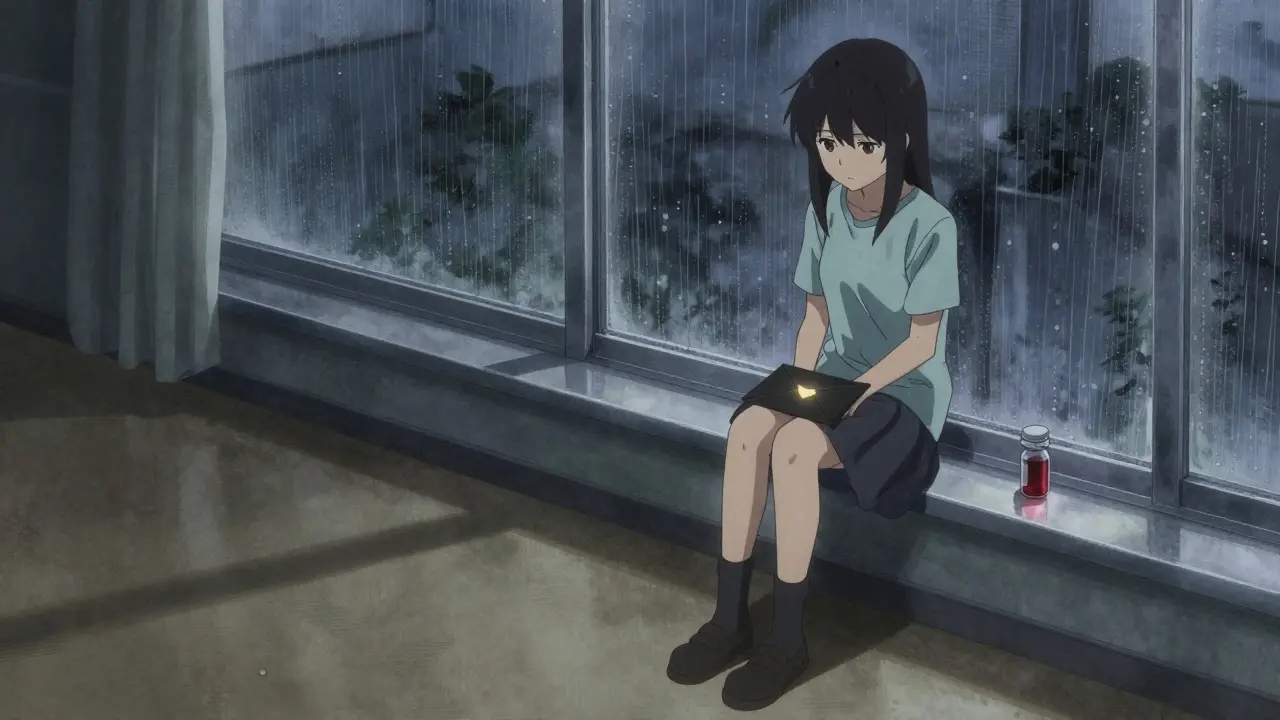
When the FDA slapped a black box warning on antidepressants for children and teens in 2005, the goal was simple: protect young lives. But what happened next wasn’t what anyone expected. Instead of fewer suicides, many kids stopped getting treatment-and suicide rates went up.
What the Black Box Warning Actually Says
The FDA’s black box warning is the strongest safety alert they can give. It’s printed in bold, bordered in black, and appears on every prescription antidepressant package. The message is clear: antidepressants may increase the risk of suicidal thinking and behavior in children, adolescents, and young adults up to age 24.
This warning came after a review of 24 clinical trials involving over 4,400 young patients. The data showed that about 4% of kids on antidepressants had suicidal thoughts or behaviors during the first few months of treatment. That’s compared to 2% in the placebo group. No one died in those trials. But the FDA decided the risk was real enough to warrant a national alert.
The warning applies to all antidepressants-SSRIs like Prozac and Zoloft, SNRIs like Effexor, and others. It doesn’t matter which one or how much. If it’s prescribed to someone under 25, the warning goes with it.
What the FDA Intended vs. What Actually Happened
The FDA hoped doctors would monitor kids more closely. They wanted parents to watch for sudden mood swings, agitation, or talk of self-harm. They expected prescriptions to continue, but with better oversight.
That’s not what happened.
Within two years of the warning, antidepressant prescriptions for teens dropped by 31%. That’s over a million fewer prescriptions a year. Parents, scared by the warning, refused medication. Some doctors, unsure how to respond, stopped prescribing altogether.
And here’s the troubling part: suicide rates among 10- to 19-year-olds jumped 75% between 2003 and 2007. That’s not a coincidence. A 2023 study in Health Affairs tracked 1.1 million adolescents and found a 21.7% spike in psychotropic drug poisonings-used as a proxy for suicide attempts-after the warning. For young adults aged 20-24, the spike was even higher: 33.7%.
Meanwhile, depression diagnoses were rising. More kids were suffering. But fewer were getting the one treatment proven to help: antidepressants.
The Unintended Consequences
Doctors didn’t just lose patients-they lost time. A 2018 study found psychiatrists spent nearly three times longer explaining the warning to parents. What used to take 8 minutes now took over 22. That’s time taken away from therapy, family support, or checking if the medication was working.
And even when prescriptions were written, monitoring often didn’t happen. A 2020 study found only 37% of teens got the recommended weekly check-ins during the first month. In rural areas, it was as low as 22%. Without regular follow-ups, the warning’s safety net didn’t work.
Parents were left confused. One mother on Reddit wrote: “My daughter’s doctor told me the warning was doing more harm than good. He said he’d rather see her on medication with close monitoring than untreated and spiraling.”
On support forums, 74% of parents said they delayed or refused antidepressants because of the warning. But among those who went ahead anyway, 67% reported improvement in their child’s mood and functioning. The warning didn’t stop treatment-it just made it harder, scarier, and less consistent.
What the Experts Are Saying Now
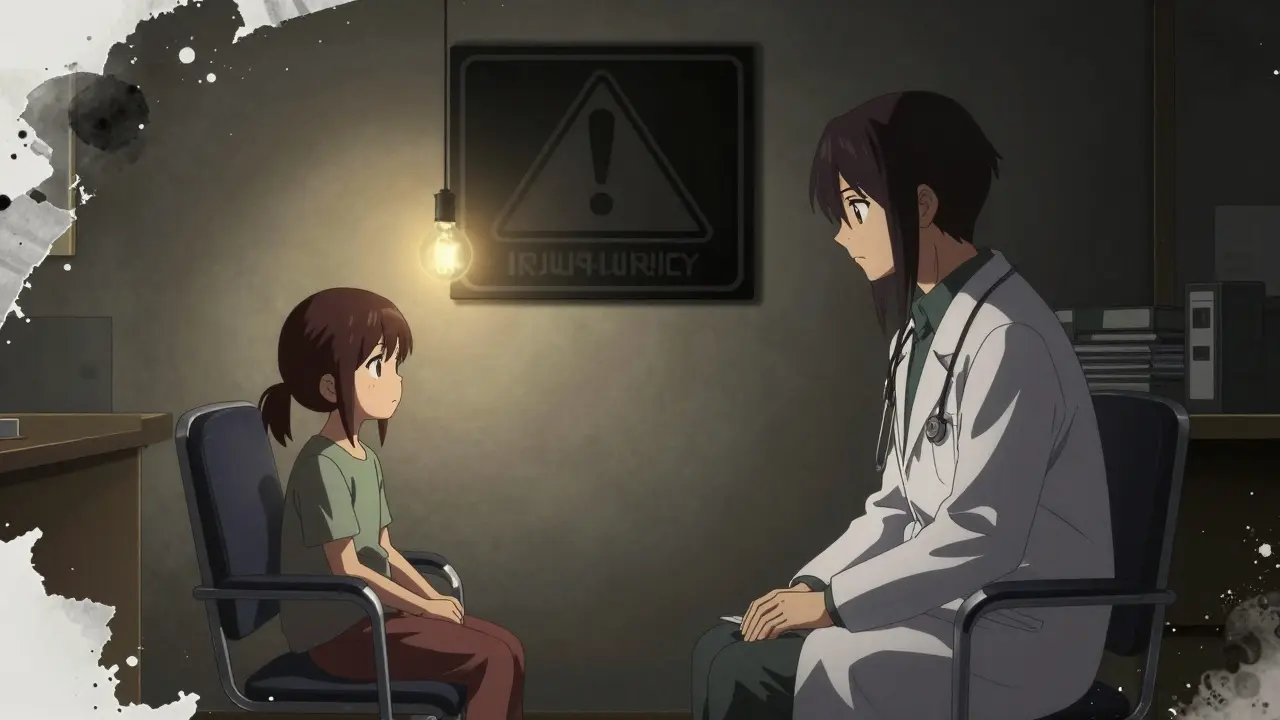
Leading researchers are calling for change. Dr. Stephen Soumerai from Harvard Pilgrim Health Care Institute says the evidence is clear: “The sudden drop in treatment and rise in suicide aren’t random. They’re the direct result of the warning.”
Swedish researchers analyzed over 800 teen suicides before and after the warning. They found that after 2005, more young people died by suicide-not fewer. Their conclusion: “The warning may have left suicidal teens without treatment.”
Even the Mayo Clinic, while acknowledging the warning, says: “It’s important to get the facts. The risk of untreated depression often outweighs the risk of medication.”
The American College of Neuropsychopharmacology officially called for a reassessment in 2022. Pharmaceutical companies like Eli Lilly and Pfizer have asked the FDA to revise the language. And in September 2023, the FDA held a public meeting to review the data. No decision has been made yet-but pressure is building.
How Other Countries Handle It
Outside the U.S., the story is different.
Canada has a similar warning, but it’s worded to emphasize balance: “The benefits may outweigh the risks for some patients.”
Europe? No black box warning at all. The European Medicines Agency says the data doesn’t support a blanket warning for all youth. And guess what? European countries didn’t see the same spike in teen suicides after 2005.
This matters. If the warning was truly saving lives, why didn’t other countries see the same drop in suicide? Why did the U.S. see the opposite?
What Should Parents Do?
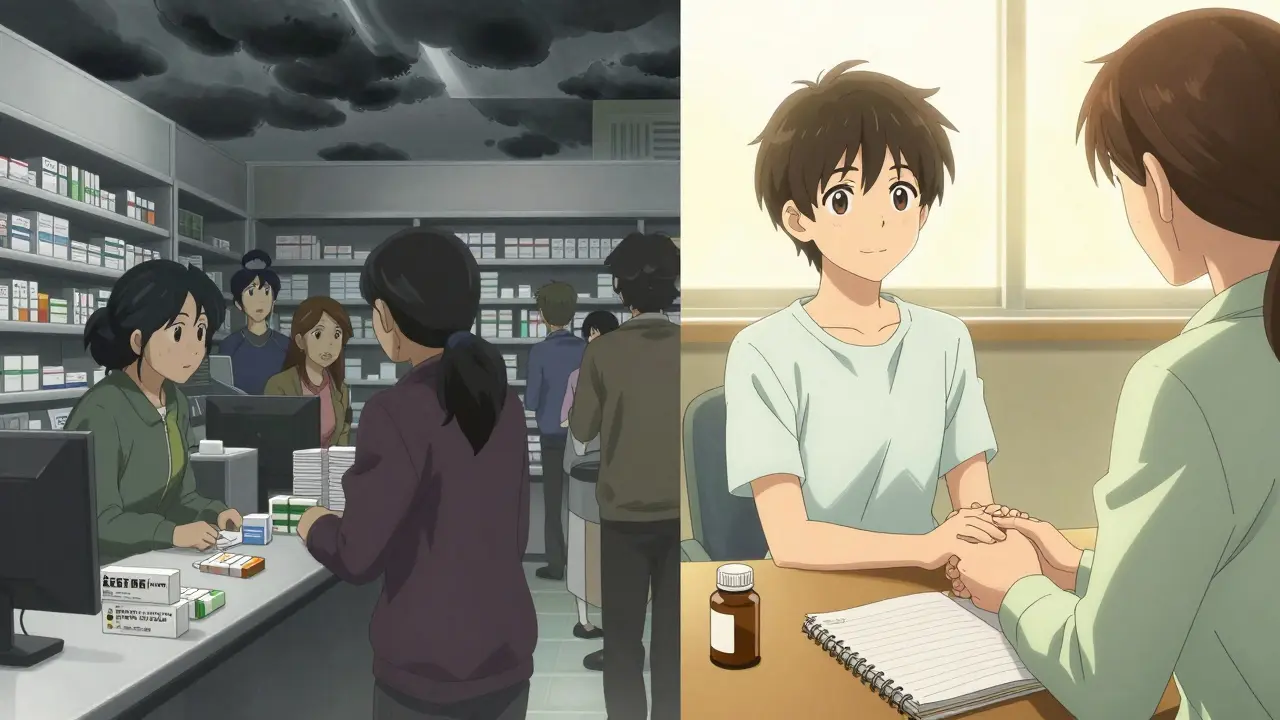
If your child is struggling with depression, anxiety, or OCD, the black box warning shouldn’t be the deciding factor. It’s a signal to be careful-not a reason to avoid treatment.
Here’s what to do instead:
- Ask for a full risk-benefit discussion. Your doctor should explain why they’re recommending this medication, what the alternatives are, and what signs to watch for.
- Insist on close monitoring. The first 4-6 weeks are critical. Schedule weekly check-ins. Call the doctor if your child becomes more withdrawn, agitated, or talks about self-harm.
- Don’t stop medication suddenly. If you’re worried, talk to your doctor. Stopping abruptly can cause withdrawal symptoms and worsen depression.
- Combine medication with therapy. CBT and other talk therapies work better with medication than alone. Ask about access to a child psychologist.
- Use the MedGuide. Pharmacists are required to give you a printed guide with each prescription. Read it. Ask questions.
One parent in New Zealand told me: “We were terrified. But when we waited, her schoolwork collapsed. She stopped talking. We started the medication. Within six weeks, she was laughing again. The warning scared us-but not treating her scared us more.”
Where Do We Go From Here?
The black box warning was meant to protect. But it may have hurt more than it helped. The data now shows a clear pattern: fewer prescriptions → more suicide attempts → more deaths.
What’s needed isn’t a warning that scares families away. It’s better tools. The National Institute of Mental Health is working on risk prediction models that could identify which teens are most vulnerable to side effects-and which are most likely to benefit.
Until then, the best thing you can do is not let fear silence treatment. Depression kills. Untreated depression kills faster than any medication ever could.
The warning isn’t a reason to say no. It’s a reason to say “yes, but carefully.”
Do antidepressants really cause suicide in teens?
No, antidepressants don’t cause suicide. The FDA warning says they may increase the risk of suicidal thoughts or behaviors in the first few weeks of treatment. In clinical trials, this meant about 2 extra cases per 100 kids-not deaths. The real danger is leaving depression untreated. Studies show untreated depression is far more likely to lead to suicide than antidepressants.
Should I avoid antidepressants for my child because of the black box warning?
No. Avoiding treatment because of the warning has been linked to higher suicide rates. The key is not avoiding medication-it’s using it correctly. Work with a psychiatrist who will monitor your child closely during the first month. Combine medication with therapy. Don’t make a decision based on fear alone.
What are the signs my child might be having a bad reaction to antidepressants?
Watch for sudden changes: increased agitation, panic attacks, insomnia, hostility, or talking about death or self-harm. These usually happen in the first 1-4 weeks. If you notice any of these, call your doctor immediately. Don’t wait. Don’t stop the medication on your own-call first.
Is the black box warning still in effect?
Yes. As of late 2025, the FDA has not removed or changed the warning. But there is growing pressure to revise it. A major review was held in September 2023, and experts now believe the warning may do more harm than good by discouraging treatment. Changes could come in 2026.
Are there alternatives to antidepressants for teens?
Yes. Cognitive behavioral therapy (CBT) is highly effective for mild to moderate depression and anxiety. Exercise, sleep hygiene, and family therapy also help. But for severe depression, especially when there’s suicidal thinking, medication is often necessary. The best results come from combining therapy with medication-not choosing one over the other.
You might like
Bret Freeman
The FDA’s black box warning was a well-intentioned disaster. We took a nuanced medical issue and turned it into a national panic. Parents now treat antidepressants like they’re radioactive, and doctors are afraid to prescribe them. The result? More kids dying because we chose fear over evidence. This isn’t safety-it’s moral theater wrapped in bureaucratic jargon.
Austin LeBlanc
You think this is about kids? It’s about liability. Doctors don’t want to be sued. Pharma doesn’t want to be blamed. So we scare parents into compliance instead of educating them. The warning didn’t protect kids-it protected institutions. And now we’re paying with lives.
niharika hardikar
While the epidemiological data demonstrates a statistically significant correlation between reduced antidepressant prescribing and elevated suicide rates among adolescents, it is imperative to acknowledge confounding variables such as socioeconomic stressors, social media exposure, and systemic gaps in mental health infrastructure. The causal attribution to the black box warning alone is methodologically reductive and risks oversimplifying a multidimensional public health crisis.
John Pearce CP
This is what happens when you let bureaucrats and academics dictate medical decisions without understanding American families. We’ve got foreign countries like Sweden and Germany handling this better because they don’t have this emotional, overprotective culture. We need to stop treating teens like fragile porcelain and start teaching them resilience. Medication isn’t the answer-it’s a crutch for weak parenting.
Andrea Di Candia
I’ve seen both sides. My niece was suicidal. We waited six months to start medication because of the warning. By then, she’d dropped out of school, stopped talking to anyone, and was sleeping 14 hours a day. We started her on Zoloft with weekly therapy. Within five weeks, she was drawing again. She laughed. She asked for ice cream. The warning scared us-but not treating her scared us more. This isn’t about fear. It’s about balance.
Joseph Manuel
The FDA’s black box warning was not an error-it was a necessary precaution based on clinical trial data showing a doubling of suicidal ideation in the treatment group. To claim causality between reduced prescriptions and increased suicide is ecological fallacy. Correlation does not equal causation. Other factors-economic decline, isolation, internet radicalization-must be considered before dismantling a safety mechanism that has saved lives.
Andy Grace
I worked in a rural clinic for ten years. The warning made parents terrified. But the real problem? No one had access to follow-up care. If you live 90 miles from the nearest psychiatrist, what good is a warning that says ‘monitor closely’? We need better access-not just better warnings.
Delilah Rose
It’s heartbreaking how we’ve turned mental health into a moral dilemma instead of a medical one. We treat depression like it’s a choice-like if you just prayed harder or ate less sugar, your kid would snap out of it. But depression isn’t laziness. It’s a brain chemistry problem. The black box warning wasn’t designed to stop treatment-it was supposed to make it safer. But we turned it into a reason to do nothing. And doing nothing is the most dangerous thing of all. I’ve met parents who refused meds because of the warning, then blamed themselves when their child didn’t come home from school one day. That’s not protection. That’s guilt dressed up as caution.
Spencer Garcia
Start with therapy. Add meds if needed. Monitor for the first month. That’s it.