
FDA's 180-Day Exclusivity: How First Generic Applicants Gain Market Advantage

When a brand-name drug loses its patent, you’d expect generic versions to flood the market quickly, right? That’s the whole point of competition - lower prices, more access. But in reality, the first company to file a generic version often gets a 180-day exclusivity period from the FDA. And that one window can change everything - for patients, for prices, and for how the entire generic drug system works.
Why the FDA Gives 180 Days to the First Generic Applicant
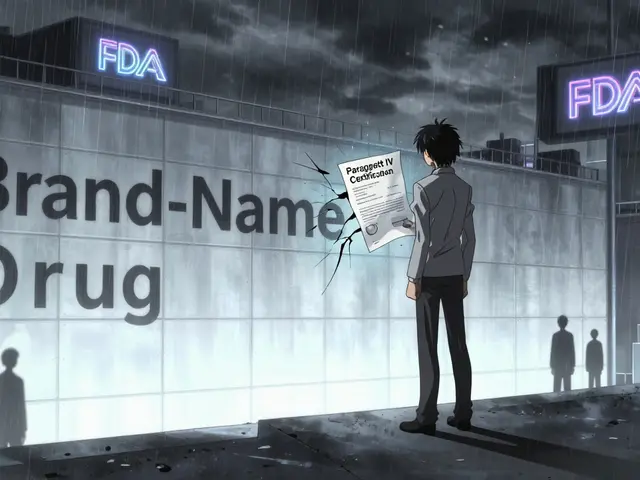
This isn’t a favor. It’s a legal tool built into the Drug Price Competition and Patent Term Restoration Act of 1984, better known as the Hatch-Waxman Act. The idea was simple: reward the first generic company that dares to challenge a brand-name drug’s patent. Those patents are expensive and risky to fight. It can take years of legal battles, millions in legal fees, and no guarantee of winning. So the FDA offers a prize: 180 days where no other generic can enter the market.That exclusivity isn’t automatic. It only kicks in if the generic applicant files what’s called a Paragraph IV certification. That’s a formal legal notice saying, “We believe your patent is invalid, unenforceable, or we don’t infringe it.” If they win that challenge - either in court or through settlement - they get the clock started.
Here’s the catch: the 180 days don’t start when the FDA approves the drug. They start when the first generic company actually starts selling it. Or, if there’s a court ruling before launch, it starts then. That timing detail is everything.
How the Exclusivity Window Actually Works
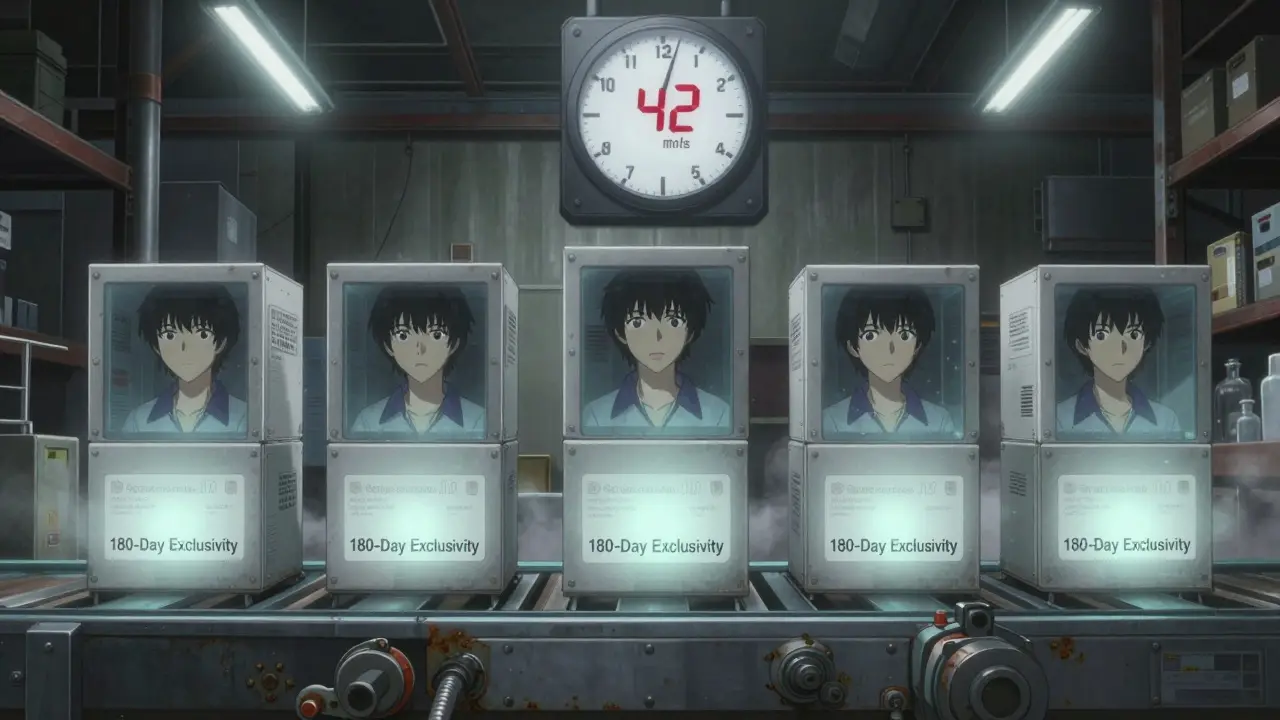
Let’s say five companies file identical generic applications on the same day, all challenging the same patent. Under FDA rules, they’re all considered “first applicants.” That means they share the 180-day window. But if only two of them launch, they split the time - say, 90 days each.But here’s where things get messy. The exclusivity clock can run for years - not 180 days. Why? Because companies can delay launching the drug. They might wait for a patent appeal to finish. Or they might sit on approval while the brand-name drug still holds the market. In fact, a 2021 FTC report found that between 2015 and 2020, there were 147 cases where the 180-day clock was used to block competition, not speed it up.
One study showed that the average time between filing a Paragraph IV challenge and launching the generic was 42 months. That’s over three and a half years. And during that time, the brand-name drug keeps charging high prices. Patients pay more. Insurance companies pay more. And the “incentive” meant to lower costs ends up doing the opposite.
When Companies Lose Their Exclusivity
It’s not a free pass. The FDA has rules to prevent abuse. If a company gets tentative approval - meaning the FDA is ready to approve it, pending final checks - they have 75 days to start selling. If they don’t, they forfeit the exclusivity. That’s called forfeiture.And it happens more than you think. About 35% of first applicants lose their exclusivity because they never launch. Sometimes it’s because they can’t scale production. Sometimes it’s because they strike a deal with the brand-name company to delay entry. Those deals, called “pay-for-delay,” are controversial and often investigated by the FTC.
In 2020, six companies qualified for exclusivity on apixaban, a blood thinner. Only three actually launched. The other three lost their rights - and the market opened up faster than expected. The result? Prices dropped quicker than they would have if one company had held the exclusivity.
Who Benefits the Most?
It’s not the small players. The top five generic drugmakers - Teva, Viatris, Sandoz, Amneal, and Hikma - got 58% of all 180-day exclusivity periods between 2018 and 2023. They have the legal teams, the cash reserves, and the manufacturing capacity to take on patent fights. Smaller companies? They’re often outgunned.But here’s the surprising part: 63% of small generic manufacturers say the 180-day exclusivity is the main reason they even try to challenge a patent. Without it, they wouldn’t risk the cost. So while the system favors big players, it still gives small ones a shot.
The financial stakes are huge. A generic drug launches at 15-20% of the brand’s price during exclusivity. After that, when more generics enter, prices plunge to 9-12%. That’s a massive difference for people paying out-of-pocket or on high-deductible plans.
What’s Changing? The Push for Reform
The FDA doesn’t think the current system works as intended. In 2022, they proposed a major change: switch to the Competitive Generic Therapy (CGT) model. Under this new system, the 180-day clock starts only when the first generic hits the market - and it lasts exactly 180 days. No more sitting on approval for years.That’s a big deal. The Congressional Budget Office estimates this change would speed up generic entry by 8.2 months per drug. That could save $5.3 billion a year in drug costs.
Senator Chuck Grassley’s 2023 bill, the Preserve Access to Affordable Generics and Biosimilars Act, also targets abuse. It would crack down on “sham” patent challenges - where a company files a Paragraph IV certification just to block competition, not to actually sell a generic.
The FTC is watching too. In 2023 alone, they found 37 cases where companies got exclusivity but waited over 18 months to launch. That’s not competition. That’s market manipulation.
What This Means for Patients
At the end of the day, this isn’t about corporate strategy. It’s about whether someone can afford their medicine. Since 1984, the Hatch-Waxman Act has helped bring over 14,000 generic drugs to market. Today, 90% of prescriptions in the U.S. are filled with generics - but they cost only 23% of what brand-name drugs do.That’s a win. But the 180-day exclusivity is a double-edged sword. It’s supposed to accelerate access. Too often, it delays it. When a company holds off launching, patients pay more. Doctors can’t switch prescriptions. Pharmacies can’t offer cheaper alternatives.
The fix isn’t to get rid of exclusivity. It’s to make it work as intended: 180 days of real competition, not 180 days of legal loopholes.
Why This Matters Beyond the U.S.
The U.S. system is unique. Most other countries don’t offer this kind of exclusivity. Canada, the UK, Australia - they rely on faster generic approvals without long delays. The U.S. is the only major market where a single company can hold the market for years just by filing a lawsuit.That’s why global health experts watch this closely. If the U.S. reforms its system, other countries may follow. And if it doesn’t, the gap between what’s promised and what actually happens will keep growing.
You might like
Bob Cohen
So let me get this straight - we reward the first company that sues a drug company with a 6-month monopoly, and somehow that’s supposed to lower prices? 🤦♂️
Meanwhile, my insulin still costs $300 and the ‘competition’ is just one guy sitting on approval for 4 years.
Call it a ‘legal loophole’ - I call it corporate welfare with extra steps.
Ishmael brown
THEY’RE ALL IN ON THIS. 🚨
Big Pharma + Big Generic = the ultimate pay-to-play cartel.
That 180-day window? More like 180 MONTHS of waiting while your prescriptions sit on the shelf.
And don’t even get me started on the ‘Paragraph IV’ - it’s just a fancy way to say ‘I’m suing you so I can charge more later.’ 😈💊
Aditya Gupta
US system is broken fr. In India, generics hit fast, cheap, no drama.
Here? You wait 3 years for a drug that should’ve been $5.
Small guys try but get crushed. Big boys play chess while patients die waiting.
Fix it. Pls.
Nancy Nino
It is profoundly disconcerting to observe that a legislative framework ostensibly designed to enhance market competition has, in practice, been perverted into a mechanism of strategic market suppression.
One cannot help but note the stark dissonance between the laudable intent of the Hatch-Waxman Act and the documented reality of 42-month delays, pay-for-delay agreements, and forfeited exclusivity periods.
It is not merely a regulatory failure - it is an ethical one.
Patients are not line items on a balance sheet.
And yet, the system treats them as such.
Jaden Green
Let’s be honest - this whole system is a grotesque parody of capitalism. You’ve got a handful of megacorps with legal teams the size of small nations, filing Paragraph IV certifications not because they believe the patent is invalid, but because they’ve crunched the numbers and determined that a 14-month delay in launch yields a 300% ROI on their lawsuit budget.
And the FDA? They’re just the janitor cleaning up after the party.
Meanwhile, the ‘small generics’ you mention? They’re not the heroes here - they’re the cannon fodder, the ones who file just to get bought out or to trigger the exclusivity clock so the big guys can sit back and wait.
It’s not innovation. It’s litigation arbitrage dressed up as public policy.
Angel Fitzpatrick
They’re not just delaying generics - they’re using the FDA as a weapon.
Every single ‘Paragraph IV’ filing? Probably a shell company funded by Big Pharma.
Think about it - why would a generic company waste millions on a lawsuit they know they’ll lose? Unless they’re being paid to lose.
And the 35% who never launch? Coincidence? Or is the FDA just another branch of the pharma lobby?
Remember when the CDC ‘lost’ data on vaccine side effects? This is the same playbook.
They don’t want you to have cheap medicine.
They want you to be dependent.
And they’re winning.
Nidhi Rajpara
Actually, the FDA’s proposed Competitive Generic Therapy model is a step in the right direction - but it must be paired with mandatory disclosure of all settlement terms, including reverse payments.
Without transparency, even the best regulations will be circumvented.
Furthermore, the 75-day launch window should be non-negotiable and enforceable with automatic forfeiture - no exceptions.
Patients deserve predictable access, not corporate theater.
Chris & Kara Cutler
THIS. 🙌
My dad’s blood thinner went from $400 to $15 in 3 weeks after the exclusivity expired.
People think generics are ‘cheap’ - they don’t realize it’s because the system is rigged to keep them expensive until the last minute.
Thank you for writing this. We need more people to see it.
Donna Macaranas
It’s wild how something meant to help ends up hurting so much.
My sister’s asthma inhaler? Still $200 because the first generic ‘forgot’ to launch for 2 years.
They say ‘competition lowers prices’ - but here, competition is a game of chicken.
And we’re the ones getting crushed.
Hope they fix it soon.