
Getting Clarification on Confusing Medication Instructions


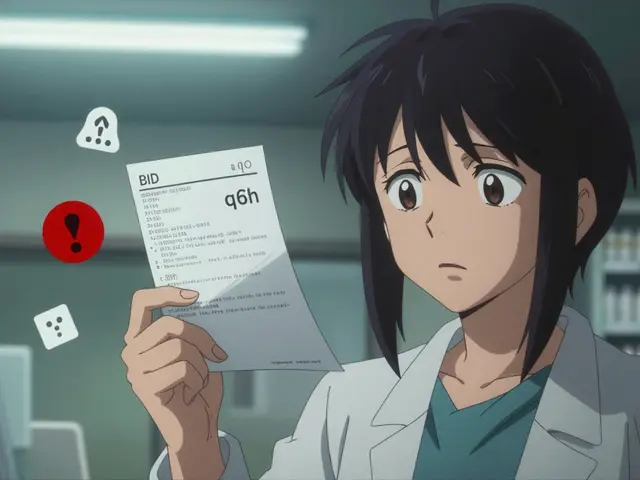
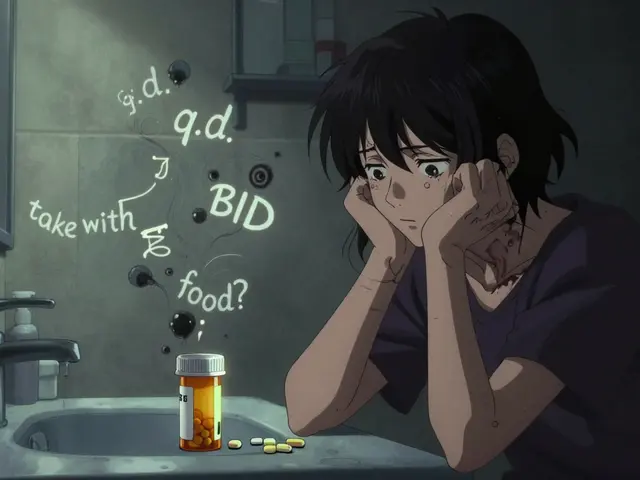
How many times have you looked at your prescription label and thought, Wait, what does this actually mean? "Take one by mouth twice daily." Sounds simple - until you realize you don’t know if "twice daily" means 8 a.m. and 8 p.m., or just anytime you remember. Or worse - your pill looks different this month, and the instructions on the bottle don’t match the last time you filled it. You’re not alone. Millions of people struggle with unclear medication directions every year, and the consequences can be serious.
Why Medication Instructions Get So Confusing
Medication instructions aren’t just written to be clear - they’re written under tight rules, from different sources, and often with outdated shorthand. The Food and Drug Administration (FDA) is the U.S. federal agency responsible for regulating drugs and requiring patient labeling for high-risk medications has been pushing for clearer language since 1998. But even with guidelines, problems persist.One major issue? Abbreviations. Words like "q.d." for "daily" or "BID" for "twice a day" might make sense to a doctor or pharmacist, but they’re confusing to patients. The Institute for Safe Medication Practices (ISMP) is a nonprofit organization that sets standards to prevent medication errors and promotes safe prescribing practices says these abbreviations are dangerous. "q.d." can be misread as "q.i.d." (four times a day). "IN" for intranasal might be mistaken for "IV" (intravenous). That’s why ISMP insists on writing everything out: "daily," "twice a day," "intranasal." No shortcuts.
Another problem? Different manufacturers. If you take a generic version of a drug - say, a cholesterol-lowering statin - the instructions might vary slightly from brand to brand. One company says "take at bedtime," another says "take with dinner." The National Institutes of Health (NIH) is a U.S. government agency that conducts and funds medical research and publishes clinical guidelines warns this isn’t just confusing - it can affect how well the drug works. Your body makes more cholesterol at night, so taking a statin at bedtime may be more effective. If you switch brands and suddenly start taking it in the morning, you could be losing that benefit.
What You Should Do When Instructions Don’t Make Sense
The best thing you can do? Ask. Don’t guess. Don’t assume. Don’t hope it’s "close enough."- Ask your pharmacist when you pick up your prescription. They’re trained to explain dosing, timing, and interactions. If your pill looks different, ask if it’s the same drug - and if the instructions changed.
- Ask your doctor if the dose or timing makes sense for your lifestyle. "Take one tablet daily" doesn’t tell you whether to take it with food, on an empty stomach, or at night. If you’re supposed to take it at bedtime but you’re always asleep by then, talk to them about adjusting the time.
- Ask about "as needed" instructions. "Take one tablet as needed for pain" sounds flexible - but how many can you take in a day? How long should you wait between doses? "As needed" doesn’t mean "whenever you feel like it."
The Centers for Disease Control and Prevention (CDC) is the U.S. federal public health agency that tracks health data and issues safety recommendations says nearly 1 in 4 Americans takes three or more medications. That means you’re juggling multiple schedules, side effects, and timing rules. A simple mistake - like taking two doses too close together - can lead to dizziness, nausea, or worse. Don’t rely on memory. Set phone alarms. Use a pill organizer. Write it down.
When Your Medication Changes - And Why It Matters
Ever notice your pills are a different color, shape, or size? That’s probably because your pharmacy switched to a different generic manufacturer. It’s legal. It’s common. But it’s not always harmless.Generic drugs are supposed to be identical to brand-name versions. But sometimes, the Medication Guide is a printed document provided with certain high-risk prescription drugs to inform patients of serious side effects and proper use that comes with the new version has different instructions. For example:
- One manufacturer says: "Take with food."
- The next says: "Take on an empty stomach."
That’s not a typo. That’s a real difference. Food can change how your body absorbs the drug. For some medications, it can make them less effective - or more toxic. The NIH recommends that clinicians review instructions from all manufacturers of the same drug to determine if a prescription should be modified because of this exact issue.
When you get a refill and the pill looks different, ask: "Is this the same drug? Are the instructions the same?" If the pharmacist says "yes," but the label says something different - insist on clarification. Don’t just take it.

What Healthcare Providers Should Be Doing
Pharmacists are required to hand you a Medication Guide is a printed document provided with certain high-risk prescription drugs to inform patients of serious side effects and proper use the first time you get certain high-risk drugs - like opioids, birth control pills, or isotretinoin (Accutane). These guides explain risks, side effects, and exact dosing rules.But here’s the catch: Medication Guides are only required for about 200 specific drugs out of thousands. Most other prescriptions? No guide. No printed instructions. Just a label with tiny print.
That’s where communication breaks down. Hospitals and clinics aren’t required to give you a guide at all - they’re supposed to explain it verbally. But in busy settings, that often doesn’t happen. The National Coordinating Council for Medication Error Prevention and Reporting (NCC MERP) is a coalition of healthcare organizations that standardizes how medication errors are reported and prevented says you should be told: the name of the drug, why you’re taking it, what it’s supposed to do, and what side effects to watch for.
If you’re not getting that - ask for it. Say: "Can you please explain how I should take this? I want to make sure I’m doing it right."
Timing Matters More Than You Think
It’s not just "how much" - it’s "when."- Cholesterol meds? Take them at night. Your liver makes more cholesterol while you sleep.
- Stomach acid meds? Take them 30 minutes before breakfast.
- Antibiotics? Some must be taken on an empty stomach. Others need food to avoid nausea.
- Diabetes meds? Timing affects blood sugar. Taking one too early or too late can cause a crash.
The MD Anderson Cancer Center is a leading cancer treatment and research center that provides detailed medication administration guidelines says "twice daily" means as close to 12 hours apart as possible - not "morning and night" if you go to bed at midnight. If you take a dose at 10 p.m. and the next at 8 a.m., that’s only 10 hours. That gap could affect how well the drug works.
Use your phone. Set two alarms. Label your pillbox. Write it down. If your doctor says "take once daily," ask: "Is there a best time of day?"

What to Ask Your Pharmacist or Doctor
Next time you get a prescription, ask these five questions:- What is this medicine for? (Don’t just accept "for high blood pressure" - ask how it helps.)
- How many times a day, and at what times? (Ask for exact hours if possible.)
- Should I take it with food, before food, or on an empty stomach?
- What happens if I miss a dose? Can I double up?
- What side effects should I watch for? When should I call you?
There’s no such thing as a "stupid" question when it comes to your meds. If you’re unsure - you’re not alone. And you’re not wrong to ask.
What You Can Do Today
- Keep a written list of all your medications - including doses, timing, and why you take them.
- Take that list to every doctor visit - even if you think they already know.
- Use a pill organizer with alarms. Even a basic one with AM/PM slots helps.
- If your pharmacy changes your medication, ask: "Is this the same? Are the instructions the same?"
- Don’t be afraid to say: "I don’t understand. Can you explain it again?"
Medication errors are one of the leading causes of preventable harm in healthcare. But most of them happen because someone didn’t ask. You have the right to understand what you’re taking - and how to take it safely.
You might like

Zola Parker
lol i just take my meds whenever i remember and hope for the best 🤷♀️ like if i take my blood pressure pill at 3am because i woke up to pee, is that bad? idk. i’m not a robot. 🤖
Elaine Parra
This is why America’s healthcare system is a joke. You’re telling me we have FDA guidelines but still let pharmacies slap on labels written in 1980s medical shorthand? We’re literally letting people overdose because we’re too cheap to print full words. This isn’t negligence-it’s systemic cruelty. And don’t even get me started on how generics are just chemical roulette. 🇺🇸
Natasha Rodríguez Lara
I’ve been taking statins for 7 years and I never knew timing mattered until my pharmacist sat me down and explained it. I was taking mine at breakfast-turns out I was missing out on 30% of the benefit. Now I take it right before bed. Also, I keep a little notebook. It’s not glamorous, but it’s saved me from mixing up my thyroid med and my vitamin D. Small habits = big safety nets.
peter vencken
i used to think "b.i.d." meant "before i go to bed" lmao. turned out it was twice a day. my pharmacist laughed but then gave me a sticker chart. now i use a pillbox with the days of the week. best thing i ever did. also-ask for the med guide. they have to give it to you. if they don’t, ask again. then ask the manager.
James Moreau
I’ve been a pharmacy tech for 12 years. Most patients don’t read the label at all. They look at the pill, see if it looks like last time, and assume it’s fine. I’ve seen people take 4 doses of antibiotics because they thought "as needed" meant "whenever I feel sick." The system isn’t broken-it’s just not designed for people to understand it. We need better packaging. And maybe a QR code that links to a 30-second video of a pharmacist explaining it.
J. Murphy
just take the pill. stop overthinking. if it’s not killing you, it’s probably fine. i’ve been on 8 meds for 10 years and i still don’t know what half of them do. i just know i feel better than before. also q.d. means daily. stop acting like this is rocket science.
Jesse Hall
this is so important. 🙌 i used to forget my insulin until i set two alarms-one for morning, one for night. now i even have a sticky note on my fridge: "insulin = before meals." small stuff, but it saves lives. also-tell your doctor if you can’t take something at night because you work nights. they’ll adjust it. they really will. you just have to ask.
Donna Fogelsong
this is all part of the pharma-industrial complex. they want you confused so you keep refilling. why else would they change pill colors every 3 months? why would they use "q.d." instead of "daily"? it’s intentional. the FDA doesn’t care. the NIH doesn’t care. they’re all paid off. your meds are designed to make you dependent, not healthy. ask yourself: who benefits? not you.
Sean Bechtelheimer
i swear the government puts tracking chips in the pills now. that’s why the instructions change every refill. they’re watching. 🤫👁️