
Skin Rashes and Medication-Induced Dermatitis: What Patients Should Know

Drug Rash Symptom Checker
Assessment Result
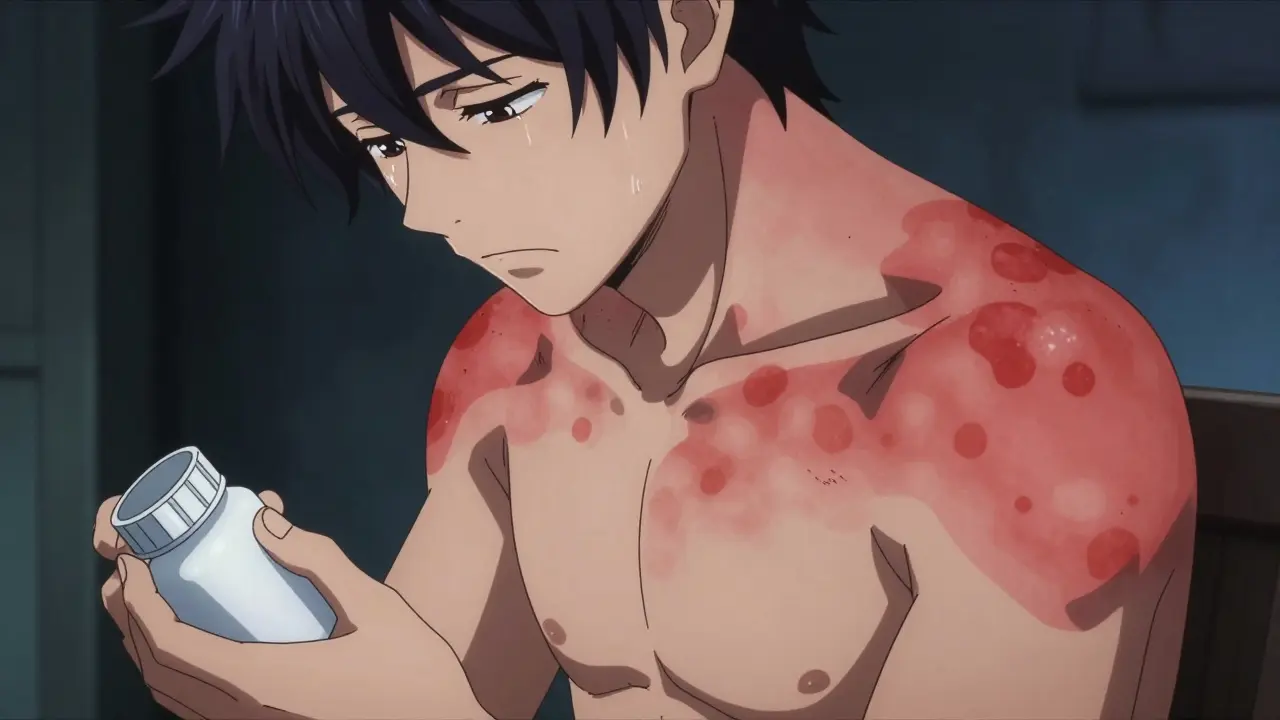
It starts as a small patch of redness on your arm. Maybe it itches a bit. You scratch it, apply some lotion, and assume it’s just heat rash or something you ate. But two days later, the spots have spread to your chest and back. This isn’t just a bad day for your skin-it might be your body screaming that a medication is causing harm.
We often think of side effects as nausea or drowsiness, but skin rashes are actually one of the most common signs that a drug isn’t agreeing with your system. In fact, between 2% and 5% of all adverse drug reactions show up on your skin first. While most of these cases are mild and resolve quickly, ignoring them can lead to dangerous complications. Understanding what to look for, when to worry, and how to manage these reactions is essential for anyone taking prescription or over-the-counter medications.
The Two Main Types of Drug Reactions
To understand why your skin reacts to medicine, you need to know there are two different mechanisms at play. It’s not always an "allergy" in the way people typically think of it.
Allergic reactions happen when your immune system mistakenly identifies a medication as a harmful invader. Your body creates antibodies to fight it, triggering histamine release. This is what causes immediate hives or swelling. Think of penicillin; if you’re truly allergic, your body attacks the drug aggressively.
On the other hand, non-allergic reactions do not involve the immune system. Instead, they result from direct toxic effects on the skin cells or increased sensitivity to sunlight (photosensitivity). For example, aspirin can cause symptoms that mimic allergies in about 1% of the population without any immune involvement. Opiates can also trigger similar responses in 10-15% of users by directly stimulating mast cells to release histamine. Knowing the difference matters because the treatment approach changes depending on which type you have.
Recognizing Common Rash Patterns
Not all drug rashes look the same. Identifying the pattern can help your doctor pinpoint the culprit faster. Here are the three most frequent presentations:
- Morbilliform Eruptions (The Most Common): These account for 90-95% of all drug rashes. They look like measles-flat, red patches or raised bumps that start on the trunk or upper arms and spread symmetrically. They usually appear 4 to 14 days after starting a new medication. If you’ve been on the drug for weeks, don’t rule it out; delayed onset is normal here.
- Urticaria (Hives): These are raised, itchy welts that can move around your body. Unlike morbilliform rashes, hives often appear within an hour of taking the medication. This suggests an IgE-mediated allergy, which is more urgent. Hives typically resolve within 24-48 hours once the drug is stopped.
- Nummular Dermatitis: This presents as distinct, coin-shaped circular plaques. They can be dry or weeping fluid. Drug-induced nummular dermatitis clears up much faster (4-8 weeks) after stopping the offending drug compared to non-drug causes, which can linger for years.
If you notice your rash is spreading rapidly, involves your mouth or eyes, or is accompanied by fever, stop reading this article and seek medical attention immediately. These are signs of severe cutaneous adverse reactions (SCARs).

When It Becomes Dangerous: SCARs and DRESS
While most rashes are annoying rather than deadly, a small percentage (<2%) of drug reactions are life-threatening. These are known as Severe Cutaneous Adverse Reactions (SCARs). They require hospitalization and intensive care.
Stevens-Johnson Syndrome (SJS) and Toxic Epidermal Necrolysis (TEN) are among the most feared. SJS affects less than 10% of the body surface area with blistering and peeling skin, while TEN affects more than 30%. The mortality rate for SJS is 5-15%, rising to 25-35% for TEN. Symptoms include painful red or purple skin that blisters and sheds, along with sores in the mouth, nose, and genitals.
Another serious condition is Drug Reaction with Eosinophilia and Systemic Symptoms (DRESS). This is a delayed-onset reaction, appearing 2 to 6 weeks after starting a medication. It doesn’t just affect the skin; it impacts internal organs like the liver, kidneys, and lungs. Key signs include a widespread rash, high fever, swollen lymph nodes, and abnormal blood counts (specifically eosinophilia).
Certain drugs carry higher risks for DRESS:
- Antiepileptics: Carbamazepine (35% of cases), Phenytoin (25%), Lamotrigine (20%).
- Allopurinol: Used for gout, responsible for 15% of DRESS cases.
- Sulfonamides: Antibiotics accounting for 12% of cases.
If you are taking any of these medications and develop a rash plus flu-like symptoms (fever, fatigue, body aches), contact your doctor immediately. Do not wait for the rash to "go away."
High-Risk Medications and Genetic Factors
Some medications are notorious for causing skin issues. According to clinical data, the top offenders include:
| Medication Class | Specific Drugs | Risk Profile |
|---|---|---|
| Antibiotics | Penicillins, Sulfonamides | Penicillins cause ~10% of all drug rashes. High risk for severe allergic reactions. |
| NSAIDs | Ibuprofen, Naproxen | Account for 25% of non-allergic drug reactions. Often cause photosensitivity. |
| Anticonvulsants | Lamotrigine, Carbamazepine | High risk for SJS/TEN and DRESS, especially in specific genetic groups. |
| Gout Medication | Allopurinol | Major trigger for DRESS syndrome. Risk varies significantly by ethnicity. |
| Diuretics/Antibiotics | Doxycycline, Hydrochlorothiazide | Primary causes of photosensitivity rashes (sun-triggered eruptions). |
Your genetics also play a surprising role. Certain human leukocyte antigen (HLA) genotypes drastically increase your risk. For instance, individuals with the HLA-B*1502 allele have a 1,000-fold higher risk of developing SJS when taking carbamazepine. This is particularly prevalent in Southeast Asian populations. Similarly, the HLA-B*5801 allele increases the risk of severe reactions to allopurinol by 580 times in Han Chinese individuals. If you belong to these demographic groups, ask your doctor about genetic screening before starting these high-risk drugs.

Immediate Steps: What To Do When A Rash Appears
Panic is natural, but action is better. Here is a practical checklist for managing a suspected drug rash:
- Do Not Stop Essential Meds Abruptly: If you are taking antiepileptics, steroids, or heart medications, stopping them suddenly can be life-threatening. Call your prescribing physician immediately. They may switch you to an alternative or taper the dose safely.
- Document Everything: Take clear photos of the rash daily. Note when you started the medication, the dosage, and any other new products (soaps, detergents) introduced recently. This helps doctors distinguish between a drug reaction and contact dermatitis.
- Soothe Mild Symptoms: For mild, itchy rashes (without blistering or breathing issues), lukewarm baths with colloidal oatmeal can help. Apply fragrance-free emollients within 3 minutes of bathing to lock in moisture. Over-the-counter hydrocortisone 1% cream applied twice daily can reduce inflammation. Oral antihistamines like cetirizine or loratadine may help with itching.
- Avoid Sun Exposure: If you suspect photosensitivity (common with tetracyclines and diuretics), stay out of direct sun. Wear protective clothing and use broad-spectrum sunscreen, though note that sunscreen alone may not prevent a drug-induced reaction.
If you experience facial swelling, difficulty breathing, wheezing, or widespread blistering, call emergency services or go to the nearest ER. These are signs of anaphylaxis or severe SCARs, which require immediate intervention.
Prevention and Future Safety
Once you’ve had a drug rash, you are sensitized. Taking the same medication again could trigger a faster and more severe reaction. Prevention centers on communication and record-keeping.
First, update your medical records. Ensure every doctor, dentist, and pharmacist knows exactly which drug caused the reaction and what the reaction looked like. Was it hives? Blistering? Just a mild itch? Specificity matters because sometimes a patient labeled "penicillin allergic" can actually tolerate related antibiotics if tested properly. Studies show that 15% of patients who report penicillin allergy can safely take it, but only formal testing (like skin prick tests) can confirm this.
Second, be wary of polypharmacy. If you are older or take five or more medications, your lifetime risk of a drug-induced skin reaction jumps to 35%. Review your meds regularly with a pharmacist. Ask if any of your current drugs interact to increase skin sensitivity. For example, combining certain antibiotics with diuretics can heighten photosensitivity risks.
Finally, consider genetic testing if you fall into high-risk ethnic categories for specific drugs. It’s a simple blood test that can save you from potentially fatal outcomes. Knowledge is your best defense against medication-induced dermatitis.
How long does a drug rash last?
Most mild drug rashes, such as morbilliform eruptions, resolve within 1 to 2 weeks after discontinuing the causative medication. Hives typically clear up within 24-48 hours. However, severe reactions like DRESS syndrome can take 3 to 6 weeks to fully resolve even with treatment. Nummular dermatitis induced by drugs usually clears in 4-8 weeks.
Can I take antihistamines for a drug rash?
Yes, oral antihistamines (like cetirizine, loratadine, or diphenhydramine) can help relieve itching associated with mild drug rashes and hives. They do not cure the underlying reaction but provide symptomatic relief. For severe rashes involving blistering or systemic symptoms, antihistamines are insufficient and medical evaluation is required.
What is the difference between an allergic and non-allergic drug rash?
An allergic drug rash involves the immune system creating antibodies against the medication, often leading to immediate symptoms like hives or swelling. Non-allergic rashes occur due to direct chemical irritation, toxicity, or increased sun sensitivity (photosensitivity) without immune involvement. Non-allergic reactions are common with NSAIDs and aspirin.
Should I stop my medication if I get a rash?
Not necessarily. For non-essential medications (like occasional pain relievers), stopping is usually safe. However, for critical medications like epilepsy drugs, heart conditions, or immunosuppressants, abrupt cessation can be dangerous. Always consult your healthcare provider before stopping prescribed drugs to ensure a safe transition or tapering plan.
Are there genetic tests for drug allergies?
Yes, pharmacogenetic testing can identify specific genes (like HLA-B*1502 or HLA-B*5801) that predispose individuals to severe skin reactions from certain drugs like carbamazepine or allopurinol. This is particularly recommended for patients of Southeast Asian or Han Chinese descent before starting these high-risk medications.
You might like

Jake Kitzmiller
I had a reaction to antibiotics once and it was scary. Just remember to talk to your doc if something looks weird. Better safe than sorry.
Dale Simpson
Great info here! Stay strong everyone. Your health is your wealth so keep an eye on those symptoms. You got this!
Charlotte Stuart
This article is painfully obvious for anyone with basic medical literacy. The distinction between allergic and non-allergic reactions is elementary immunology. I suppose some readers need this hand-holding though.
Tucker Brown
The government tracks us through these side effect reports. They use the data to target specific demographics. Dont report anything.
Sam Dudgeon
you really need to stop ignoring your body signals its not hard. why do people always wait until its too late. i told my sister this years ago but she never listens now shes stuck with chronic issues because she thought it was just heat rash. typical.
Annemarie Kautz
ugh another article telling me what i already know. my skin is always breaking out from stuff. annoying lol :)
Hema Khimasia
The pathophysiological mechanisms underlying cutaneous adverse drug reactions are complex. One must consider the role of T-cell mediated hypersensitivity versus direct cytotoxicity. It is imperative that we analyze the temporal relationship between drug initiation and symptom onset to determine causality accurately.
Kimberly Maten-ao
Why do doctors rarely warn patients about skin rashes before prescribing? It feels like we are left in the dark until it happens. I want to know more about how to prevent this before starting new meds.
alexander barrera
Only weaklings complain about side effects. In America we push through pain. This is why our healthcare system is superior. Stop whining and take your pills 💪🇺🇸
krystal Live
hey guys dont forget to drink water and rest when you feel sick. you can do it! stay positive and healthy hearts everyone <3
Alyssa Smith
I appreciate posts like this that help demystify medical jargon. It makes healthcare feel less intimidating. Thanks for sharing this important info.
Sumit gupta
pretty standard stuff. i saw this happen to a friend last year. he stopped the med and it went away. simple as that.
Bruno Sarri
I understand how frightening it can be to see unexplained changes in your body. Please know that you are not alone in this experience. Many people go through similar scares and finding the right support is key. If you are worried, please reach out to a healthcare provider who can listen without judgment. Your well-being matters deeply. We are all navigating our health journeys together. Take care of yourself during this time. It is okay to ask for help when you need it. Remember that small steps lead to better outcomes. You deserve to feel comfortable in your own skin. Let us support each other in staying informed and safe. Health is a shared responsibility. Be gentle with yourself today. There is hope and clarity ahead.