
Foodborne Illnesses Guide: Common Pathogens and How to Stay Safe


Whether it is a virus from a coworker's unwashed hands or bacteria growing in a fridge that is slightly too warm, the threats are everywhere. But you don't need to be a scientist to protect yourself. Understanding which foodborne illnesses is a disease caused by consuming contaminated food or beverages containing biological, chemical, or physical hazards are the most common and how they behave is the first step toward a safer kitchen.
The Usual Suspects: Bacteria and Viruses
Not all food poisoning is the same. Some are caused by viruses that spread like wildfire through a crowd, while others are caused by hardy bacteria that can survive in your refrigerator.
One of the biggest culprits is Norovirus. This is the leading cause of foodborne illness, triggering millions of cases annually. It isn't just about the food; it is often about the person handling the food. If an infected worker touches your ready-to-eat meal, you could be feeling sick within 12 to 48 hours. The good news is that it usually clears up in about three days, though it is an absolute nightmare while it lasts.
Then there are the bacteria. Salmonella is a heavy hitter, often linked to eggs and poultry. It doesn't just make you sick; it is responsible for a huge chunk of foodborne hospitalizations and deaths. Similarly, Campylobacter is frequently found in raw or undercooked poultry. If you've ever had bloody diarrhea and a high fever after a BBQ, this might have been the cause.
Some pathogens are more dangerous than others. Listeria monocytogenes is particularly frightening because it can grow even at refrigeration temperatures. While it doesn't cause as many cases as Norovirus, it has a massive hospitalization rate of 91%. It is especially risky for pregnant women, where it can lead to miscarriage or neonatal death.
We also have Escherichia coli (specifically the O157:H7 strain), which often comes from contaminated produce or undercooked beef. In some children, this can lead to a severe kidney complication called hemolytic uremic syndrome. Lastly, Clostridium perfringens usually pops up when large batches of meat or gravy are kept at the wrong temperature for too long, making it a common issue at catered events.
Comparing the Impact of Common Pathogens
It is easy to confuse "most common" with "most dangerous." For example, while Norovirus makes the most people sick, it rarely kills. Listeria, on the other hand, is rare but deadly.
| Pathogen | Primary Source | Incubation Period | Severity Level | Key Risk |
|---|---|---|---|---|
| Norovirus | Contaminated handlers / shellfish | 12-48 hours | Low to Moderate | Rapid spread in crowds |
| Salmonella | Eggs, poultry, animal products | 6 hours to 6 days | Moderate to High | High hospitalization rate |
| Campylobacter | Raw poultry, raw milk | 2-5 days | Moderate | Increasing antibiotic resistance |
| Listeria | Soft cheeses, deli meats | Days to months | Very High | Danger to pregnant women |
| E. coli O157:H7 | Ground beef, leafy greens | 3-4 days | High | Kidney failure (HUS) |
The Danger Zone: Why Temperature Matters
Bacteria aren't just passive hitchhikers; they are living organisms that multiply. To stop them, you need to control the temperature. The industry uses a concept called the "danger zone," which is the temperature range between 41°F (5°C) and 135°F (57°C). In this window, bacteria can double their population in a matter of minutes.
If you leave a platter of potato salad on the counter for a sunny afternoon, you are essentially creating a petri dish. To keep your food safe, hot foods must be held above 135°F and cold foods must stay below 41°F.
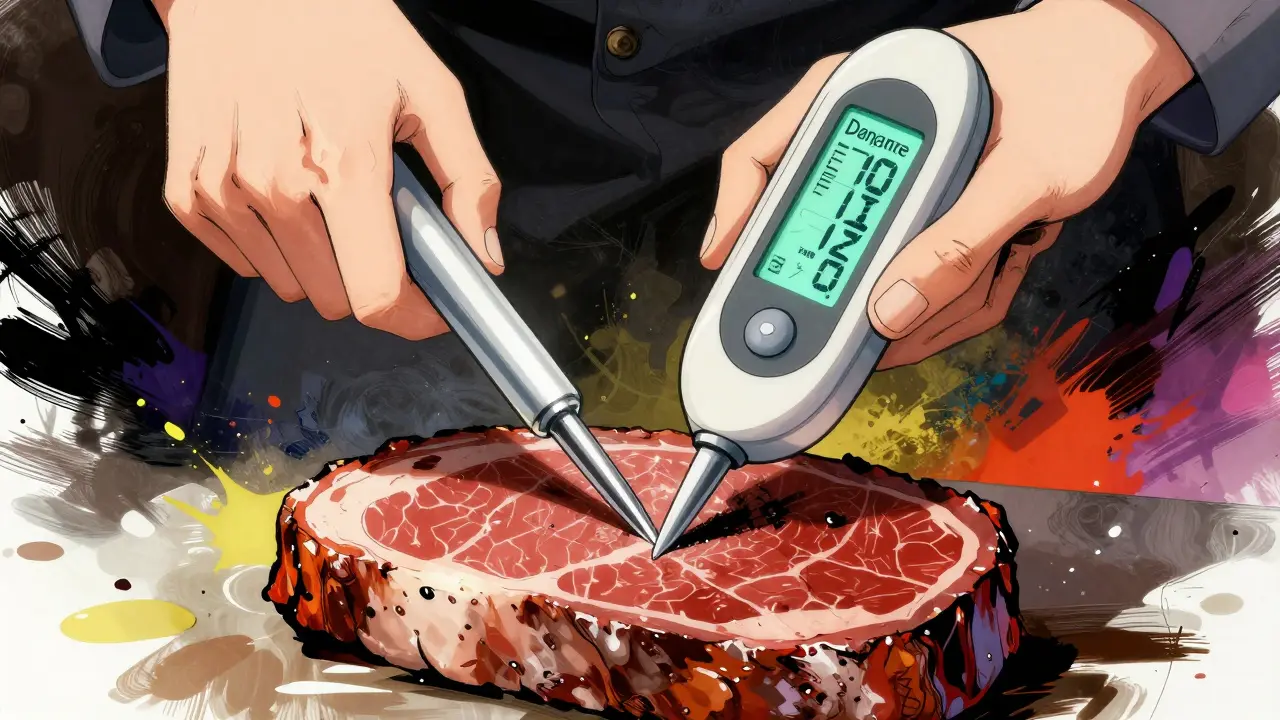
A huge mistake many people make is thawing meat at room temperature. This allows the outside of the meat to enter the danger zone while the inside is still frozen. Instead, thaw your meat in the refrigerator or under cold running water. Also, don't rely on the color of the meat to tell if it is done. Many people think a burger is safe once it stops looking pink, but that is a gamble. The only way to be sure is to use a food thermometer.
According to the USDA, you should hit these internal temperatures:
- Poultry: 165°F (74°C)
- Ground meats: 160°F (71°C)
- Whole cuts of beef/pork: 145°F (63°C) with a 3-minute rest
Stopping the Spread: Cross-Contamination and Hygiene
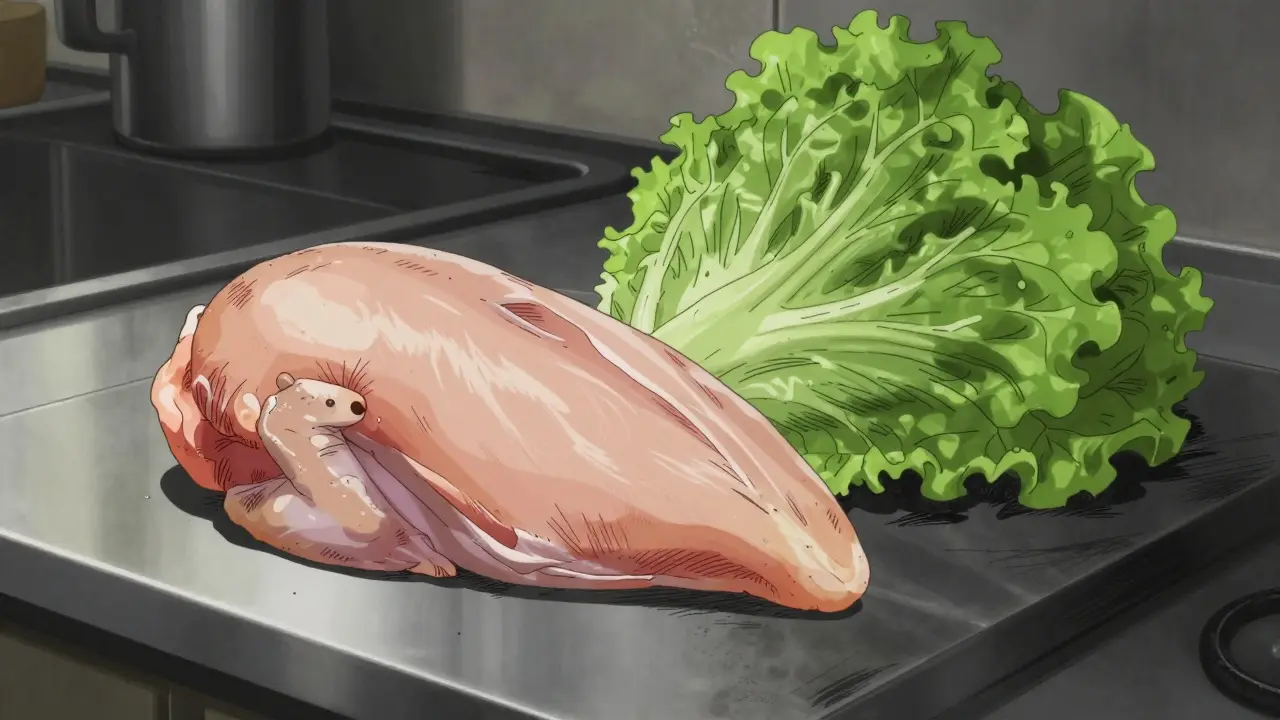
You might cook your chicken to the perfect temperature, but if you then chop lettuce on the same board without washing it, you've just transferred the bacteria. This is cross-contamination, and it is one of the most common ways people get sick at home.
A simple trick used in professional kitchens is color-coding. Use a red cutting board for raw meats and a green one for vegetables. This simple habit can reduce cross-contamination by over 60%. If you don't have colored boards, just remember: meat always goes last, or use separate boards entirely.
Then there is the human element. Handwashing is your best defense. But a quick rinse isn't enough. You need 20 seconds of scrubbing with soap and water. This is especially critical after handling raw meat, using the bathroom, or touching pets.
Be mindful of your refrigerator's cleanliness too. Listeria can hide in the drip pans or the seals of your fridge. If you haven't cleaned your refrigerator's interior in a few months, you might be harboring pathogens that are waiting for a little bit of food to land on so they can grow.
How the Pros Keep Us Safe
Behind the scenes, there is a massive system designed to stop outbreaks before they reach your plate. You might have heard of HACCP, which stands for Hazard Analysis and Critical Control Point. Developed by NASA and Pillsbury in the 60s, this system identifies where things could go wrong in the food chain and puts "control points" in place to stop it.
In the U.S., the FDA and USDA oversee these rules. The Food Safety Modernization Act (FSMA) shifted the focus from reacting to outbreaks to preventing them. This means the FDA now has the power to mandate recalls if they suspect a product is contaminated, rather than waiting for people to get sick first.
Technology is also evolving. We are moving away from old-school lab cultures that took days to grow. Now, scientists use whole genome sequencing to map the DNA of a pathogen. This allows them to trace a Salmonella outbreak back to a specific farm or processing plant in just a few days, rather than weeks. Looking ahead, the "New Era of Smarter Food Safety" is bringing AI and blockchain into the mix to make food traceability almost instant.
Common Mistakes and How to Fix Them
Even people who think they are clean often make a few critical errors. Let's look at some real-world scenarios.
Scenario 1: The "Quick Rinse"
You've handled raw chicken and give your hands a 5-second rinse with water. The Fix: Use soap and scrub for 20 seconds. Water alone doesn't remove the oils and proteins that bacteria cling to.
Scenario 2: The Countertop Thaw
You remember you need steak for dinner at 5 PM, so you put the frozen pack on the counter at 2 PM. The Fix: Plan ahead and thaw in the fridge, or use the cold-water method. Keeping the meat out of the danger zone is key.
Scenario 3: The "Look" Test
You cut into a pork chop, it's no longer pink, so you serve it. The Fix: Buy a digital meat thermometer. Color is an unreliable indicator of safety, and undercooking is a primary cause of Campylobacter and Salmonella infections.
How can I tell if food has gone bad?
Not all contaminated food looks, smells, or tastes bad. Pathogens like Salmonella or Norovirus don't always change the appearance of the food. The best way to tell if food is unsafe is to check the "use-by" date and ensure it has been stored at the correct temperature. If in doubt, throw it out.
Can you get food poisoning from vegetables?
Yes, absolutely. Leafy greens and sprouts are common sources of E. coli and Cyclospora. This usually happens through contaminated irrigation water or soil. Washing produce thoroughly and avoiding pre-cut salads from untrusted sources can help reduce the risk.
Is freezing food a way to kill bacteria?
Freezing does not kill most bacteria; it simply puts them in a "sleep" state (dormancy). Once the food thaws and warms up, the bacteria wake up and start multiplying again. To kill bacteria, you must use heat (cooking).
How long does food poisoning typically last?
It depends on the pathogen. Norovirus is usually a short, intense burst lasting 1 to 3 days. Salmonella and Campylobacter can last a week or more. Some infections, like Listeria, can have symptoms that don't appear for weeks.
What is the safest way to defrost meat?
The safest method is in the refrigerator, which keeps the meat at a constant, safe temperature. The second safest is in a leak-proof bag submerged in cold tap water, changing the water every 30 minutes.
You might like

Mike Arrant
Most of you guys are probably still using the eye-ball method to cook your steaks like some cavemen. Get a thermometer or just accept that you love gambling with your gut health.
Ajinkya Joshi
Oh wow, a guide telling us to wash our hands and not eat raw chicken. Truly ground-breaking stuff. I'm sure the FDA is thrilled we've finally discovered the concept of soap.
Divyanshu Giri
This is absolute gold! Let's all crush those germs together and keep our kitchens sparkling clean! Stay safe and stay hungry my friends!
Rick Brewster
one must consider that the act of eating is not merely biological sustenance but a dance with decay and the irony of our modern obsession with sterilization is that we forget we are but organic matter waiting to return to the earth in a way that is quite poetic if you think about the microbiome as a cosmic entity that transcends the petty boundaries of a cutting board though i suspect most people lack the intellectual depth to see the existential dread in a piece of deli meat
Ally Warren
There is a certain beauty in the fragility of our health. It reminds us that despite our technological advancements, we are still beholden to the invisible forces of nature.
Sarah Watters
Funny how this guide focuses on "handlers" and "systems." I wonder who actually funds these FSMA mandates and why they're so keen on controlling the food chain. Just a thought for those who still believe everything the government says about "safety." It smells like control to me.
Olayinka Ibukunoluwa Mercy
It is so important to look after one another!!! ❤️ Please remember to share this knowledge with your elders who might not have digital thermometers... it makes such a difference in the community!! 🌟😊
Saptatshi Biswas
The sheer audacity to suggest that "untrusted sources" are the primary risk for leafy greens is an insult to our agricultural standards. The analysis here is surface-level at best and fails to acknowledge the geopolitical nuances of food exports. Utterly pathetic.
Dan Wizard
I've always wondered about the transition from the old lab cultures to the whole genome sequencing mentioned here, as it seems like a massive leap in efficiency that could potentially save countless lives by pinpointing the source of an outbreak before it even spreads to other states or countries, which is honestly quite fascinating when you think about the scale of global trade today.
Amy Fredericks
I love how this simplifies everything! It's so encouraging to know that small changes like a color-coded board can make such a huge impact on our families' health. Let's all try to implement one new habit this week!
Dave Edwards
Wait, so we're just supposed to trust the USDA? 🙄 I've had medium-rare steaks my whole life and I'm perfectly fine. This obsession with 160 degrees is just ruined flavor for the sake of a tiny percentage of risk. Absolutely ridiculous! 🙄
Mel Glick
Get a grip. The meat temperature isn't a suggestion, it's science. If you like eating raw bacteria, go ahead, but don't complain when you're puking your guts out for a week. Some people just refuse to learn.
Anantha Lakshmi
Let's focus on the positive side of this! We have the tools to stay safe and healthy! 🌈 Just a little bit of effort in the kitchen leads to a lifetime of wellness! Keep going everyone! 💪✨