How Drug-Drug Interactions Work: Mechanisms, Effects, and Prevention

Drug Interaction Checker
Imagine taking a new antibiotic for a simple infection, only to find that your daily birth control pill stops working. Or perhaps you’re managing high blood pressure with two different medications, unaware that together they are silently pushing your potassium levels into a dangerous zone. These aren’t just bad luck scenarios; they are drug-drug interactions (DDIs), where one medication changes how another works in your body.
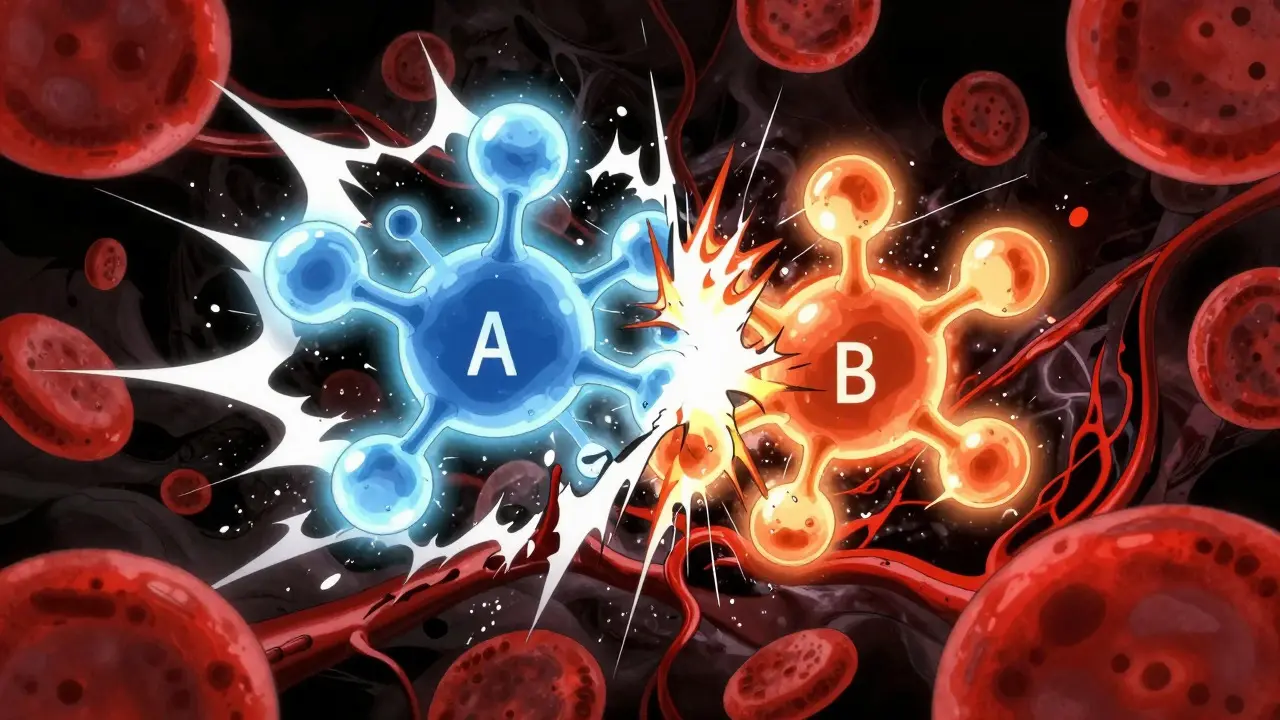
We often think of drugs as isolated tools, each doing its own job. But inside your bloodstream, they are neighbors sharing the same space, competing for resources, and sometimes interfering with each other’s tasks. Understanding how these interactions work isn’t just academic-it’s the difference between effective treatment and hospitalization. Let’s break down exactly what happens when medications collide.
The Two Main Ways Drugs Clash
To understand why interactions happen, we need to look at the two primary mechanisms: pharmacokinetic and pharmacodynamic. Think of pharmacokinetics as what your body does to the drug (absorption, distribution, metabolism, excretion), and pharmacodynamics as what the drug does to your body (the actual effect).
Pharmacokinetic interactions occur when one drug alters the concentration of another in your system. If Drug A prevents Drug B from being broken down, Drug B builds up to toxic levels. Conversely, if Drug A speeds up the breakdown of Drug B, Drug B might not work at all. This is the most common type of interaction because it involves the busywork of processing chemicals.
Pharmacodynamic interactions are different. Here, the drug levels stay the same, but their effects clash or amplify each other. For example, taking a sedative like benzodiazepines with an opioid painkiller doesn’t change how much of either drug is in your blood, but both slow down your breathing. Together, they can stop your breathing entirely. It’s a direct collision of biological effects.
Metabolism: The Bottleneck of Drug Processing
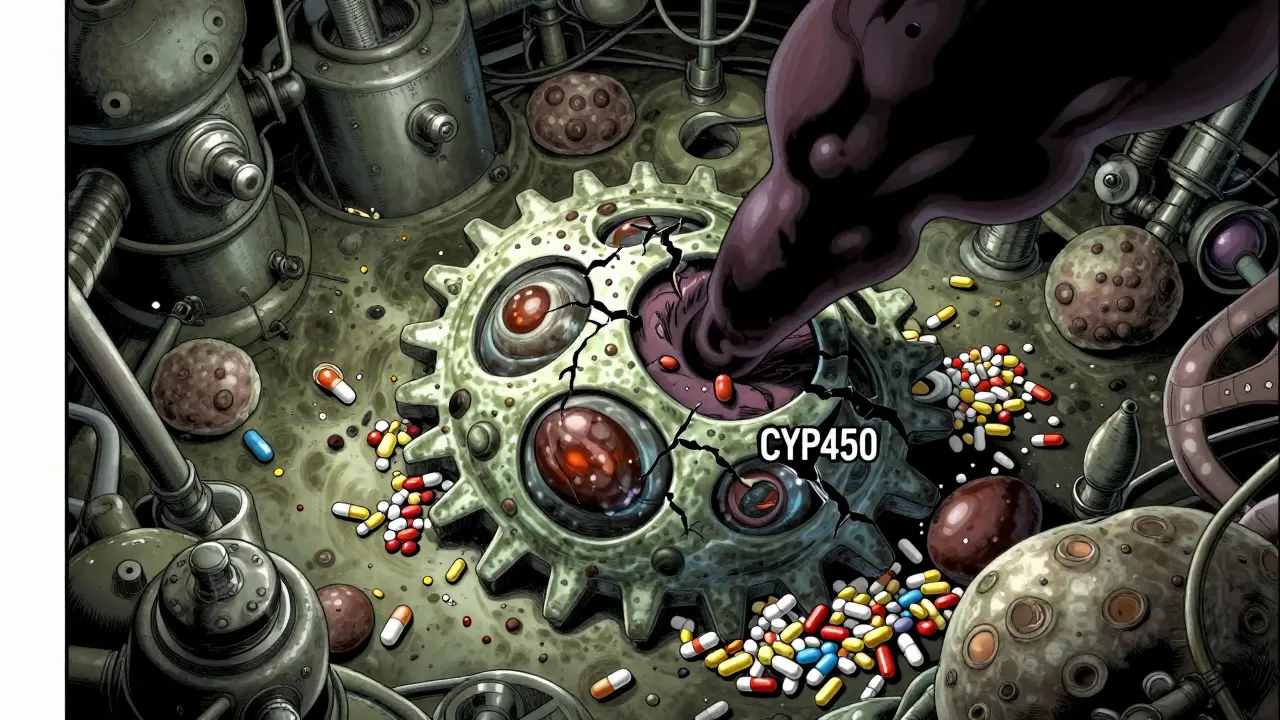
The biggest source of pharmacokinetic trouble lies in your liver, specifically with a family of enzymes called Cytochrome P450 (CYP450). These enzymes act like garbage disposals, breaking down drugs so your body can eliminate them. About 70-80% of all prescription drugs rely on this system.
The star player here is CYP3A4. It metabolizes roughly 50% of all clinically used drugs. When a new drug enters the mix, it can either jam this disposal unit or supercharge it.
- Inhibition (Jamming): One drug blocks the enzyme, causing the other drug to pile up. A classic example is ketoconazole (an antifungal) blocking the breakdown of simvastatin (a cholesterol drug). This can increase simvastatin levels by 10 to 20 times, leading to muscle damage known as rhabdomyolysis.
- Induction (Supercharging): One drug tells the liver to make more enzymes, speeding up the breakdown of the other. St. John’s Wort, a popular herbal supplement, induces CYP3A4. If you take it with cyclosporine (an immunosuppressant), your body clears the cyclosporine too fast, reducing its effectiveness by 50-60% and risking organ rejection.
Other key players include CYP2D6, which handles many antidepressants and painkillers, and CYP2C9, crucial for blood thinners like warfarin. Genetic differences mean some people naturally have slower or faster versions of these enzymes, making them more or less susceptible to these interactions.
Beyond the Liver: Transporters and Absorption
Your body has gatekeepers besides liver enzymes. P-glycoprotein (P-gp) is a transporter protein found in your gut, kidneys, and brain barrier. It pumps drugs out of cells, limiting how much gets absorbed or stays in the brain.
If you take verapamil (a heart medication) with digoxin (another heart drug), verapamil inhibits P-gp. Digoxin, which relies on P-gp to be pumped out, suddenly stays in your system longer. Levels can jump by 50-100%, potentially causing life-threatening heart rhythms.
Absorption issues also play a role. Some drugs change the pH of your stomach or alter gut motility. Antacids, for instance, can bind to certain antibiotics like tetracyclines, preventing them from entering your bloodstream altogether. It’s not about metabolism; it’s about the drug never getting past the front door.
When Effects Collide: Pharmacodynamic Risks
Even if drug levels are perfect, their combined effects can be disastrous. These interactions fall into two categories: additive/synergistic and antagonistic.
Additive/Synergistic Effects: Two drugs do the same thing, and together they do it too well. Combining ACE inhibitors (for blood pressure) with potassium-sparing diuretics (like amiloride) reduces potassium excretion through two different pathways. The result? Hyperkalemia (high potassium), which can stop your heart. Similarly, mixing fluoroquinolone antibiotics with macrolides prolongs the QT interval in your heart’s electrical cycle, increasing the risk of a fatal arrhythmia called torsades de pointes by nearly six times.
Antagonistic Effects: One drug cancels out the other. Beta-blockers slow your heart rate, while albuterol (an asthma inhaler) speeds it up. Taking them together means neither works effectively, leaving your asthma uncontrolled or your blood pressure unchecked.
Who Is Most at Risk?
Not everyone faces the same level of danger. The risk skyrockets with polypharmacy-taking five or more medications daily. This is common in older adults. Studies show DDIs account for 3-5% of hospital admissions in patients aged 65 and older.
The American Geriatrics Society’s Beers Criteria identifies 30 high-risk combinations for seniors. One major red flag is combining NSAIDs (like ibuprofen) with anticoagulants (like warfarin). NSAIDs irritate the stomach lining and inhibit platelet function, while warfarin thins the blood. Together, they multiply bleeding risk by 3 to 5 times.
Genetics also matter. If you are a "poor metabolizer" due to genetic variants in CYP2D6, drugs like codeine may not convert to morphine properly, offering no pain relief. Conversely, "ultrarapid metabolizers" might convert codeine to morphine too quickly, leading to toxicity, especially if combined with other CNS depressants.
| Drug A (Precipitant) | Drug B (Victim) | Mechanism | Clinical Consequence |
|---|---|---|---|
| Ketoconazole | Simvastatin | CYP3A4 Inhibition | Rhabdomyolysis (muscle breakdown) |
| Warfarin | Ibuprofen | Pharmacodynamic + GI irritation | Severe bleeding |
| Verapamil | Digoxin | P-gp Inhibition | Cardiac arrhythmias |
| St. John’s Wort | Cyclosporine | CYP3A4 Induction | Organ transplant rejection |
| ACE Inhibitors | Amiloride | Pharmacodynamic (Potassium retention) | Hyperkalemia (heart risk) |
Why Current Safety Nets Are Failing
You might think electronic health records (EHRs) solve this problem. They try, but they’re noisy. A 2022 review found that 80-90% of DDI alerts in EHR systems are false positives or low-risk warnings. Clinicians override 49-96% of these alerts, leading to "alert fatigue." When every warning screams equally, doctors start ignoring them all.
This gap leaves room for error. Community pharmacists step in to fill this void. Research shows pharmacist interventions reduce clinically significant DDIs by 37%. They perform medication regimen reviews, catching issues that automated systems miss or bury under noise.
Practical Steps to Protect Yourself
Preventing DDIs requires active participation. Here’s how to stay safe:
- Maintain a Master List: Keep an updated list of all prescriptions, over-the-counter meds, vitamins, and herbal supplements. Show this to every doctor and pharmacist.
- Use One Pharmacy: Having all your medications filled at one location allows the pharmacist’s software to catch interactions across all your prescriptions.
- Ask About Supplements: Don’t assume herbs are harmless. St. John’s Wort, garlic, and ginkgo biloba all have potent interaction profiles.
- Monitor for Symptoms: If you start a new med and feel unusually tired, dizzy, or notice bruising, contact your provider immediately. These could be signs of an interaction.
- Check Resources: Tools like the Liverpool HIV-Drug Interactions Checker or FDA tables provide detailed data for complex regimens.
The future of DDI management involves artificial intelligence and pharmacogenomics. Machine learning models trained on millions of patient records are now predicting interactions with over 94% accuracy, far surpassing traditional rule-based systems. Meanwhile, guidelines from the Clinical Pharmacogenetics Implementation Consortium (CPIC) help tailor treatments based on your genetic makeup, reducing guesswork.
Drug interactions are complex, but they are predictable. By understanding the mechanisms-whether it’s CYP3A4 inhibition or pharmacodynamic synergy-you can advocate for safer care. Always talk to your healthcare team before adding or changing any medication. Your body is a delicate ecosystem; treat it with respect.
What is the most common cause of drug-drug interactions?
The most common cause is metabolic interference via Cytochrome P450 enzymes, particularly CYP3A4. When one drug inhibits or induces these enzymes, it drastically changes the blood concentration of other drugs processed by the same pathway.
Can over-the-counter medicines cause serious interactions?
Yes. Over-the-counter drugs like ibuprofen, aspirin, and antacids can interact severely with prescription medications. For example, NSAIDs like ibuprofen increase bleeding risk when taken with warfarin, and antacids can prevent absorption of certain antibiotics.
How long does it take for a drug interaction to show effects?
It varies. Pharmacokinetic interactions involving enzyme induction (like St. John’s Wort) may take days to weeks to fully develop as new enzymes are produced. Inhibitory effects or pharmacodynamic clashes can occur within hours or even minutes of taking the second drug.
Are herbal supplements safe to mix with prescription drugs?
Not necessarily. Herbal supplements are biologically active. St. John’s Wort is a potent inducer of CYP3A4 and can render many drugs ineffective. Garlic and ginkgo can increase bleeding risks. Always disclose supplement use to your healthcare provider.
What should I do if I suspect a drug interaction?
Do not stop taking your medication abruptly without consulting your doctor. Contact your pharmacist or physician immediately. Describe your symptoms and provide a list of all medications and supplements you are currently taking. They may adjust doses or switch medications to resolve the issue.
You might like