
Questions to Ask Your Doctor Before Starting a New Medication

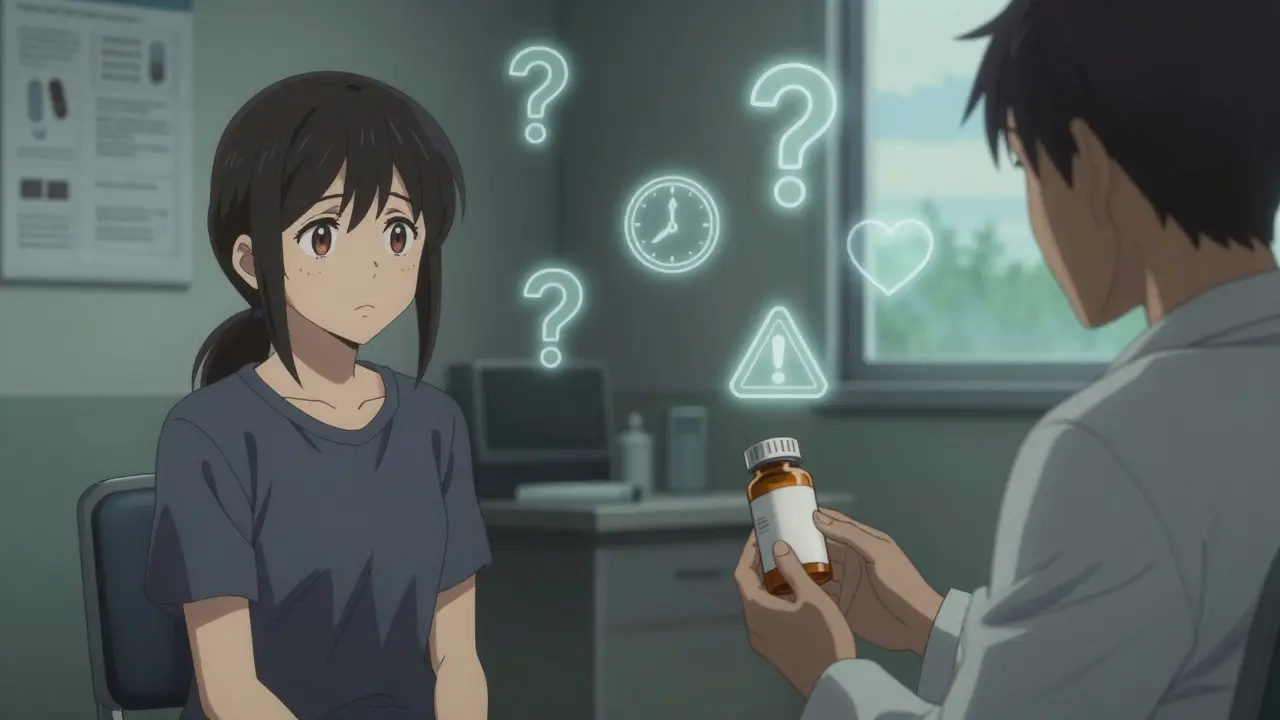
Don’t Start That New Medication Without Asking These Questions
It’s easy to feel overwhelmed when your doctor hands you a prescription. You’re told it’s important, you’re given a bottle, and then you’re sent on your way. But what if you don’t know why you’re taking it? What if you’re not sure how to take it? What if you’re scared of the side effects but too nervous to ask?
You’re not alone. Nearly half of all patients don’t take their medications as prescribed. And a big reason? They simply don’t understand them. A 2021 study in JAMA Internal Medicine found that 50% of people skip doses, stop early, or take things wrong - not because they’re careless, but because no one took the time to explain it clearly.
Asking questions isn’t being difficult. It’s being smart. And it’s safer. Patients who ask at least five key questions before starting a new drug have 32% fewer bad reactions, according to a 10,000-patient study from UCLA. Here’s what you need to know before you leave the office.
What Exactly Is This Medication, and Why Am I Taking It?
Start with the basics. Don’t just accept the name on the bottle. Ask for both the brand name and the generic name. Many errors happen because patients mix up similar-sounding drugs. One study found that 23% of medication mistakes come from confusion over names.
Then ask: What condition is this actually treating? Is it for high blood pressure? Depression? Acid reflux? Don’t settle for vague answers like “it helps with your symptoms.” You need to know the link between the drug and your health issue. If your doctor says, “This will help your joint pain,” ask, “How? What’s it doing inside my body?”
Understanding the purpose helps you recognize if the drug is working - or if something’s wrong. If you don’t know why you’re taking it, you won’t know when to expect results. And that’s when people quit too soon.
How and When Do I Take This?
It sounds simple, but 34% of patients misunderstand how to take their meds, according to the Agency for Healthcare Research and Quality. That’s not because they’re dumb - it’s because instructions are often rushed or unclear.
Ask: Do I take this with food, on an empty stomach, or does it matter? Some drugs need food to be absorbed. Others can upset your stomach if taken with anything. Timing matters too. Is it once a day? Should it be at breakfast, bedtime, or spread out evenly?
Also ask: How many milligrams am I supposed to take? Don’t assume the pill you get is the same as what was written. Dose changes happen. Write it down. And ask: How long should I take this? Is it for 10 days? Three months? Forever? If you think it’s temporary but it’s actually long-term, you might stop too early - and risk your condition coming back worse.
How Will I Know If It’s Working?
This is one of the most overlooked questions. A 2022 study found that 68% of people quit their meds because they didn’t feel better right away - even though the drug was working fine.
Ask: When should I start noticing a difference? Some drugs take days. Others take weeks. Antidepressants, for example, often need 4 to 6 weeks before you feel any change. If your doctor says “it works fast” but you don’t feel better in two days, you might assume it’s useless. That’s when people stop - and end up worse.
Also ask: What signs will tell me it’s actually helping? For blood pressure meds, is it lower readings? For anxiety meds, is it fewer panic attacks? For antibiotics, is the fever gone? Be specific. Write down what to look for. That way, you’re not guessing. You’re measuring.
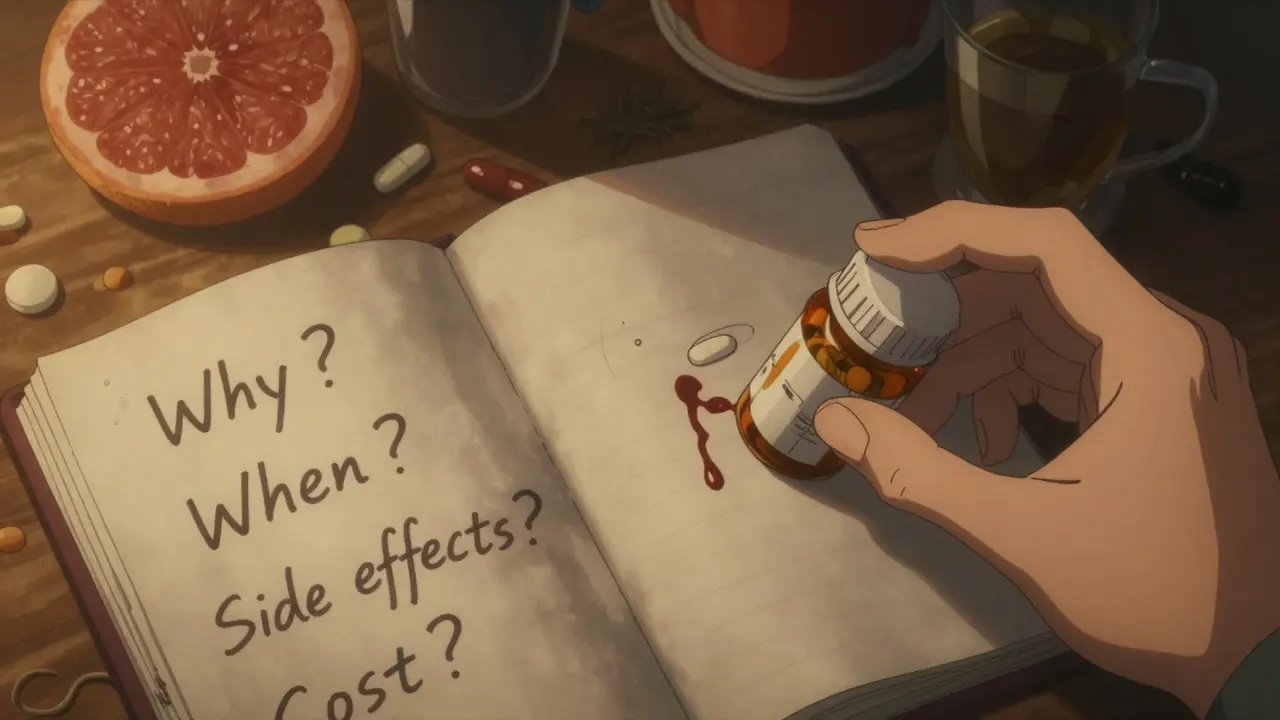
What Side Effects Should I Expect - and Which Ones Are Dangerous?
Side effects scare people. And that’s okay. But not all side effects are bad. Some are normal and go away. Others mean you need to call your doctor right away.
Ask: What side effects are common in the first few days or weeks? Nausea, drowsiness, dizziness - these often fade as your body adjusts. But if your doctor says “you might feel tired,” and you end up so dizzy you can’t stand, you need to know whether that’s normal or a red flag.
Then ask: Which side effects mean I should stop taking this or go to the ER? Think: chest pain, trouble breathing, swelling, severe rash, confusion, suicidal thoughts. These aren’t “mild.” They’re emergencies. Know the warning signs before they happen.
And ask: How long should I wait before deciding a side effect won’t go away? If you’re told “it usually clears up in a week,” but you’re still dizzy after 10 days, you have permission to call back. Don’t suffer silently.
Will This Interact With Anything Else I’m Taking?
Most people don’t realize how many things can interfere with a new drug. You’re not just taking one pill. You’re probably taking vitamins, supplements, over-the-counter painkillers, even grapefruit juice.
Ask: Does this interact with my current medications, supplements, or herbal products? Even something as simple as St. John’s Wort can cancel out antidepressants. Or ibuprofen can raise your blood pressure if you’re on a beta-blocker.
Also ask: Are there foods, drinks, or activities I need to avoid? Alcohol? Sun exposure? Driving? Some meds make you dizzy. Others make you sunburn faster. One patient in a Reddit thread shared that asking about interactions saved her life - her new blood pressure drug dangerously amplified her antidepressant. She never would’ve known unless she asked.
Bring a list of everything you take - including doses and how often. Studies show patients who do this reduce interaction risks by 63%.
Are There Other Options - and Why This One?
Doctors don’t always offer alternatives. But you deserve to know if there’s another choice.
Ask: Why this drug and not another? Is it cheaper? More effective? Fewer side effects? Is it the first-line option, or was it picked because it’s what’s in stock?
Also ask: Is genetic testing right for me? Pharmacogenetic testing - which looks at your DNA to predict how you’ll respond to certain drugs - is now used in over 300,000 cases a year. It can tell if you’ll metabolize a drug too fast or too slow, which affects dosing and safety. If you’ve had bad reactions to meds before, this test could prevent future problems.
And don’t be afraid to ask: What’s the cost? Are there generics? Is there a patient assistance program? One in four people skip doses because they can’t afford their meds. If cost is a barrier, your doctor might be able to switch you to a cheaper option - or help you find a coupon or program.

When Do I Come Back? What If This Doesn’t Work?
Too many patients start a new drug and never hear from their doctor again. That’s dangerous. A 2022 study found that 47% of people don’t schedule follow-ups - even when they’re supposed to.
Ask: When should we check in? Is it in two weeks? A month? Do you need blood tests? Are you supposed to call if you feel worse?
And ask: What’s the plan if this doesn’t work? Will we try a higher dose? A different drug? A combination? You need to know the next steps before you start - not after you’ve wasted weeks on something that’s not helping.
Write down the date of your follow-up. Set a reminder on your phone. Don’t rely on memory. If you forget, you might miss the window to adjust your treatment - and your health could suffer.
How to Prepare So You Don’t Forget Anything
Doctors are busy. Visits are short - often just 15 minutes. You won’t remember everything unless you prepare.
Here’s how to make the most of your time:
- Bring a full list of everything you take - prescriptions, vitamins, supplements, OTC drugs, even herbal teas. Include doses and how often.
- Write down your questions ahead of time. Don’t rely on memory. Use the questions above as a guide.
- Take notes during the visit. Or bring someone with you to listen. Studies show writing things down improves memory by 70%.
- Ask for written instructions - even if it’s just a printed sheet or a link to a patient guide.
- Ask for clarification if something sounds confusing. Say: “Can you explain that like I’m 12?” If your doctor gets frustrated, that’s a red flag. Good doctors welcome questions.
Some clinics now give out “Medication Question Cards” - visual prompts with icons for common concerns. They’re especially helpful if you have low health literacy. Ask your pharmacist if they have them.
What If Your Doctor Gets Defensive?
Some providers feel threatened when patients ask questions. A 2022 survey found that 39% of patients felt rushed or dismissed when they asked more than three questions.
If that happens, stay calm. Say: “I’m not challenging you. I just want to make sure I understand so I can take this safely.” Most doctors will soften. If they don’t - consider finding another provider. Your health isn’t negotiable.
Remember: You’re not a passive recipient. You’re a partner in your care. The best outcomes happen when patients speak up - not when they stay quiet out of fear or politeness.
Final Thought: This Isn’t Just About Medication - It’s About Control
Starting a new drug can feel like giving up control. But asking these questions? That’s how you take it back.
You’re not just getting a pill. You’re getting a tool - one that can improve your life, or harm it, depending on how well you understand it. The more you know, the safer you are. The more you ask, the more your doctor learns about you.
Don’t wait until something goes wrong. Ask now. Write it down. Bring it with you. Your future self will thank you.
What’s the most important question to ask before starting a new medication?
The most important question is: "What is this medication for, and how will I know if it’s working?" Without knowing the purpose and the signs of effectiveness, you can’t tell if the drug is helping or if you need to call your doctor. This single question prevents premature discontinuation and helps you track progress accurately.
Can I ask about the cost of the medication?
Absolutely. One in four people skip doses because they can’t afford their meds. Ask if there’s a generic version, if your insurance covers it, or if the manufacturer offers a discount program. Many drug companies have patient assistance programs you might qualify for. Cost is part of your treatment plan - not an afterthought.
Should I bring a list of all my current medications?
Yes. Always. Include prescriptions, over-the-counter drugs, vitamins, supplements, and even herbal remedies. Studies show patients who bring a full list reduce dangerous drug interactions by 63%. Don’t rely on memory - write it down, even if it’s on a napkin.
What if I forget to ask a question during the appointment?
Call your doctor’s office or pharmacist the same day. Most clinics have nurses or pharmacists who can answer follow-up questions. Don’t wait until you’re already taking the pill. You have a right to clear information - even after the appointment ends.
Is it okay to ask about genetic testing for medications?
Yes - especially if you’ve had bad reactions to meds before, or if you’re taking multiple drugs. Pharmacogenetic testing looks at your genes to predict how your body will respond. It’s now used in over 300,000 cases a year and can help avoid trial-and-error prescribing. Ask if your doctor recommends it for your situation.
How do I know if a side effect is serious enough to call my doctor?
If a side effect is new, sudden, severe, or getting worse - call. Examples: chest pain, trouble breathing, swelling of the face or throat, severe rash, confusion, or thoughts of self-harm. These aren’t normal. Even if your doctor said they were “possible,” if they’re intense or life-altering, treat them as emergencies.
Can I use an app to help track my questions and answers?
Yes. Apps like Hero Health and Medisafe help you log medications, set reminders, and store answers to your questions. Some even sync with your pharmacy. Patients using these tools see 38% fewer initial adherence failures. If you’re on multiple meds, it’s worth trying.
You might like

Solomon Ahonsi
Ugh, another preachy article. Like I don't already know I should ask questions. But most doctors act like you're wasting their time if you dare to open your mouth. I got prescribed something last month and the nurse handed me a sheet with a barcode and said "Google it." Thanks, I guess.
George Firican
There's a profound irony in how modern medicine treats patients as passive recipients of chemical interventions rather than active participants in their own biological narrative. The act of questioning isn't merely practical-it's an existential reclamation of agency in a system that thrives on compliance. When we fail to interrogate the purpose of a pill, we surrender not just our health, but our autonomy to algorithmic protocols and pharmaceutical incentives.
Matt W
This is so true. I had a doctor tell me 'it's just for anxiety' and didn't explain what it did. I ended up feeling like a zombie for two weeks. Finally asked what it was for-turns out it was for sleep, not anxiety. I didn't even know I was supposed to be sleeping better, not feeling drugged. Always ask. Always.
Anthony Massirman
Just ask what it's for and how you'll know it's working. Done.
Brittany Marioni
I always bring a printed list-every pill, every supplement, every tea I drink that has 'natural' in the name. And I write down every answer. I use a notebook with colored tabs. Seriously, if you're on more than three meds, you're not remembering anything. And yes, you can say, 'Can you explain this like I'm 12?'-I do it all the time.
phara don
I asked about genetic testing last time and my doc laughed. Said it's 'for rich people.' But then I Googled it and found out my pharmacy offers it for $99 with insurance. I got tested. Turns out I metabolize SSRIs super slow. Now I'm on half the dose and not feeling like a zombie. So yeah, ask. Even if they roll their eyes.
Bob Hynes
bro i just took that blood pressure med and my whole face turned red and i felt like i was gonna pass out and i was like 'yo is this normal?' and the pharmacist was like 'oh that's called flushing it's fine' and i was like 'no it's not fine i think i'm dying' and then i called my doc and they were like 'oh shit sorry we forgot to warn you' so yeah ask about side effects like your life depends on it because it does
Eli Kiseop
I forgot to ask about grapefruit juice and now I can't eat my morning grapefruit and I hate that I didn't ask
Ellie Norris
Oh my gosh yes!! I once took a med that made me super dizzy and I thought I was just tired. Turned out it was interacting with my fish oil. My pharmacist spotted it when I brought in my list. I always take my meds list to the pharmacy now-sometimes they catch things the doctor missed. Don't be shy, they love it when you're prepared!
larry keenan
The empirical evidence supporting pre-prescription patient inquiry is robust, particularly with regard to medication adherence and adverse event mitigation. A systematic review published in the Journal of General Internal Medicine demonstrated a statistically significant reduction in hospitalizations among patients who engaged in structured pre-prescription dialogue with clinicians. The construct of patient autonomy, while culturally valorized, remains underutilized in primary care settings due to systemic time constraints and hierarchical communication paradigms.
Nick Flake
This post hit me right in the soul 🫂. I used to just swallow pills like candy. Then my mom had a bad reaction and almost went to the ER. Now I ask EVERYTHING. I even make my kids ask questions when they get their flu shots. Knowledge isn't power-it's protection. And your future self is gonna hug you for doing this.
Akhona Myeki
In South Africa, we do not waste time with such trivialities. We take what the doctor gives and endure. If you are weak enough to need explanations, perhaps you should not be taking medication at all. This Western obsession with questioning authority is a luxury of the over-educated. We have real problems here. We do not have time for your questionnaires.
Chinmoy Kumar
i askd my doc why this med and he said 'because its cheap' and i was like 'oh ok' but then i looked it up and it had like 10x more side effects than the other one so i asked again and he switched it. so yeah ask about cost and alternatives. they dont always tell you the truth unless you push.
Bridget Molokomme
So let me get this straight. I’m supposed to interrogate my doctor like a courtroom lawyer just to get a prescription? And if they get ‘defensive’ I should ‘find another provider’? Cool. So now I’m not just sick-I’m also a corporate litigator who needs a 15-minute TED Talk before I can get a pill. Thanks, I guess.