
How to Create a Medication Expiration Review Schedule

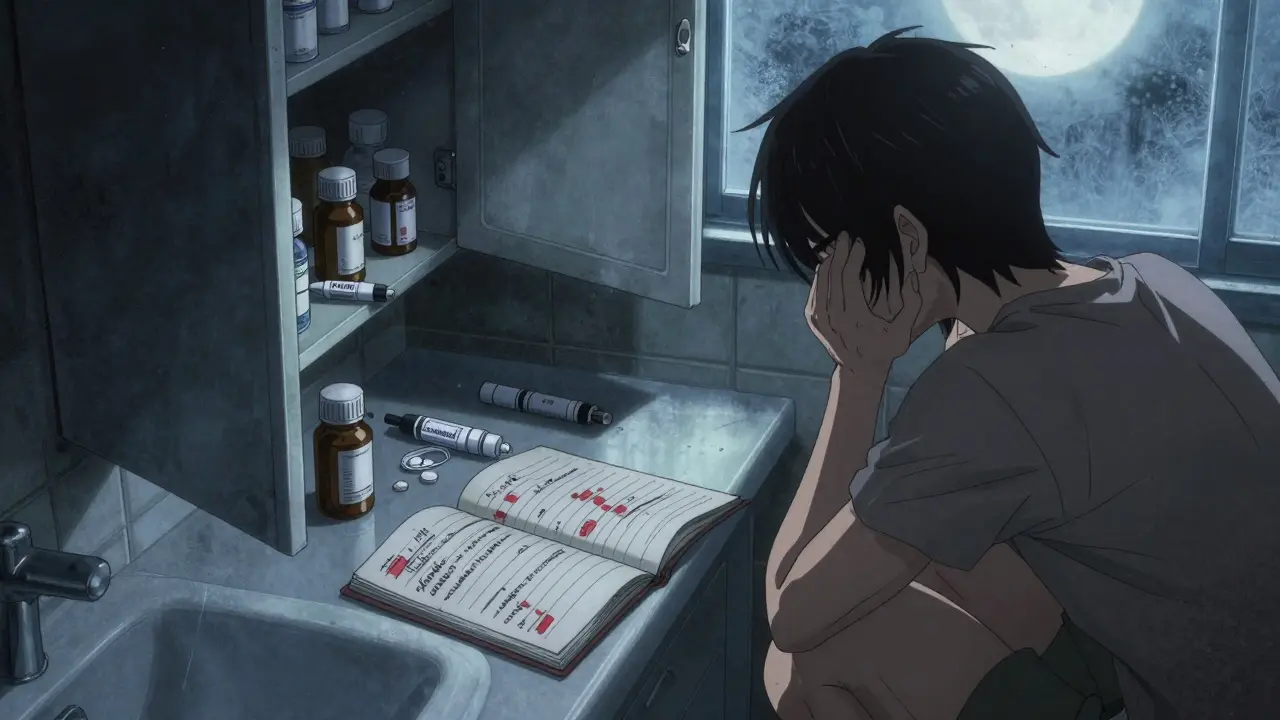
Every household with medications has them-bottles tucked in bathroom cabinets, drawers filled with old prescriptions, maybe even a forgotten insulin pen in the fridge. You don’t think about them until you need one. And then you realize: is this still good?
Taking expired medication isn’t just risky-it’s common. A 2023 Pharmacy Times survey found that nearly 7 out of 10 people have taken a drug past its expiration date. Why? Because it looks fine. Smells fine. Maybe it even worked last time. But here’s the truth: expiration dates aren’t arbitrary. They’re based on real science. And ignoring them can mean your medicine doesn’t work-or worse, harms you.
Creating a simple, repeatable medication expiration review schedule isn’t about being obsessive. It’s about safety. It’s about saving money. And it’s about peace of mind. You don’t need fancy tech or hours of work. Just a system. Here’s how to build one that actually works.
Start with a Full Medication Inventory
Before you can track expiration dates, you need to know what you have. Grab a notebook, your phone, or a free printable template from the National Council on Aging. Go through every drawer, cabinet, purse, and car glove compartment. Don’t skip the old pills in the back of the medicine cabinet. They’re the ones you’ll forget about.
For each medication, write down:
- Name (brand and generic, if different)
- Dosage (e.g., 10 mg, 500 mg)
- Prescribing doctor or pharmacy
- Expiration date (look on the bottle or box)
- Storage instructions (room temp? refrigerated?)
- Quantity left
Use the National Drug Code (NDC)-the long number on the label-to double-check the exact product. Many people confuse the manufacture date with the expiration date. The expiration date is what matters. If you can’t read the label, call your pharmacy. They can tell you the expiration date from their records.
Pro tip: Keep this list updated. Add new meds as you get them. Cross off anything you’ve used up. This isn’t a one-time task-it’s a living document.
Know Which Medications Are High-Risk
Not all expired meds are created equal. Some lose potency fast. Others are dangerous when degraded. The FDA and Institute for Safe Medication Practices (ISMP) flag these as critical:
- Insulin - After expiration, it can fail to lower blood sugar. This isn’t theoretical. In 2023, a hospital in Vermont reported three patients with dangerously high glucose levels after using expired insulin pens.
- Nitroglycerin - Used for chest pain. If it’s expired, it won’t work when you need it most. It’s especially sensitive to heat and light.
- Liquid antibiotics - Once mixed, they start breaking down within days. Even if the bottle says “use by 14 days,” if it’s been sitting for 3 months, toss it.
- Epinephrine auto-injectors (EpiPens) - If they’re expired, they may not deliver a full dose during an allergic reaction. That’s life-or-death.
- Birth control pills - Degraded hormones can lead to unintended pregnancy. Don’t risk it.
These need special attention. Mark them in red on your list. Check them every month. If you’re unsure, call your pharmacist. They’ll tell you if it’s safe-or if you need a new prescription.
Set Your Review Frequency
Once you know what you have and what’s high-risk, set a rhythm. You don’t need to check everything every week. But you can’t wait until you’re sick to look.
Here’s a simple schedule based on storage and risk:
- Monthly - High-risk meds (insulin, EpiPens, nitroglycerin)
- Quarterly - All other prescription and OTC meds stored at room temperature
- Every 6 months - Emergency meds (like asthma inhalers) stored properly and rarely used
- Immediately - Any medicine that looks discolored, smells odd, or has changed texture
Set calendar reminders. Use your phone. Put sticky notes on your fridge. Pick a day that’s easy to remember-like the first Monday of each month. Make it part of your routine, like brushing your teeth.
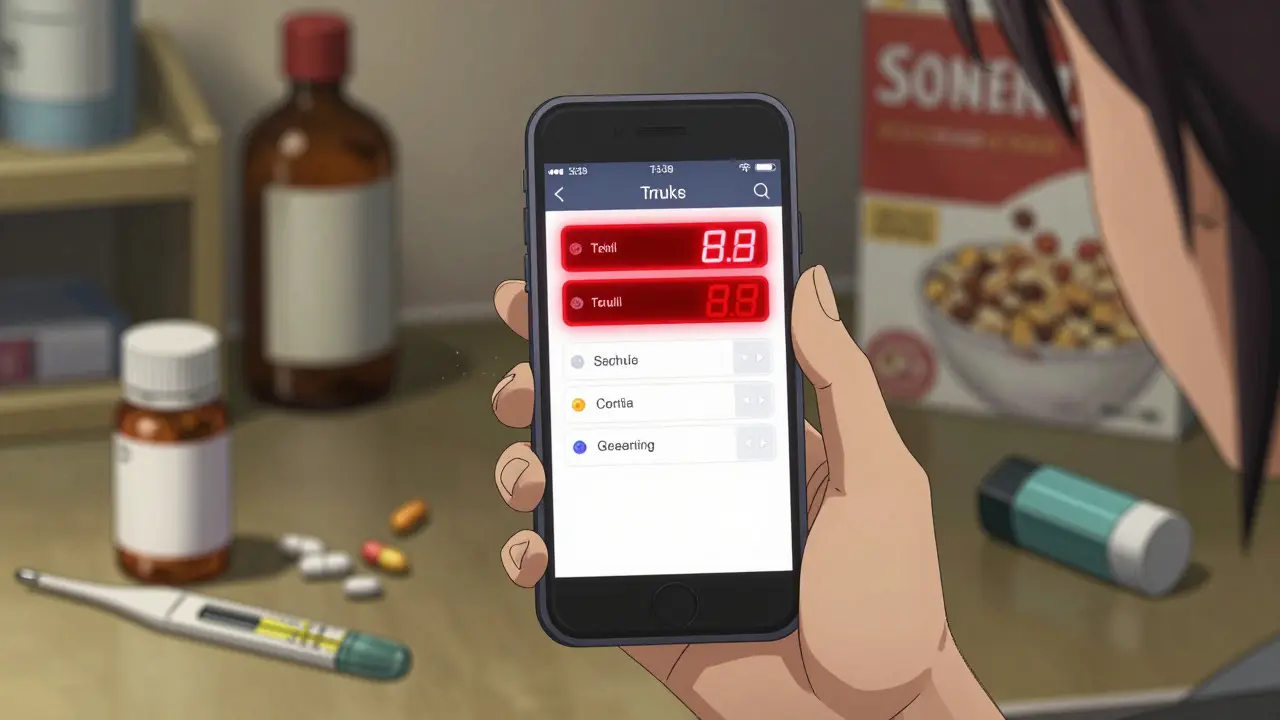
Use the Right Tools
You don’t need to buy expensive gadgets to stay safe. But the right tools make it easier.
Free options:
- Printable Medication Expiration Log from the National Council on Aging
- Google Calendar or Apple Reminders with recurring alerts
- Simple spreadsheet with columns for name, date, location
Low-cost apps:
- Medisafe - Free version tracks expiration dates, sends alerts, and reminds you to take pills
- MyTherapy - Tracks meds and lets you log side effects
For those who want automation:
- Hero Health dispenser - Automatically dispenses pills and alerts you when refills are due or meds are expiring. Costs around $500 upfront, $25/month. Worth it if you take 5+ meds daily.
One study in the Journal of Medical Systems found digital systems cut expiration errors by over 20% compared to paper logs. But even a handwritten list is better than nothing.
Store Medications Correctly
Expiration dates assume proper storage. If you keep your pills in a hot, humid bathroom, they’ll break down faster-even if the date hasn’t passed.
The FDA says most medications are stable at room temperature: 68°F to 77°F (20°C to 25°C). Avoid:
- Bathroom cabinets (heat and steam)
- Windowsills (sunlight degrades pills)
- Car glove compartments (summer temps can hit 140°F)
Refrigerated meds (like insulin or some eye drops) should go in the main fridge-not the door. Keep them in their original containers. Don’t transfer pills to pill organizers unless you’re using them daily. Organizers don’t protect from light or moisture.
Pro tip: If you live in a place with extreme temperatures (like Wellington in winter), keep a thermometer in your storage area. If it drops below 36°F or rises above 86°F, check your meds more often.
Dispose of Expired or Unneeded Meds Safely
Don’t flush pills. Don’t throw them in the trash. Don’t let kids or pets get into them.
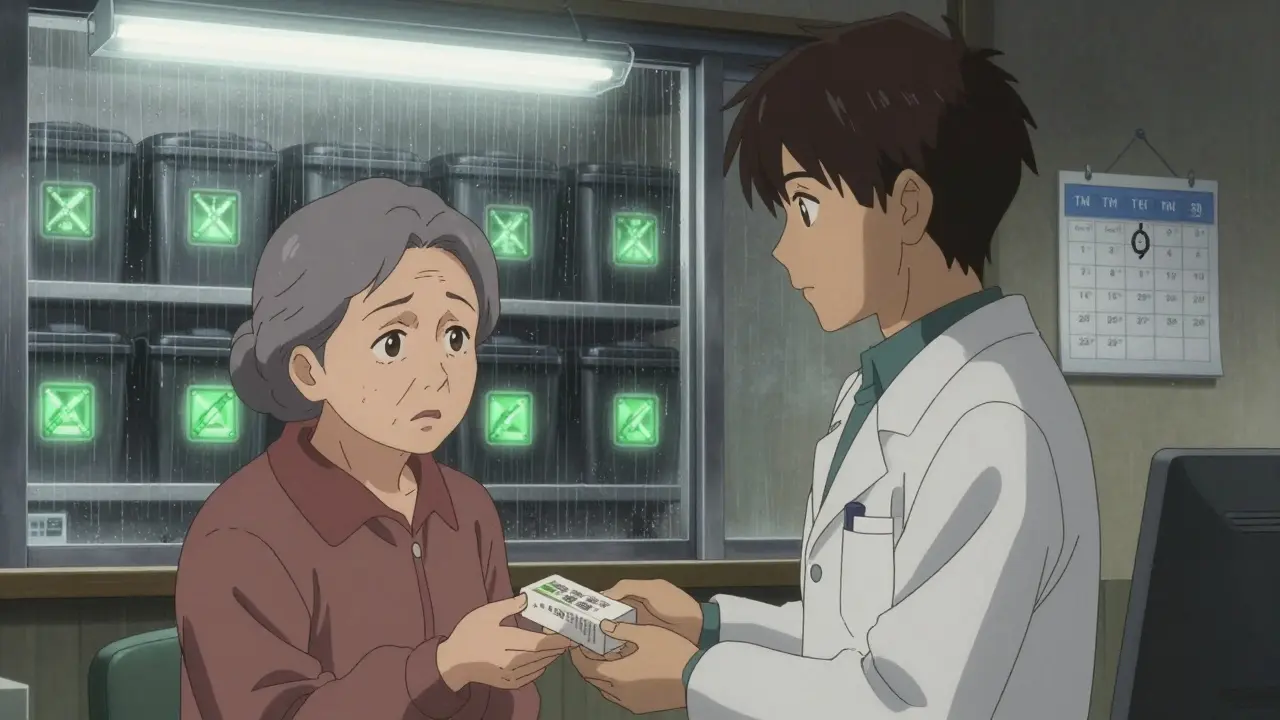
The safest way? Use a take-back program. In New Zealand, pharmacies like Pharmacy2U and Countdown offer free disposal bins. In the U.S., the DEA’s National Prescription Drug Take Back Day happens twice a year, but many local pharmacies accept meds year-round.
If no take-back is available, mix pills with coffee grounds or cat litter, seal them in a container, and throw them in the trash. Remove labels or scratch out personal info to protect your privacy.
And here’s the hard truth: Throwing away expired meds isn’t a loss-it’s an investment in safety. The Kaiser Family Foundation estimates Americans throw away $7.2 billion in unused meds every year. But if you’re taking expired insulin or nitroglycerin, the cost isn’t money-it’s your life.
Why This Matters More Than You Think
Some experts argue that most pills are still effective years after expiration. The FDA’s own Shelf Life Extension Program found military stockpiles stayed potent for over a decade. But here’s the catch: that’s under perfect, controlled conditions. You don’t have a climate-controlled warehouse.
For most people, expiration dates are a safety net-not a suggestion. A 2023 study in the Journal of the American Pharmacists Association showed patients who used apps with expiration alerts and talked to their pharmacist reduced expired medication use by over half.
And the risks aren’t just theoretical. The Agency for Healthcare Research and Quality found that 76% of home medication errors involved expired drugs. Asthma inhalers. Epinephrine. Antibiotics. Birth control. These aren’t just pills. They’re tools that keep you alive.
Creating a review schedule takes 45 minutes the first time. After that, it’s 10 minutes a month. That’s less time than you spend scrolling through social media. But it’s the difference between feeling safe and living in fear.
Start Today
Don’t wait for the next doctor’s visit. Don’t wait until you run out of something. Open your medicine cabinet right now. Pull out one bottle. Check the date. Write it down. Set a reminder for next month.
You don’t need to be perfect. You just need to be consistent. One bottle at a time. One month at a time. That’s how you protect yourself-and your family.
You might like
Sophia Daniels
OMG I just threw out my grandma’s 2018 insulin pens after reading this-she’s been using them ‘just in case’ since the pandemic. I thought she was being frugal. Turns out she was playing Russian roulette with her life. 💀 Thank you for this wake-up call. I’m printing the log right now and making my whole family do a cabinet audit this weekend. No more ‘it looks fine’ nonsense.
Sumler Luu
This is one of the most practical health guides I’ve read in years. I’ve been meaning to organize my meds for months but kept putting it off. Now I have a clear plan: monthly check for EpiPen and insulin, quarterly for everything else. I’ll use Google Calendar reminders. Simple, effective, and honestly-kinda empowering.
Brittany Fuhs
Let’s be real-most people don’t care until someone dies. And then they blame the pharmacy. The FDA’s Shelf Life Extension Program proves most drugs last years past expiration. But nooo, we need to turn every medicine cabinet into a biohazard zone because ‘safety.’ I get it. You want to feel in control. But this is performative health. The real issue is access to affordable refills-not panic-checking your ibuprofen.
sakshi nagpal
In India, we often reuse medicines because we can’t afford to replace them every time. But I never realized how much storage matters. I kept my asthma inhaler in the bathroom-now I know why it stopped working during my last attack. This article changed my perspective. I’m moving all meds to a cool drawer, and I’ll start a simple notebook log. Thank you for the clarity.
Sandeep Jain
my mom used to say ‘if it still looks like a pill, it’s fine’… i used to laugh. now i dont. i just checked my amoxicillin from 2022 and it’s got a weird smell. tossed it. no regrets. also-why do we keep old birth control? just sayin’.
roger dalomba
Wow. A 10-minute monthly chore that prevents death? What’s next? Brushing your teeth? Maybe you should write a guide on not breathing polluted air. This is just common sense dressed up like a TED Talk.
Nikki Brown
YOU’RE NOT SAFE. YOU’RE NOT EVEN CLOSE. If you’re still using expired meds, you’re a danger to yourself and everyone around you. I’ve seen people die from this. Not ‘might die.’ DIED. Your EpiPen isn’t a suggestion. Your insulin isn’t a suggestion. Your birth control isn’t a suggestion. If you need a reminder to not kill yourself, you’re not ready to be an adult. 🙄
Peter sullen
It is imperative, from a clinical and public health standpoint, that individuals establish a structured, time-bound, and digitally augmented medication stewardship protocol. The confluence of pharmacokinetic degradation, environmental stressors, and cognitive neglect creates a high-risk, low-probability event matrix that, when unmitigated, precipitates iatrogenic morbidity. Utilizing a validated, interoperable, and HIPAA-compliant digital tracker (e.g., Medisafe) is not merely advisable-it is a bioethical imperative.
Steven Destiny
This is the most important thing you’ll read this year. If you’re not doing this, you’re lazy. If you’re not teaching your kids to do this, you’re irresponsible. If you’re still using expired insulin, you’re a walking liability. I’ve done this for 12 years. My family has never had a medication error. Because I don’t wait for a crisis-I prevent it. Start today. Now. Go. I’m waiting.
Fabio Raphael
I love how this breaks it down without shaming. I’ve been scared to check my meds because I didn’t want to face how much I’ve hoarded. But this feels doable. I’m going to start with one drawer this week. And maybe I’ll ask my pharmacist to help me read the NDC codes-I’ve always been too intimidated to call. Thanks for making it feel human.
Amy Lesleighter (Wales)
just check the date. throw out the weird ones. keep the rest in a cool box. done. you dont need apps or logs or guilt. your body knows what it needs. trust it.