
Meniere’s Disease: Managing Inner Ear Fluid and Reducing Symptoms

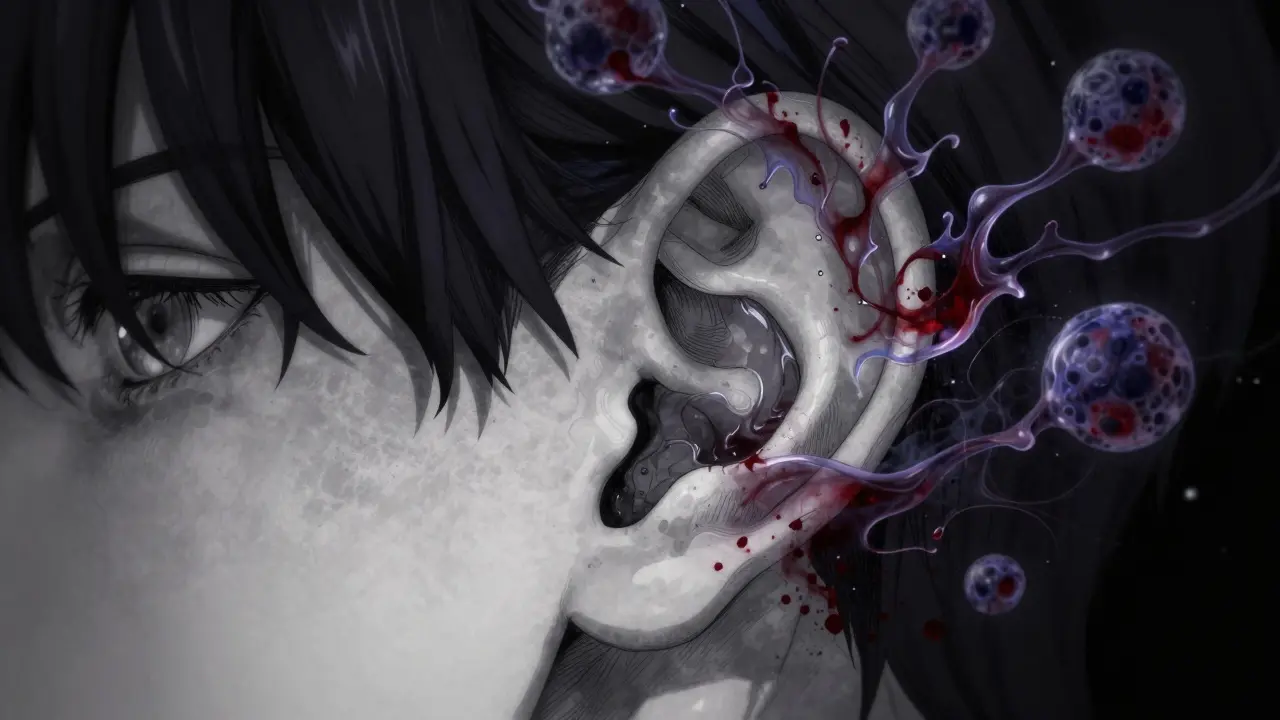
When your world suddenly spins out of control, your ears ring like a constant alarm, and your hearing feels muffled - it’s not just dizziness. It could be Meniere’s disease, a hidden disorder inside your inner ear that’s quietly reshaping how you hear and move. Unlike regular vertigo, this isn’t a one-time glitch. It’s a chronic condition driven by too much fluid - endolymph - building up where it shouldn’t. And over time, it doesn’t just make you dizzy. It steals your hearing.
What’s Really Happening Inside Your Ear?
Your inner ear isn’t just a sound receiver. It’s a complex, fluid-filled system that also controls balance. Two types of fluid work together: one rich in potassium (endolymph) and one rich in sodium (perilymph). They need to stay perfectly balanced. When endolymph builds up - a condition called endolymphatic hydrops - it stretches the membranes, presses on nerves, and scrambles the signals your brain gets. This isn’t guesswork. In 2022, researchers used 3D imaging to see this fluid buildup in living patients for the first time. They found the saccule - a small sac in the inner ear - swells in 97% of cases. The cochlear duct follows close behind. But the utricle? Only 32% of patients show swelling there. Why? Because its membrane is thicker. That thickness acts like a buffer - until it doesn’t. When the pressure hits 60 cmH₂O, membranes rupture. That’s when the worst attacks happen.Why Does the Fluid Build Up?
For over 160 years, doctors have known about Meniere’s - but not why it starts. Today, we know it’s not one cause. It’s a mix. About 40% of cases involve poor drainage. The endolymphatic sac, your ear’s natural drainpipe, can be too narrow - sometimes less than 0.3mm wide, compared to the normal 0.5-0.8mm. That’s like trying to flush a toilet with a straw. Another 25% of cases link to immune problems. Research from 2025 shows your inner ear starts producing too much of the inflammatory signals IL-12, IL-23, TNF-α, and IL-6. These chemicals break down the blood-labyrinth barrier - the shield that protects your inner ear from your body’s own immune system. Once that’s down, T-cells invade, causing long-term damage. That’s why some people lose hearing even when their dizziness improves. Then there’s the kidney connection. The stria vascularis, which makes endolymph, works like kidney tissue. That’s why cutting salt helps. A low-sodium diet (1,500-2,000 mg/day) can reduce fluid production by 23-37%. Stanford researchers found this isn’t just a myth - it’s measurable.The Four Signs You’re Dealing With Meniere’s
You don’t need a scan to suspect Meniere’s. Look for this pattern:- Vertigo attacks - sudden, violent spinning that lasts 20 minutes to several hours. You can’t stand. You’re nauseous. You might vomit.
- Fluctuating hearing loss - your hearing drops during an attack, then partly comes back. Over time, it doesn’t come back at all.
- Tinnitus - a roaring, buzzing, or ringing in the ear. It often gets louder before an attack.
- Aural fullness - your ear feels clogged, like you’re underwater. It’s not an infection. It’s pressure.

How Doctors Treat the Fluid Buildup
Treatment isn’t one-size-fits-all. It’s layered. First step: Diet and diuretics. Cut salt. Avoid caffeine, alcohol, and MSG. Take a diuretic like hydrochlorothiazide. It helps your body flush excess fluid. About 55-60% of people get relief. But not everyone. Why? Because if your endolymphatic sac is too narrow, the diuretic can’t fix that. Second step: Steroid injections. If attacks keep coming, doctors inject methylprednisolone directly into the middle ear. This reduces inflammation and helps reset ion channels. It works for 68-75% of people. Side effects? Rare. No hearing loss. Just a little discomfort. Third step: Gentamicin injections. For severe, disabling vertigo, this is the nuclear option. Gentamicin kills part of your balance nerve. It stops vertigo in 85-92% of cases. But it carries a 12-18% risk of worsening hearing. You trade dizziness for hearing loss. Some patients choose it because the vertigo is worse than the deafness. Fourth step: Surgery. Endolymphatic sac decompression opens up the drain. It helps vertigo in 60-70% of cases. But hearing? Only 25-35% improve. It’s not a cure. It’s damage control.The New Hope: Fighting Inflammation, Not Just Fluid
The biggest breakthrough isn’t in draining fluid. It’s in stopping the immune attack. A 2025 study tested anti-IL-17 antibodies - the same drugs used for psoriasis and rheumatoid arthritis - in Meniere’s patients. Results? Vertigo attacks dropped by 63%. Hearing loss slowed by 41%. This isn’t theoretical. It’s clinical data from phase II trials. Why does this matter? Because if inflammation is the engine driving the fluid buildup, then treating the immune system might stop the disease before it destroys your hearing. Corticosteroids already do this - they reduce endolymphatic hydrops by 31-44% in responsive patients. But now, we have more targeted tools.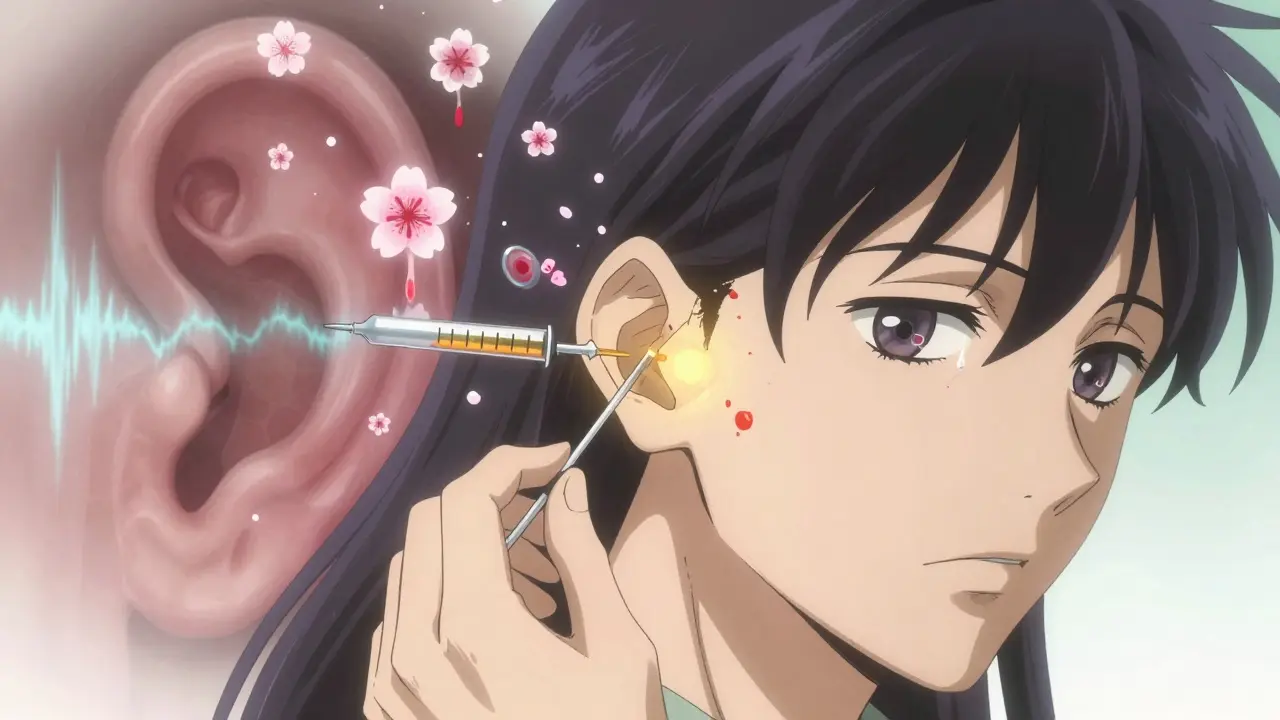
What Doesn’t Work - And Why
Don’t waste time on unproven fixes. Vestibular rehab helps with balance after attacks, but it doesn’t stop fluid buildup. Herbal supplements? No strong evidence. Acupuncture? Some report relief, but no controlled studies confirm it. And here’s a myth: “If you stop having attacks, you’re cured.” False. When vertigo disappears after 10+ years, it’s because your inner ear is full of scar tissue and dead cells. The inflammation didn’t go away. It just ran out of room to cause spinning. You’re left with permanent hearing loss and chronic imbalance.Long-Term Reality: It’s a Spectrum
Not everyone with Meniere’s loses hearing the same way. Some have “vestibular Meniere’s” - vertigo without hearing loss. That’s about 18% of cases. These patients often respond better to balance therapy and steroids. Others develop bilateral disease - both ears affected. After 15 years, 93% of patients have permanent hearing loss in both ears. That’s why early action matters. The 2022 3D imaging study showed we can detect fluid buildup before symptoms appear. That’s the future: catching it early, before the membranes stretch too far.What You Can Do Today
If you suspect Meniere’s:- Keep a symptom diary - note when attacks happen, how long they last, what you ate, your stress level.
- Track your salt intake. Use a food scale. Avoid processed food. Read labels.
- See an ENT specialist who understands inner ear disorders. Ask for a hearing test and balance evaluation.
- Ask about steroid injections if attacks are frequent.
- Don’t wait for “it to get worse.” Early immune-focused treatment could change your outcome.
Can Meniere’s disease be cured?
No, Meniere’s disease cannot be cured. But it can be managed. Treatments like low-sodium diets, diuretics, steroid injections, and emerging immunotherapies can significantly reduce attacks and slow hearing loss. Some people go years without symptoms, but the underlying fluid imbalance and inflammation often remain.
Does Meniere’s get worse over time?
Yes, it typically does. In the early stages, hearing may bounce back after attacks. But over time - often 5 to 15 years - the inner ear’s hair cells die from pressure and inflammation. Hearing becomes permanently damaged. Vertigo may lessen as the ear becomes fully distended, but chronic unsteadiness and tinnitus usually remain.
Can diet really help with Meniere’s symptoms?
Yes. Reducing sodium intake to 1,500-2,000 mg per day lowers endolymph production by 23-37% in many patients. Avoiding caffeine, alcohol, and MSG also helps reduce fluid retention and triggers. Studies show diet alone can reduce attack frequency by up to 50% in responsive individuals.
Are steroid injections safe for Meniere’s?
Yes, intratympanic steroid injections are considered safe and effective. They reduce inflammation and fluid buildup without damaging hearing. Side effects are rare - maybe minor ear discomfort or temporary dizziness. They’re often used before more aggressive treatments like gentamicin or surgery.
What’s the difference between Meniere’s and regular vertigo?
Regular vertigo - like BPPV - is caused by loose crystals in the inner ear and lasts seconds to minutes. Meniere’s involves fluid buildup, lasts hours, and includes hearing loss, tinnitus, and ear pressure. It’s progressive and chronic, not a one-time event. BPPV can be fixed with a head maneuver. Meniere’s needs long-term management.
Can Meniere’s affect both ears?
Yes. About 30-50% of people with Meniere’s eventually develop symptoms in both ears, especially after 10-15 years. This is called bilateral Meniere’s. Hearing loss becomes more severe, and balance problems worsen. Early treatment may delay or reduce this risk.
You might like
Chloe Hadland
i had my first attack last year and i thought i was dying. now i just keep a salt tracker on my phone and avoid anything that looks like it came from a bag. it’s not perfect but i’ve cut my attacks in half. you’re not alone
this post saved me
Amelia Williams
i read this whole thing while waiting for my audiologist appointment and i cried a little. not because i’m scared but because someone finally explained what’s happening inside my ear instead of just saying ‘drink less coffee’
the part about the saccule swelling at 97%? mind blown. i’ve been told for years it’s ‘just stress’ but now i know it’s biology. thank you for writing this with so much heart
Sharon Biggins
i started the low sodium diet after reading this and honestly i didnt expect it to work but my ear pressure has been way better. still get tinnitus but its not screaming anymore. steroid injection next week. praying it helps. dont give up everyone
Himanshu Singh
this is beautiful. the ear is a silent temple and we treat it like a broken radio. we fix the speaker but never ask why the signal is corrupted
inflammation is the real enemy. not the fluid. the fluid is just the messenger. we need to listen to what the body is screaming, not just silence the noise
🙏
Husain Atther
Thank you for this comprehensive and well-researched overview. It is refreshing to encounter medical content that avoids sensationalism and presents evidence-based insights with clarity. The distinction between symptom management and disease modification is particularly valuable. I will be sharing this with my colleagues in neurology.
Marlon Mentolaroc
ok but like… why are we still using diuretics in 2025? if you’re gonna inject steroids why not just go full autoimmune mode from day one? this whole ‘try salt then try shots then try killing your balance nerve’ thing feels like medical whack-a-mole
also who still uses MSG as a villain? it’s not even real
Gina Beard
the real tragedy isn't the disease. it's that we only care when it's too late. we don't screen for inner ear pressure like we do for glaucoma. we wait until you can't hear your kid say 'mom'. then we hand you a pamphlet and a diuretic. sad.
Don Foster
you guys are missing the point. the 2022 3D imaging study was done on 42 patients. that’s not a sample size. that’s a coffee klatch. and the anti-il-17 trial? phase ii with 87 people. you think that’s a cure? you think that’s science? this is just fancy marketing dressed up as medicine
and don’t even get me started on the salt thing. everyone thinks they’re a nutritionist now
siva lingam
so you’re telling me the cure is… less salt? and a shot? wow. i’m shocked. next you’ll tell me smoking causes cancer
Phil Maxwell
i’ve had this for 8 years. attacks slowed after steroids. hearing’s gone in one ear. still here. still listening. still trying. this post didn’t fix anything. but it made me feel like i wasn’t just a symptom in a chart. thanks for that.