
OTC Vitamins vs. Drugs: What the Drug Facts Label Hides From You

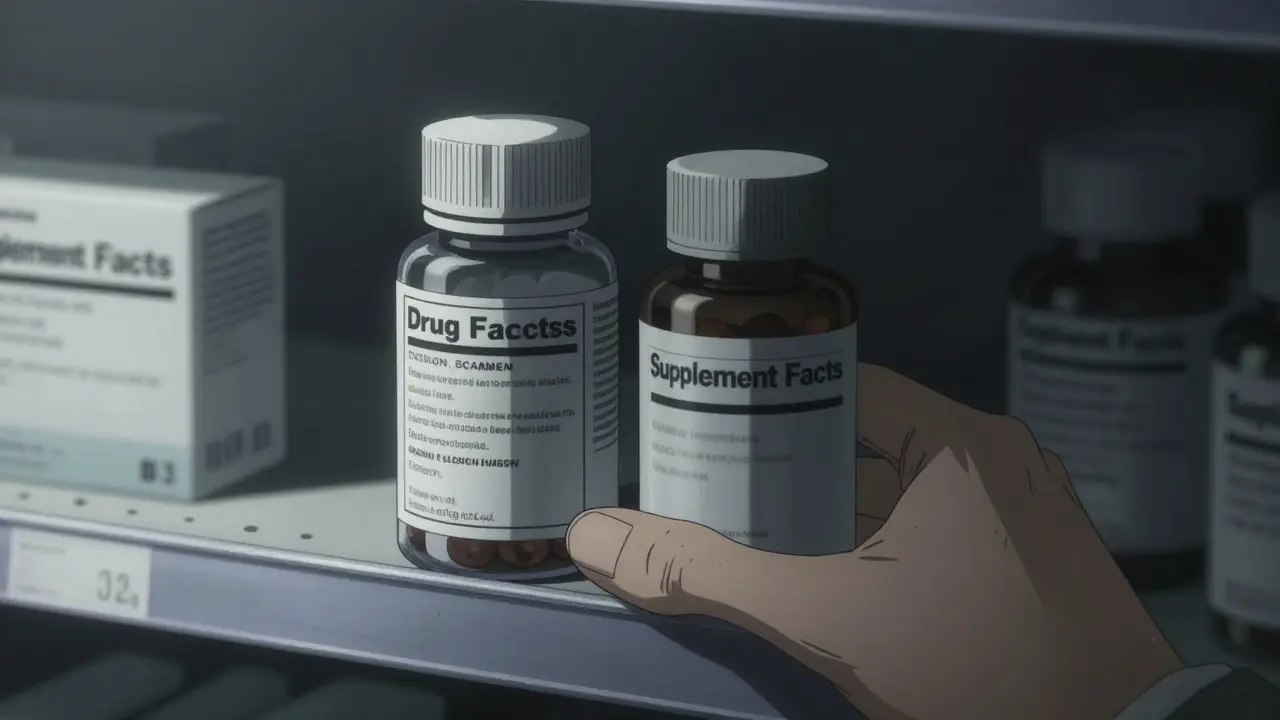
You grab a bottle of multivitamins from the pharmacy shelf and glance at the back. It looks familiar-almost identical to the pain reliever sitting next to it. But here is the catch: that vitamin bottle is playing by a completely different set of rules. While your painkiller has to prove its safety before you can buy it, your vitamins are essentially classified as food. This regulatory gap means the Drug Facts label you trust for medications simply does not exist for most supplements, leaving you with critical blind spots about what you are putting into your body.
The Regulatory Divide: Food vs. Medicine
To understand why your vitamin label lacks specific warnings, you have to look at how the U.S. Food and Drug Administration (FDA) classifies these products. Since the passage of the Dietary Supplement Health and Education Act (DSHEA) in 1994, dietary supplements have been regulated as food products, not drugs. This distinction is massive. When an over-the-counter (OTC) medication hits the shelves, it has undergone rigorous review to ensure it is safe and effective for its intended use. The FDA mandates a standardized "Drug Facts" panel that includes precise active ingredient amounts, detailed usage instructions, and explicit warnings about side effects and interactions.
Dietary supplements, however, bypass this pre-market approval process. Manufacturers do not need to prove their product is safe or effective before selling it. Instead, they rely on a "Supplement Facts" panel, which has far fewer mandatory disclosure requirements. According to a 2022 commentary in the AMA Journal of Ethics, 72% of consumers incorrectly believe that supplements undergo the same FDA safety review as medications. This misconception creates a false sense of security. You assume the product is vetted because it sits next to proven medicines, but legally, the manufacturer only needs to act if the product is later found to be "adulterated" or "misbranded." The burden of proof shifts from the company proving safety to the regulator proving danger after the fact.
What’s Missing: The Critical Gaps in Supplement Labels
If you compare a Drug Facts label to a Supplement Facts panel side-by-side, several glaring omissions appear. These aren't just minor details; they are vital safety data points that could prevent adverse health events.
- Drug Interactions: OTC medications must list potential interactions with prescription drugs. A 2021 study in JAMA Internal Medicine revealed that only 17% of supplement labels warn about interactions with prescription medications. If you are taking blood thinners, for example, an OTC aspirin bottle will explicitly warn you. A fish oil or vitamin K supplement might not mention this risk at all.
- Pregnancy Warnings: Medications with teratogenic risks (risks of causing birth defects) require prominent warnings and often strict risk management programs. Vitamin A, specifically in the form of retinol, carries similar risks. Yet, while prescription isotretinoin requires rigorous monitoring, high-dose vitamin A supplements often bury generic warnings in fine print. The American College of Obstetricians and Gynecologists noted that 40% of prenatal vitamins exceed the recommended daily limit of 10,000 IU for pregnant women, yet only 22% feature prominent pregnancy warnings comparable to those on OTC drugs.
- Sodium Content: The FDA requires OTC medications to list sodium content per dosage unit to protect consumers with hypertension. This requirement does not extend to supplements. If you have heart conditions, you might be consuming hidden sodium in your daily multivitamin without realizing it.
- Specific Dosage Directions: Drug Facts labels provide precise instructions based on age, weight, or condition severity. Supplements often offer vague guidance like "take one capsule daily," ignoring individual metabolic differences or existing health conditions.
The Danger of Proprietary Blends and Vague Claims
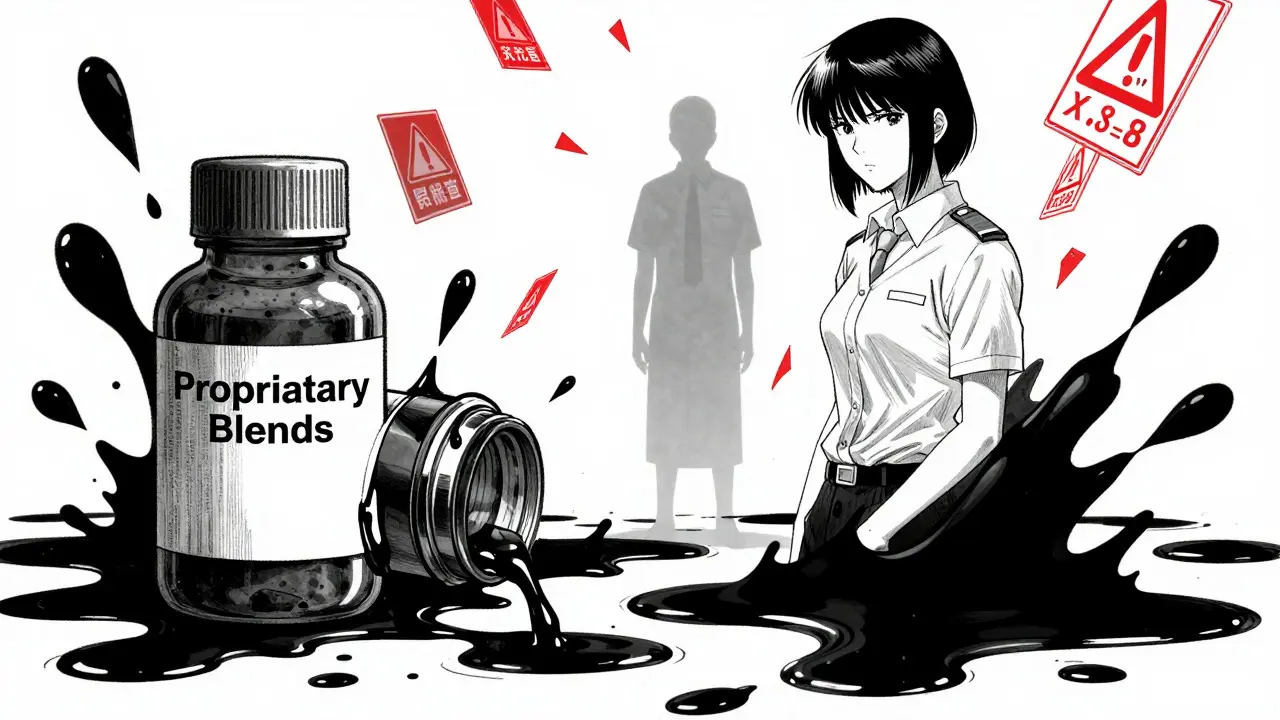
Another major hurdle is transparency regarding ingredients. On a Drug Facts label, every active ingredient is listed with its exact milligram amount. In the supplement world, manufacturers frequently use "proprietary blends." This term allows them to group multiple ingredients together and list only the total weight of the blend, hiding the specific dose of each component. An analysis by NSF International found that 41% of protein supplements and 63% of weight loss supplements use this tactic. Without knowing the exact amount of each ingredient, you cannot assess if you are getting an effective dose or a dangerous overdose.
Furthermore, supplements are restricted to making "structure/function claims" rather than disease claims. You will see phrases like "supports immune health" or "promotes joint comfort" followed by the mandatory disclaimer: "This statement has not been evaluated by the FDA. This product is not intended to diagnose, treat, cure, or prevent any disease." While this prevents companies from claiming their pill cures cancer, it also allows them to market products with little clinical backing. Unlike OTC drugs, which must cite evidence for their therapeutic uses, supplements can make broad health assertions without providing proof of efficacy.
| Feature | OTC Medications (Drug Facts) | Dietary Supplements (Supplement Facts) |
|---|---|---|
| Pre-Market Safety Review | Required | Not Required |
| Active Ingredient Dosage | Exact mg listed for each | Often hidden in "Proprietary Blends" |
| Drug Interaction Warnings | Mandatory | Rarely included (only 17% of labels) |
| Pregnancy/Breastfeeding Precautions | Standardized, prominent warnings | Inconsistent, often buried in fine print |
| Sodium Content Disclosure | Required | Not Required |
| Claim Verification | Must prove efficacy | Structure/function claims only; no proof needed |
Why These Gaps Persist: Market Forces and Lobbying
You might wonder why these labeling standards haven't evolved to match drug regulations. The answer lies in economics and political influence. The U.S. dietary supplement industry generated $54.2 billion in sales in 2022, growing steadily since 2019. This financial clout translates into lobbying power. According to data from the Center for Responsive Politics, the supplement industry spent $8.2 million on federal lobbying in 2022 alone, successfully resisting efforts to strengthen labeling requirements.
Regulatory enforcement remains reactive. The FDA must prove a supplement is dangerous to remove it from the market, a process that takes an average of 427 days according to a 2023 Government Accountability Office investigation. In contrast, problematic OTC medications are addressed within 45 days. During those 14 months, consumers continue to purchase products that may contain undeclared pharmaceutical ingredients. Between 2008 and 2020, the FDA identified 776 dietary supplements containing undeclared drugs, yet the current labeling system does not require third-party testing verification to be displayed prominently on the package.

How to Protect Yourself: Practical Steps for Consumers
Since you cannot rely on the label alone, you need to take proactive steps to ensure your supplements are safe and effective. Here is how to navigate the gaps:
- Look for Third-Party Certification: Seek out seals from organizations like USP (United States Pharmacopeia), NSF International, or ConsumerLab.com. These independent groups test products for purity, potency, and contamination. As of September 2023, only 2,147 products held NSF/ANSI Standard 173 certification-a small fraction of the market, but a reliable indicator of quality.
- Check Independent Databases: Use resources like the NIH Office of Dietary Supplements' Supplement Label Database or Examine.com. These platforms aggregate scientific research and provide unbiased information on ingredient safety and interactions. Examine.com reported 4.7 million monthly users in 2023, reflecting a growing demand for transparent data.
- Consult Your Pharmacist: Pharmacists are trained to identify drug-supplement interactions. Walgreens pharmacists documented over 14,000 inquiries in Q1 2023 alone regarding why supplements lack interaction warnings. Bring your supplement bottles to your next appointment and ask specifically about interactions with your current prescriptions.
- Decode Vitamin A Forms: If you are pregnant or planning to become pregnant, check if your vitamin A comes from retinol or beta-carotene. Retinol has teratogenic risks at high doses, while beta-carotene does not. Many labels list only "International Units" (IU) without specifying the source, making it hard to assess risk. Look for products that specify "mcg RAE" (Retinol Activity Equivalents) for clarity.
- Beware of "Natural" Marketing: Remember that "natural" does not mean "safe" or "regulated." The same plants used in herbal supplements can interact with chemotherapy drugs, blood thinners, and antidepressants. Treat supplements with the same caution you would a new medication.
Future Outlook: Are Changes Coming?
There are signs that the landscape may shift. In June 2023, the FDA issued draft guidance proposing enhanced labeling for high-dose vitamin A supplements, recommending the use of mcg RAE and more prominent pregnancy warnings. Additionally, the Dietary Supplement Listing Act of 2022 aims to require manufacturers to list all products with the FDA, improving traceability. However, these changes do not yet mandate the comprehensive warning labels seen on Drug Facts panels. Until legislation forces stricter alignment between supplement and drug labeling, the responsibility falls on you to read beyond the front of the bottle and verify the contents independently.
Do vitamins need FDA approval before being sold?
No. Under the DSHEA of 1994, dietary supplements are regulated as food, not drugs. Manufacturers do not need FDA approval to sell them. They are responsible for ensuring safety, but the FDA only intervenes if a product is found to be adulterated or misbranded after it reaches the market.
Why don't supplement labels list drug interactions?
Unlike OTC medications, supplements are not required by law to list drug interactions. Studies show only 17% of supplement labels include these warnings. This is because supplements are allowed to make structure/function claims without proving efficacy or conducting extensive clinical trials for safety interactions.
What is the difference between Drug Facts and Supplement Facts?
Drug Facts labels are mandated for OTC medications and require detailed info on active ingredients, dosages, warnings, and interactions. Supplement Facts panels are less stringent, allowing proprietary blends, omitting sodium content, and lacking mandatory interaction or pregnancy warnings.
Are "proprietary blends" safe?
They can be, but they lack transparency. Proprietary blends hide the specific amount of each ingredient, making it impossible to know if you are getting an effective or safe dose. Over 60% of weight loss supplements use these blends, obscuring potentially risky ingredient levels.
How can I verify if a supplement is safe?
Look for third-party certification seals from USP, NSF, or ConsumerLab. Check independent databases like Examine.com or the NIH Supplement Label Database. Always consult your pharmacist or doctor, especially if you take prescription medications or are pregnant.
You might like
Fenton Quinn
The regulatory gap is real. We treat supplements like candy and drugs like medicine. It’s a philosophical disconnect in modern healthcare.
Marc H
Oh, brilliant. So the government basically says 'good luck' when you swallow that mystery powder. I’m just sitting here laughing at the sheer audacity of it all. You walk into a pharmacy, see the little blue bottle next to the big orange one, and think they’re both safe? Please. One has been through the wringer, the other just needs a smile and a label. It’s dramatic, really. The drama of ignorance. I feel for everyone out there thinking their multivitamin is a shield against death while it’s actually just a tax on hope. And don’t get me started on the pregnancy warnings. Or lack thereof. It’s like playing Russian roulette with your unborn child’s liver. Just fantastic.
sam howard
people need to stop buying stuff from gas stations if they want quality but seriously who reads labels anyway its all marketing BS
Chris McQuaid
You’re missing the bigger picture here. It’s not just about safety, it’s about the illusion of control. We buy these things because we want to feel like we’re optimizing our biology, but without data, it’s just placebo theater. The proprietary blends are the ultimate scam. They hide behind 'secret formulas' like alchemists in robes. Meanwhile, the FDA sits back and watches the industry lobby its way out of accountability. It’s a perfect storm of greed and naivety. Most people don’t even know what DSHEA stands for, let alone how it protects corporations over consumers. Wake up.
Alli Crumley
Let’s be honest; the epistemological crisis in supplement regulation is staggering 🧐. The dichotomy between pharmaceutical rigor and supplemental anarchy creates a cognitive dissonance for the layperson. When we engage with structure/function claims, we are essentially participating in a performative act of health optimization without empirical validation. The jargon-heavy nature of these labels is designed to obscure the lack of clinical trial data. It’s a pseudo-scientific facade. We must deconstruct the narrative of 'natural equals safe.' It’s a fallacy rooted in romanticism rather than biochemistry. 🙄
Samuel Hershberger
I appreciate this breakdown. As a pharmacist, I see this every day. People bring in bottles of fish oil or vitamin K and ask why their blood thinners aren't working as expected. The interaction warnings are rarely there. My advice? Always check for third-party seals like USP or NSF. It’s not perfect, but it’s better than blind faith. Also, talk to your pharmacist. We’re trained to spot these issues. Don’t be afraid to ask questions. Your health is worth the extra five minutes.
Mathew Stuckey
This is so helpful! 😊 I had no idea about the sodium content thing. I have high blood pressure, so that’s scary. Thanks for sharing this info. It makes me want to read every label twice now. 🌟
John Divers
A well-reasoned analysis. The distinction between pre-market approval for drugs and post-market surveillance for supplements is the crux of the issue. It requires a shift in consumer mindset from passive acceptance to active verification. Collaboration between regulators and independent testing bodies is essential.
Ambria St louis
We must consider the systemic implications of this regulatory divide!!! It is not merely a matter of individual choice, but a collective failure to prioritize public health transparency!!! The lack of mandatory interaction warnings is a profound oversight that disproportionately affects vulnerable populations!!! We need advocacy!!! We need change!!! Let us empower ourselves with knowledge and demand better standards from our legislators!!!
Dennis Leeftink
its simple really companies make more money when they dont have to test stuff so they lobby hard to keep it that way stop trusting the front of the bottle and look for the seals or dont buy it