
Pharmacokinetic vs Pharmacodynamic Drug Interactions: What You Need to Know


Two drugs taken together can save your life-or send you to the hospital. It’s not about luck. It’s about whether those drugs are fighting each other inside your body, and how they’re doing it. There are two main ways this happens: pharmacokinetic and pharmacodynamic interactions. One changes how much drug gets to your cells. The other changes how your cells respond to it. Knowing the difference isn’t just for doctors. If you’re on five or more medications-especially if you’re over 65-this is information that could keep you safe.
What Pharmacokinetic Interactions Really Mean
Pharmacokinetic, or PK, interactions are about what your body does to the drug. Think of it like traffic on a highway. The drug is the car. PK interactions are roadblocks, detours, or speed bumps that change how fast or how much of that car reaches its destination. There are four main ways this happens: absorption, distribution, metabolism, and excretion. That’s the ADME rule. Let’s break it down with real examples. If you take an antacid with a ciprofloxacin antibiotic, the antacid can block the antibiotic from being absorbed. Studies show this cuts absorption by 75% to 90%. That means the antibiotic never even gets into your bloodstream to fight the infection. You might think the pill didn’t work-but it never had a chance. Then there’s distribution. Warfarin, a blood thinner, sticks to proteins in your blood. If you add phenylbutazone (an old painkiller), it kicks warfarin off those proteins. Suddenly, the free warfarin in your blood jumps by 300%. That’s not a small change. That’s a bleeding risk you didn’t sign up for. Metabolism is where most PK interactions happen. Your liver uses enzymes-mostly from the CYP450 family-to break down drugs. CYP3A4 is the big one. It handles about 50% of all prescription drugs. When you take clarithromycin (an antibiotic), it shuts down CYP3A4. If you’re also on simvastatin (a cholesterol drug), your body can’t clear it. Simvastatin levels can spike 10 times higher. That’s not just a side effect-it’s muscle damage, kidney failure, even death. Excretion is simpler. Probenecid, used for gout, blocks the kidneys from flushing out penicillin. That’s actually intentional. Doctors used to pair them on purpose to make penicillin last longer. But if you don’t know what you’re doing, it can lead to toxic buildup.What Pharmacodynamic Interactions Really Mean
Pharmacodynamic, or PD, interactions are about what the drug does to your body-once it gets there. This isn’t about concentration. It’s about effect. Imagine two people pulling a rope in the same direction. That’s synergy. Sildenafil (Viagra) and nitroglycerin together? They both drop blood pressure. Together, they can crash it so hard you go into shock. This isn’t a 1+1=2 situation. It’s 1+1=10. Additive effects are more common. Warfarin and aspirin both thin blood. Take them together? Your bleeding risk goes up. Not because one changes the other’s level-but because both are doing the same thing. It’s like turning up the volume on the same song. Antagonism is the opposite. Naloxone reverses opioid overdoses by kicking opioids off their receptors. It doesn’t lower opioid levels. It just blocks them. That’s PD in action. PD interactions are especially dangerous in the brain. Antidepressants, antipsychotics, and opioids often interact this way. Serotonin syndrome-caused by mixing SSRIs with MAO inhibitors-is a classic. Your brain gets flooded with serotonin. Symptoms: fever, confusion, shaking, seizures. It can kill you in hours. And guess what? Your blood levels of both drugs might look perfectly normal. That’s why PD interactions are so sneaky.The Big Difference: Concentration vs. Response
Here’s the simplest way to tell them apart: - PK = changed drug level → changed effect - PD = same drug level → changed effect Think of it like a light switch. PK is turning the dimmer up or down. PD is replacing the bulb with a brighter or weaker one-even if the dimmer stays at 50%. That’s why managing them is totally different. For PK interactions, you can often fix it by adjusting the dose. If you need clarithromycin and simvastatin, your doctor might drop the simvastatin from 40mg to 10mg. You still get the benefit. You avoid the danger. But for PD interactions? Dose changes rarely help. If you’re on an SSRI and someone suggests adding an MAOI? Don’t adjust the dose. Don’t wait. Don’t try to make it work. Just don’t combine them. Full stop.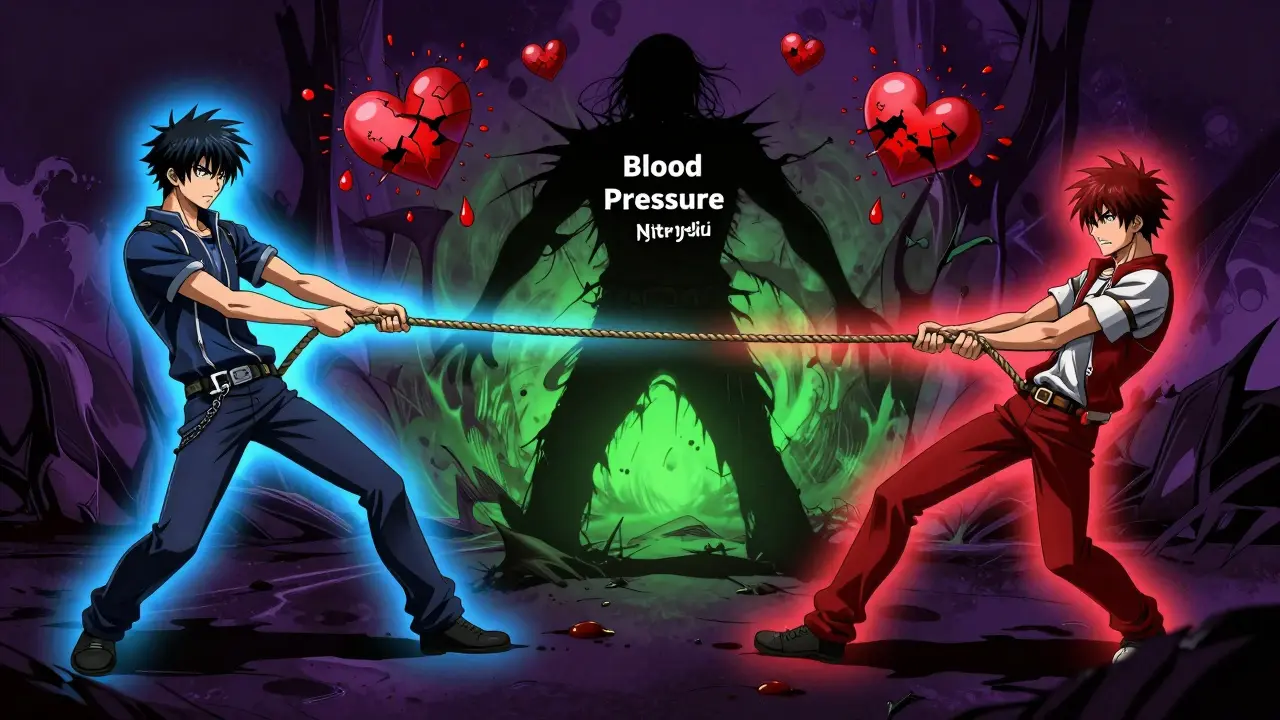
Who’s at Risk? And How Do You Know?
About 15% of adults over 65 take five or more medications daily. That’s one in seven. For them, PK and PD interactions aren’t theoretical. They’re daily risks. Narrow therapeutic index drugs are the biggest red flags. These are drugs where the difference between a safe dose and a toxic one is tiny. Warfarin, digoxin, phenytoin, lithium. If a PK interaction pushes the level even a little high, you’re in trouble. PD interactions hit hardest in two areas: the heart and the brain. Combine an ACE inhibitor with an NSAID like ibuprofen? The blood pressure drug loses up to 30% of its power. Your BP stays high. You think it’s not working. It’s not the drug. It’s the interaction. And here’s the kicker: PD interactions often show up fast. Right after you take the new pill. PK interactions? They take days. That’s why doctors tell you to watch for side effects for a week after starting a new med.What Doctors and Pharmacies Are Doing About It
Hospitals and pharmacies aren’t ignoring this. Electronic health records now flag over 2,200 high-risk interactions-1,247 PK, 983 PD. That’s not just a pop-up. It’s a warning system built into the prescribing tool. Pharmacists are the frontline. In clinics where pharmacists review all meds, adverse events from interactions dropped by 42%. That’s not magic. That’s knowing which drugs play well together-and which don’t. Therapeutic drug monitoring (TDM) helps with PK. Blood tests check if your warfarin or phenytoin levels are in the safe zone. But TDM doesn’t help with PD. You can’t measure serotonin in your brain. You have to watch your symptoms. New tools are coming. AI models now predict PD interactions with 89% accuracy-better than old tables. And pharmacogenomics is starting to help. If you’re a slow metabolizer of CYP2D6, even a normal dose of codeine can turn into dangerous morphine levels. Testing for that can prevent bad outcomes.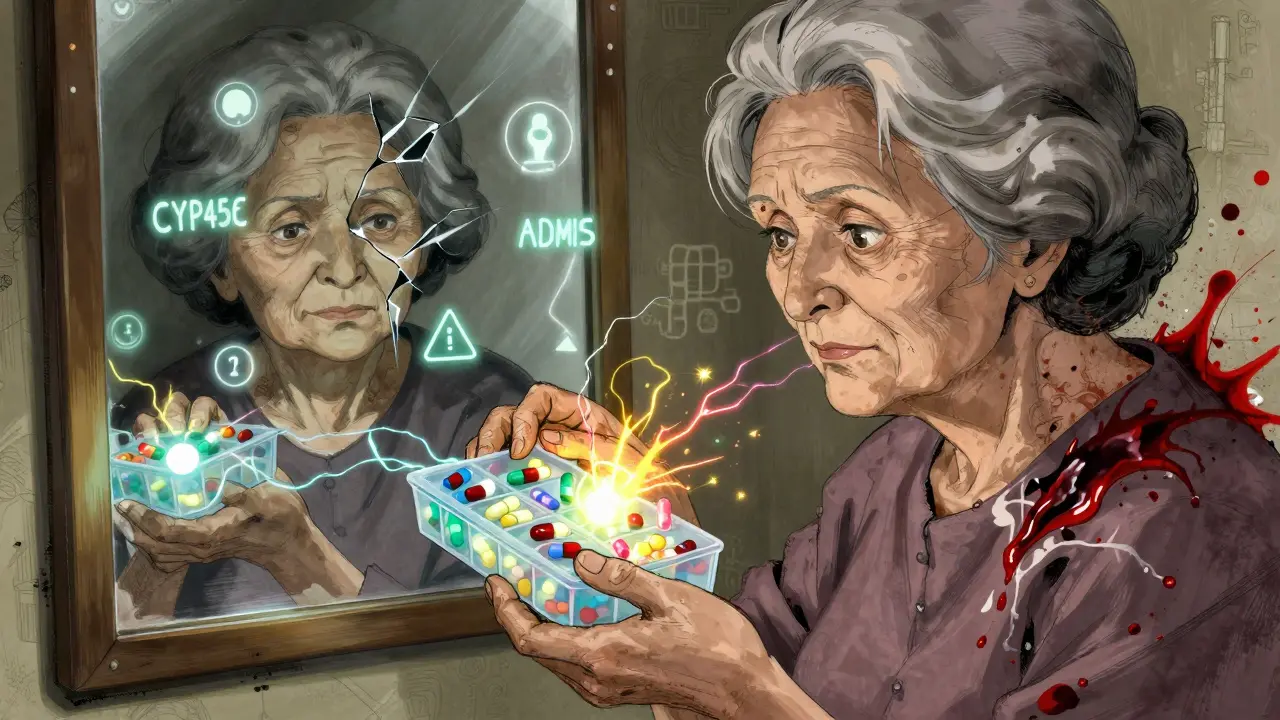
What You Can Do Right Now
You don’t need to be a scientist to protect yourself.- Keep a list of every pill, vitamin, and supplement you take. Include over-the-counter stuff. Even herbal teas.
- Bring that list to every appointment. Not just your doctor. Your pharmacist too.
- Ask: “Could this new medicine react badly with anything else I’m taking?” Don’t wait for them to ask you.
- If you feel dizzy, confused, weak, or have unusual bruising or bleeding after starting a new drug-call your doctor. Don’t wait.
- Don’t assume natural means safe. St. John’s wort can drop the level of 50+ drugs-including birth control and antidepressants.
Why This Matters More Than Ever
We’re living longer. More people are on more meds. New drugs are coming fast-especially biologics for cancer and autoimmune diseases. And many of them have unknown interaction risks. The World Health Organization says better management of these interactions could prevent 1.3 million adverse events worldwide by 2030. That’s 1.3 million hospital stays avoided. That’s billions saved. That’s lives. It’s not about fear. It’s about awareness. You’re not just taking pills. You’re managing a system. And systems fail when parts don’t understand each other. Know the difference between PK and PD. Ask the questions. Speak up. You’re the one who knows how you feel. No algorithm can replace that.Can pharmacokinetic interactions be fixed with a dose change?
Yes, often. If a drug raises or lowers the level of another drug in your blood, your doctor can adjust the dose to stay in the safe range. For example, reducing simvastatin from 40mg to 10mg when taking clarithromycin prevents dangerous muscle damage. But this only works for PK interactions-not PD ones.
Are pharmacodynamic interactions harder to predict than pharmacokinetic ones?
Yes. PK interactions follow clear rules-enzyme inhibition, transporter blocking-so they’re easier to model. PD interactions depend on how drugs affect your body’s systems, like serotonin or blood pressure. Two drugs might have no known interaction on paper, but together cause sudden dizziness or low blood pressure. That’s why symptoms matter more than blood levels with PD.
Can I rely on my pharmacy’s drug interaction checker?
It’s a good start, but not foolproof. Pharmacies use databases like the Flockhart Table, which flag known interactions. But new ones are found all the time-especially with newer biologic drugs. Also, some interactions only show up after weeks of use, or in people with kidney or liver problems. Always double-check with your doctor or pharmacist, especially if you feel different after starting a new med.
Why do some drug interactions only show up after days or weeks?
That’s usually a pharmacokinetic interaction involving enzyme induction. For example, rifampin (an antibiotic) can turn on CYP3A4 enzymes over several days. Once they’re active, they start breaking down other drugs faster-like birth control or blood thinners. The effect builds slowly. That’s why you need to monitor for side effects for at least a week after starting a new medication.
Is it safe to take herbal supplements with prescription drugs?
Not without checking. St. John’s wort can reduce levels of antidepressants, birth control, and even some heart drugs by up to 60%. Garlic and ginkgo can increase bleeding risk with warfarin. Green tea can interfere with beta-blockers. Just because something is “natural” doesn’t mean it’s safe with your meds. Always tell your doctor what supplements you’re using.
What should I do if I think I’m having a drug interaction?
Stop the new medication if it’s safe to do so (don’t stop blood pressure or seizure meds without calling your doctor), and contact your healthcare provider immediately. Write down what you took, when you started it, and what symptoms you’re having. Symptoms like confusion, rapid heartbeat, fainting, unexplained bruising, or severe drowsiness need urgent attention. Don’t wait to see if it gets better.
You might like


Jessie Ann Lambrecht
Wow, this is one of the clearest breakdowns of PK vs PD I’ve ever read. Seriously, if every doctor explained it like this, we’d have way fewer ER visits. I’m a pharmacist and I still learn something new every week-like how St. John’s wort can tank your birth control levels. People think herbal = harmless. Nope. It’s just nature’s silent saboteur.
Also, that 89% AI prediction accuracy? That’s huge. We’re finally moving from guesswork to science. Kudos to the team behind this.
Keep sharing stuff like this. It saves lives.
Kamlesh Chauhan
why do we even need to know this its just more junk to stress over i take my pills and hope for the best who even has time to memorize cyp450 enzymes
Aparna karwande
How pathetic that we’ve reduced human health to a biochemical spreadsheet. You people treat your bodies like malfunctioning machines-dose this, avoid that, monitor levels, check enzymes. But you forget: the body isn’t a lab. It’s a living, breathing, *spiritual* system. You reduce everything to CYP3A4 and serotonin receptors, yet you’re too blind to see that true healing comes from balance, not pharmacology.
And don’t get me started on ‘AI models predicting interactions’-you’re outsourcing your intuition to algorithms built by corporate labs who profit from your dependency. Wake up. Your body doesn’t need more drugs. It needs stillness. It needs truth. It needs to be free from the pharmaceutical machine.
Rachel Steward
Let’s be real-this whole PK/PD distinction is just a fancy way of saying ‘some interactions are measurable, others are chaos.’ And yes, AI predicts PD interactions at 89%, but let’s not pretend that’s a cure. That’s just better pattern recognition. The real problem? Doctors don’t have time to learn this stuff, and patients don’t know how to ask.
Also, why is it that when a drug interacts with another, it’s always the patient’s fault for not reading the label? Where’s the accountability for pharma companies that release drugs without full interaction profiles? We’re treating symptoms of a broken system, not fixing the system itself.
And St. John’s wort? Yeah, it’s dangerous. But so is prescribing SSRIs to teenagers without warning them about the serotonin cascade. We’re all just playing whack-a-mole with side effects while the industry gets richer.
Sai Ganesh
Great summary. I’m from India and see this daily-grandparents on 8+ meds, no one reviewing them. Many don’t even know what they’re taking. The real gap isn’t knowledge-it’s access. Pharmacies in small towns don’t have digital systems. Doctors are overworked. We need community health workers trained to flag interactions, not just tech fixes.
Also, yes to the list. My aunt kept taking turmeric with her blood thinner. No one told her it increased bleeding risk. She ended up in the hospital. Simple things save lives.
Thank you for writing this.
Poppy Newman
🤯 This is why I keep a little notebook in my purse. I write down every new med, supplement, and even the weird tea I start drinking. Last month I added ginger tea and got dizzy for three days. Turned out it was interacting with my BP med. I didn’t know! Now I ask before I ingest anything. 🙌
Also-yes to pharmacists. They’re the real MVPs. My pharmacist once caught a dangerous combo I didn’t even know existed. She’s basically my health guardian angel.
LALITA KUDIYA
thank you for this i never knew the difference between pk and pd but now it makes sense like a dimmer vs a bulb 🌞💡
also st johns wort is sneaky i thought it was just for mood lol
Vince Nairn
So let me get this straight-we’ve got AI predicting drug interactions better than most GPs, but we still rely on patients to ‘ask their doctor’ like that’s a real solution?
Bro. Your doctor has 8 minutes per patient. They’re not reading your 17-pill list. They’re clicking ‘approve’ because the system says ‘no red flags.’
Meanwhile, the guy who wrote this post? He’s probably got 3 PhDs and 12 hours to spare. Most of us are just trying to survive Monday without vomiting.
Stop glorifying awareness. Fix the system. Or stop pretending we’re safe.
Ayodeji Williams
bro this is all fake news lol
pharma companies made up pk and pd to sell more drugs
i took 3 pills and felt fine so its all hype
also my uncle in nigeria takes 12 herbs and 4 pills and still runs marathons so who you gonna believe
💉🌿 #trustyourbody #pharmaisalie
Kyle King
They’re hiding something. Why is it that every time someone gets sick from a drug combo, the FDA says ‘rare’? But then 3 years later, they pull the drug? Coincidence? Nah.
And why do they only start tracking interactions after people die? And why do they use ‘CYP450’ like it’s some secret code? It’s just a way to confuse you so you don’t ask questions.
Also-AI predicting interactions at 89%? That means 1 in 8 times, it misses. And who’s paying for those 1 in 8? YOU.
They’re not protecting you. They’re testing you.
Elen Pihlap
OMG I JUST REALIZED I’VE BEEN TAKING GINKGO WITH WARFARIN FOR 6 MONTHS 😭 I’M GOING TO THE PHARMACY RIGHT NOW I’M SO SCARED
Jonathan Larson
While the technical distinctions between pharmacokinetic and pharmacodynamic interactions are indeed valuable, one must also consider the epistemological implications: the reduction of human physiology to biochemical pathways reflects a broader cultural tendency to externalize agency from the self and delegate responsibility to systems-be they pharmaceutical, algorithmic, or institutional.
True autonomy in health requires not merely awareness of drug interactions, but a reclamation of the embodied self as the primary locus of medical decision-making. The physician, the pharmacist, and the algorithm are tools-not authorities.
Let us not mistake information for wisdom, nor precision for presence.
Anthony Capunong
So you’re telling me the government and Big Pharma are using AI to predict how drugs interact… but we still don’t have mandatory interaction checks built into every prescription system? That’s not progress. That’s negligence.
And why are we still relying on patients to ‘ask their doctor’? My cousin died from a PD interaction because no one thought to ask if she was taking St. John’s wort. She didn’t even think it was a ‘drug.’
We need a federal mandate. Not a suggestion. A mandate. Because right now, people are dying because we treat health like a suggestion, not a right.