
Prior Authorization for Generics: Why Insurance Demands Approval for Low-Cost Medications

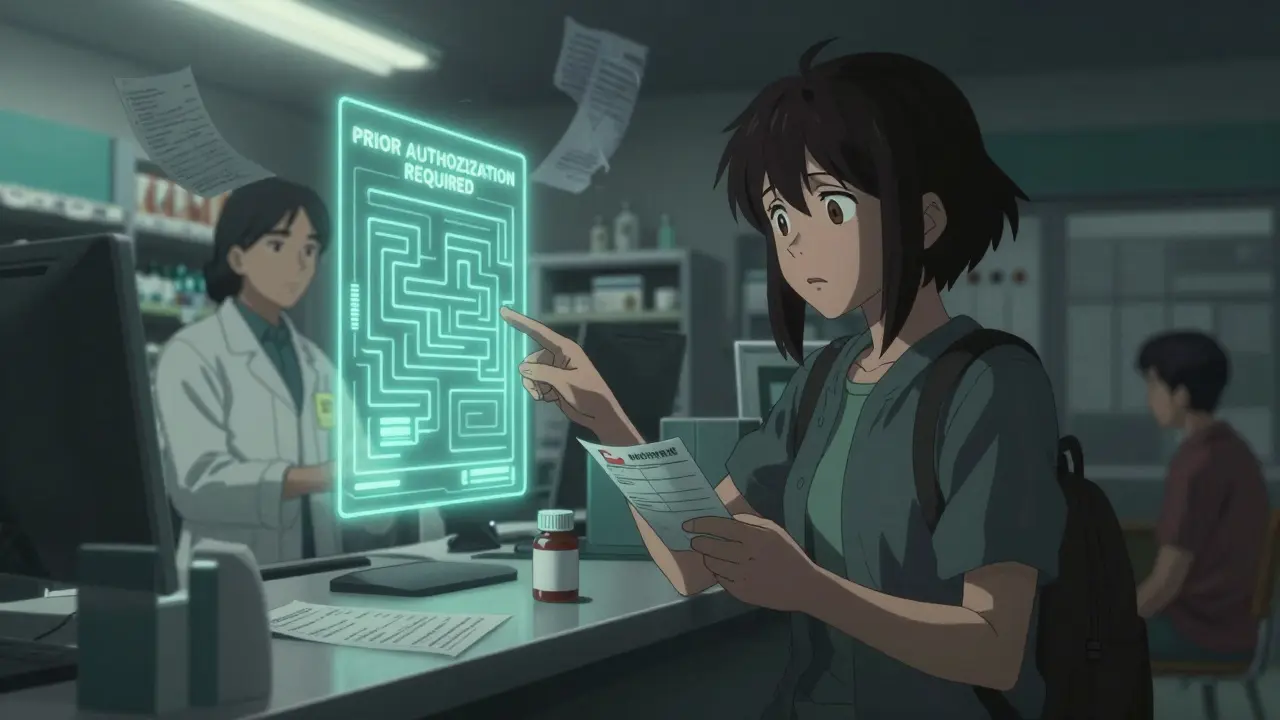
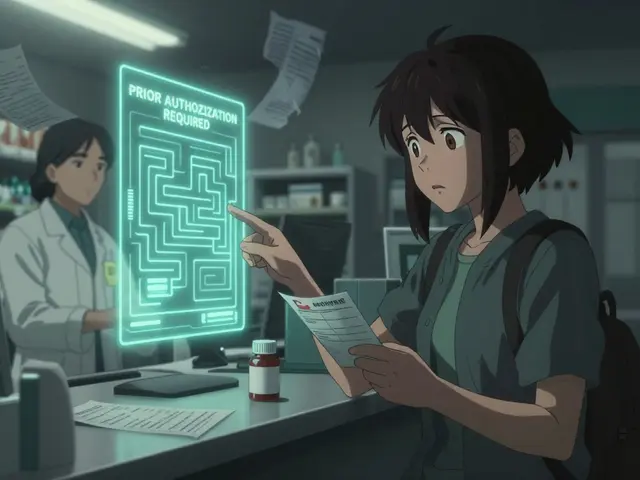
It’s 2026, and your doctor prescribes you a generic version of metformin for type 2 diabetes - the same drug millions of Americans take every day. It’s cheap. It’s safe. It’s been on the market for decades. But when you walk to the pharmacy, the pharmacist says: "We need prior authorization." You’re confused. Why would insurance require approval for a generic? Shouldn’t this be the easy part?
Generics Are Supposed to Be the Solution - Not the Problem
Generic drugs were designed to cut costs. They’re chemically identical to brand-name drugs but cost 80-95% less. In 2023, 90% of all prescriptions filled in the U.S. were for generics. They’re the backbone of affordable care. So why are insurance companies now asking for paperwork before approving them? The answer isn’t about safety or effectiveness. It’s about control. Pharmacy benefit managers (PBMs) and insurers have started applying prior authorization - a process meant to block expensive specialty drugs - to even the most common generics. In 2018, only 5% of generic prescriptions needed prior approval. By 2024, that number jumped to 15-20%. Some classes, like oncology generics, now require approval in 35% of cases. This isn’t just bureaucratic clutter. It’s delaying care. A 2023 American Medical Association survey found that 24% of doctors have seen patients hospitalized because they couldn’t get their medication on time. One patient in a Kaiser Family Foundation case study waited 14 days for generic metformin. Their blood sugar jumped from 6.8% to 8.2% during that delay - a clear sign their diabetes was worsening.How Prior Authorization Works (Even for Generics)
When your doctor writes a prescription for a generic, the pharmacy checks your insurance’s formulary - the list of covered drugs. If the drug is flagged for prior authorization, the pharmacy sends a request to your insurer. This usually happens electronically, but many still use fax or phone. The insurer then asks for documentation. Common requirements include:- Proof that you tried and failed other generics first (step therapy)
- Specific ICD-10 diagnosis codes matching the drug’s approved use
- Lab results or clinical notes showing why this specific generic is necessary
Why Are Insurers Doing This?
At first glance, this makes no sense. Generics save money. So why make patients jump through hoops? The real reason is formulary management. Insurers and PBMs don’t just want to control costs - they want to control which generic gets dispensed. Even though two generics are chemically the same, they might come from different manufacturers. One might pay a bigger rebate to the PBM. So insurers block your doctor’s choice and push you toward the one they profit from. Some insurers use prior authorization to enforce step therapy - forcing you to try a cheaper generic first, even if your doctor knows it won’t work for you. For instance, in Crohn’s disease, even generic methotrexate - a standard treatment - sometimes needs prior approval because insurers want you to try a different generic first. Big insurers have different rules:- Aetna: 25% of generics require prior authorization
- UnitedHealthcare: 22%
- Humana: 18%
Who’s Getting Hurt?
Patients. Providers. The whole system. On Reddit’s r/healthinsurance, users share stories daily: “My insurance won’t cover generic levothyroxine without prior auth.” “I had to wait three weeks for generic metformin. My A1C went up.” “My clinic spends 17 hours a week just on prior auth paperwork - that’s half a staff member’s time.” Doctors are drowning in paperwork. The average physician handles 43 prior authorization requests per week. Nearly 40% of those are for generics. Many providers admit they can’t complete them all. Some skip them entirely - and patients go without meds. And the delays aren’t just inconvenient. They’re dangerous. A 2024 study in the Journal of the American Pharmacists Association found that when patients can’t get their generic meds on time, emergency room visits go up. Hospitalizations rise. Overall healthcare costs increase by 18% - the exact opposite of what prior authorization was supposed to do.What’s Changing? (And When)
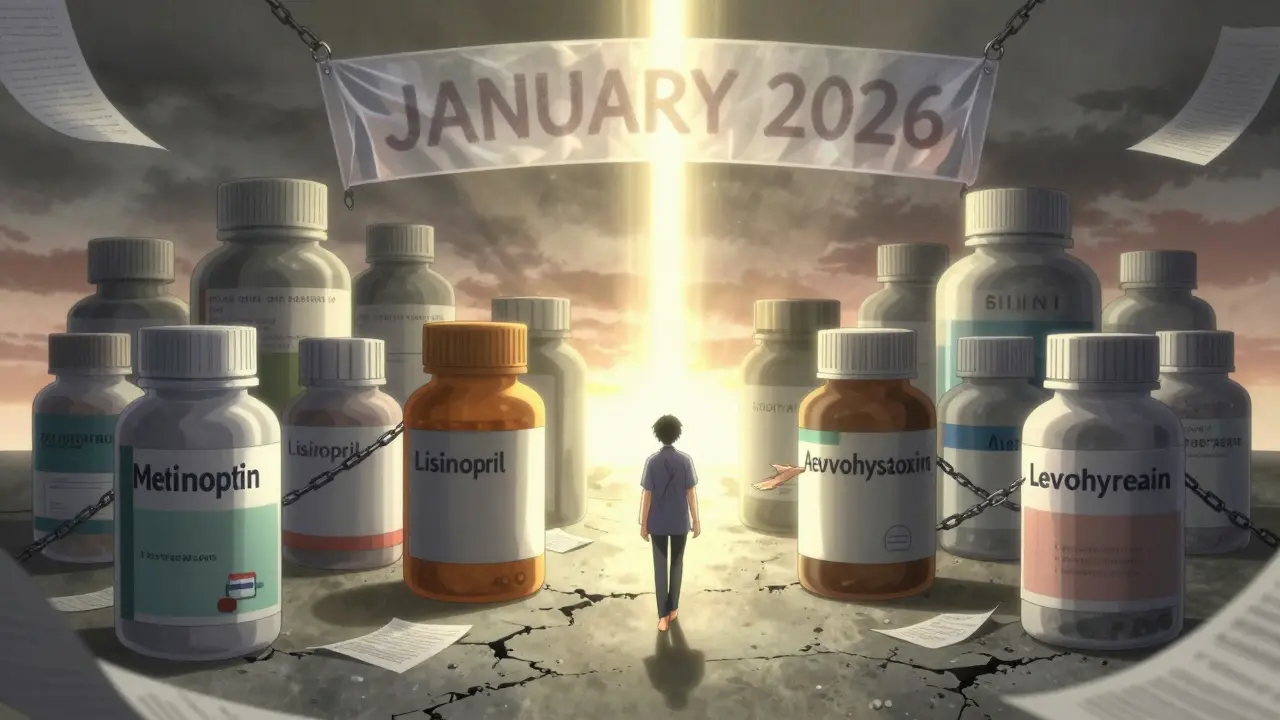
There’s growing pushback. In December 2023, Congress passed the Improving Seniors’ Timely Access to Care Act. Starting in 2026, Medicare Advantage plans must use electronic prior authorization and respond to urgent requests within 72 hours. States are acting too. California’s SB 1024, effective January 2025, bans prior authorization for 47 essential generic drugs - including metformin, lisinopril, atorvastatin, and levothyroxine. And on June 23, 2025, the biggest insurers - Aetna, UnitedHealthcare, Cigna, Humana, and Blue Cross - announced a joint reform. Starting January 2026, they’ll eliminate prior authorization for 12 common generic drug classes:- ACE inhibitors (like lisinopril)
- Statins (like atorvastatin)
- Metformin
- Levothyroxine
- Generic antidepressants (SSRIs)
- Generic beta-blockers
- Generic diuretics
- Generic antihistamines
- Generic proton pump inhibitors
- Generic NSAIDs
- Generic antivirals
- Generic insulin
What You Can Do Right Now
If you’re facing prior authorization for a generic:- Ask your doctor if the prescription is flagged. They should know before you leave the office.
- Request electronic submission. It’s faster. Ask your provider to use CoverMyMeds or another e-Prior Auth system.
- Check your formulary. Log into your insurer’s website and search your drug. If it says “Prior Authorization Required,” you’ll need to act.
- Ask for urgent review. If your condition is unstable - like uncontrolled diabetes or high blood pressure - demand an urgent prior auth. Cigna and others process these in 72 hours.
- Keep records. Save every email, fax confirmation, and phone call. 67% of denials can be overturned with better documentation.
- Appeal if denied. Most insurers have a formal appeal process. Your doctor can help you write a letter explaining why the generic is medically necessary.
What’s Next?
The trend of requiring prior authorization for generics is being reversed - not because insurers suddenly care about patients, but because the system is breaking. Doctors are quitting. Patients are getting sicker. Costs are rising. The Congressional Budget Office predicts that by 2028, prior authorization for generics will drop by 40% if current reforms continue. That’s not just good policy - it’s common sense. The goal of healthcare isn’t to make paperwork harder. It’s to keep people healthy. And if a $4 generic pill can do that - why are we making it so hard to get?Why does my insurance require prior authorization for a generic drug?
Even though generics are cheaper, insurers sometimes require prior authorization to control which version of the drug you get - often because one manufacturer pays a higher rebate to the pharmacy benefit manager. It’s not about safety or effectiveness. It’s about profit and formulary control.
How long does prior authorization for generics take?
Approval times vary by insurer. Standard requests can take 5-10 business days. Urgent requests - for unstable conditions like uncontrolled diabetes or high blood pressure - should be processed within 72 hours under new federal rules starting in 2026. Some insurers still take weeks, especially if paperwork is faxed instead of submitted electronically.
Which generic drugs are most likely to need prior authorization?
Oncology generics, immunosuppressants like methotrexate, and certain psychiatric meds are most likely to require prior authorization. But even common drugs like metformin, lisinopril, levothyroxine, and statins are now being flagged by some insurers. Starting in January 2026, major insurers will eliminate prior auth for 12 key generic classes, including these.
Can I appeal a prior authorization denial for a generic?
Yes. About 67% of denials are overturned on appeal. You’ll need your doctor to submit additional clinical documentation - like lab results, treatment history, or notes explaining why the generic is medically necessary. Don’t give up. Keep copies of every communication.
Are there any generic drugs that can’t require prior authorization?
Yes. Starting January 2025, California law bans prior authorization for 47 essential generic drugs, including metformin, levothyroxine, and atorvastatin. And starting January 2026, major insurers like Aetna, UnitedHealthcare, and Cigna will eliminate prior auth for 12 common generic classes. These are mostly drugs used for chronic conditions where delays cause serious harm.
What’s the difference between prior authorization for brand-name vs. generic drugs?
Brand-name drugs usually require prior authorization to push patients toward cheaper generics. For generics, it’s the opposite: insurers use prior auth to steer patients toward a specific generic version - often the one that pays the biggest rebate. So while brand-name prior auth is about cost-saving, generic prior auth is about profit control.
Can my doctor avoid prior authorization altogether?
Sometimes. If your insurer has an automated system - like some Medicaid programs - certain generics are approved automatically. Also, if your doctor prescribes a generic that’s on your plan’s preferred list, no prior auth is needed. Always ask your pharmacist or insurer if your specific drug requires approval before you leave the office.
You might like
siva lingam
lol why are we even surprised? insurance companies are just profit machines with a side of bureaucracy.
Helen Leite
this is definitely part of the big pharma cover-up 🤫 they want you hooked on expensive drugs... they even make generics need paperwork now. it's all about control. 🧠💊
lorraine england
i’ve been through this with my levothyroxine. they made me try three different generics before approving the one my doctor picked. it’s not about cost-it’s about who’s paying the PBM kickback. 🤷♀️
Alexandra Enns
CAN WE TALK ABOUT HOW RIDICULOUS THIS IS? I’m from Canada and we don’t do this nonsense. We have single-payer and we still get our meds the same day. Why is America so broken? You’re literally punishing people for being poor and sick. This isn’t healthcare-it’s a hostage situation. 🇨🇦😤
Marie-Pier D.
I know this pain so well 😔 My mom waited 3 weeks for metformin last year and ended up in the ER. I just want to say to anyone going through this: you’re not alone. Keep fighting, keep documenting, and don’t let them make you feel like you’re asking too much. You deserve care. 💛
Kevin Waters
just to add-most of these prior auth requests are automated now. the real problem is the insurers’ formularies are rigged to favor certain manufacturers. if your doc prescribes the wrong generic (even if it’s chemically identical), it gets blocked. it’s a scam disguised as policy.
Shelby Marcel
wait so if i take a generic and its the same chemically but diff brand... why do they care? like... is it because the bottle looks different? 🤔
Josh McEvoy
my doctor just gave me a script for generic lisinopril and i was like ‘cool’... then the pharmacy said ‘nah we need faxed docs from your doc’... so now i’m sitting here wondering if my blood pressure is gonna kill me before the fax machine works 😅
Sharon Biggins
i know it sounds crazy but try calling your insurer directly and asking for an urgent review. they have a 72-hour rule now for unstable conditions. my doc helped me fill out the form and i got approved in 2 days. you got this 💪
Tommy Sandri
The structural inefficiencies within the U.S. pharmaceutical supply chain are deeply entrenched. While legislative reforms such as SB 1024 and the Improving Seniors’ Timely Access to Care Act represent meaningful progress, systemic change requires sustained advocacy and regulatory oversight beyond insurer self-regulation.
Luke Davidson
i just want to say thank you to every doctor out there spending 17 hours a week on paperwork instead of with patients. you’re heroes. and to everyone waiting for their meds: i see you. i’ve been there. the system’s broken but we’re not powerless. keep pushing, keep documenting, keep showing up. one day this’ll be a nightmare we look back on like fax machines and dial-up. 🙌❤️
Kat Peterson
OMG I KNEW IT. This is why I switched to cash pay for my meds. Why do you think they make it so hard? Because they know you’ll give up and buy the $200 brand name instead. They’re playing you. 🎭💸 I’m not even mad. I’m just disappointed.