
Prior Authorization Requirements for Medications Explained


When your doctor prescribes a medication, you might expect to walk into the pharmacy and walk out with your pills. But if that medication requires prior authorization, you could be in for a delay - sometimes days or even weeks. This isn’t a glitch in the system. It’s a standard step built into most health insurance plans in the U.S. and other countries with managed care systems. Understanding how it works can save you time, money, and frustration.
What Is Prior Authorization?
Prior authorization (also called pre-authorization or prior auth) is a rule your health plan uses to decide if it will pay for certain medications. Before your insurance covers a drug, your doctor must submit paperwork proving it’s medically necessary. This isn’t about denying care - it’s about making sure you get the right drug at the right cost.Think of it like a gatekeeper. Not every medication gets automatic approval. Some are flagged because they’re expensive, have safer alternatives, or carry risks if used incorrectly. The goal? To avoid wasting money on drugs that aren’t needed - or that could be replaced by something cheaper and just as effective.
Which Medications Usually Require Prior Authorization?
Not all prescriptions need this step. But if your doctor prescribes one of these types, you’re likely to hit a wall at the pharmacy:- Brand-name drugs with generic versions available - If a generic version exists and works just as well, insurers will usually make you try it first.
- High-cost medications - Drugs that cost over $500 a month often require prior auth. Some cancer treatments or rare disease therapies can run thousands.
- Drugs with strict usage rules - For example, a medication might only be approved if you’ve tried and failed two other treatments first. Or it might be limited to patients with a specific diagnosis.
- Medications with dangerous interactions - If you’re already taking other drugs that could cause harmful side effects when mixed, your plan may require review.
- Drugs with abuse potential - Opioids, benzodiazepines, and some stimulants are tightly controlled. Insurers want to make sure they’re not being overprescribed.
- Off-label uses - If your doctor prescribes a drug for a condition it’s not officially approved for (like using a diabetes drug for weight loss), extra documentation is needed.
Medicare Part D plans use prior authorization too. They call it a “coverage determination.” The rules vary by plan, but the process is similar: your doctor must prove the drug is necessary for your condition.
How Does the Process Work?
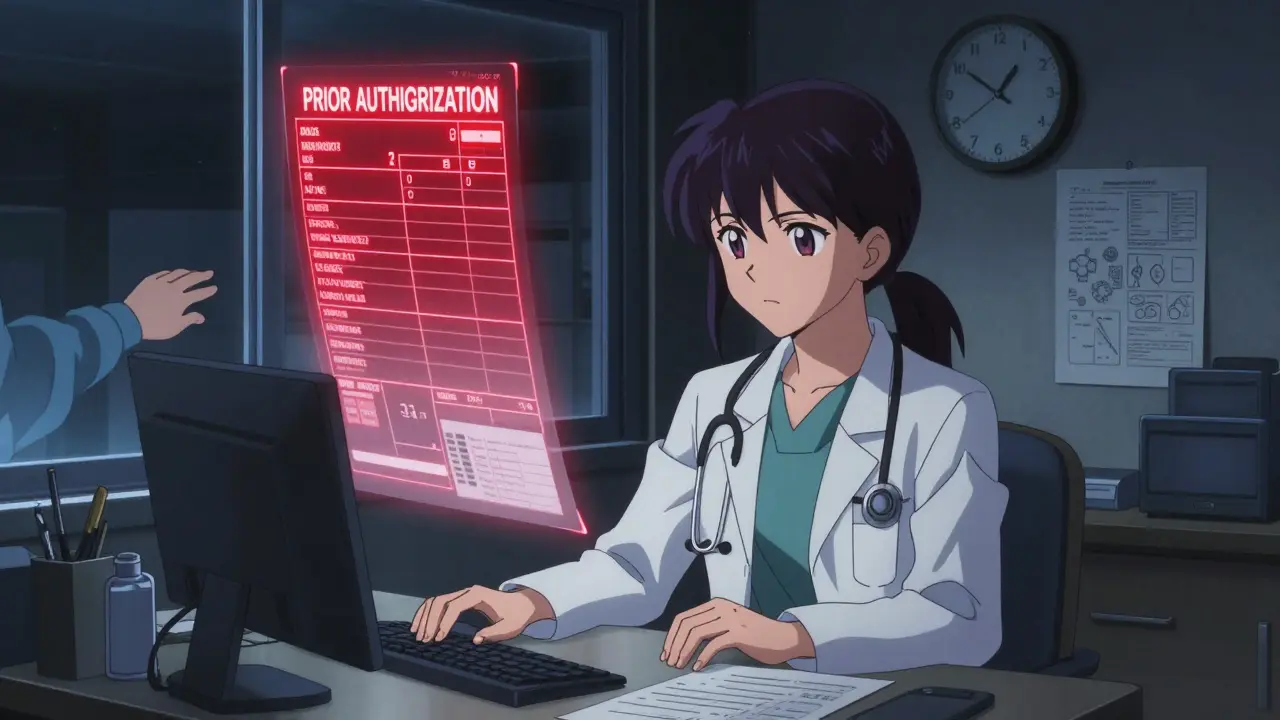
The system isn’t designed to make things hard - but it often feels that way. Here’s how it usually plays out:- Your doctor decides you need a specific medication.
- Their office checks your insurance plan’s formulary (list of covered drugs). If prior auth is required, they start the request.
- Your doctor fills out a form - sometimes online, sometimes faxed - explaining why this drug is needed. They may include lab results, previous treatment failures, or specialist notes.
- The insurance company reviews the request. This can take 24 hours for urgent cases or up to 14 days for standard requests.
- You get a call or letter: approved, denied, or needs more info.
- If approved, the authorization lasts for a set time - often 6 to 12 months. After that, you’ll need to go through it again.
Some plans let you check the status online. Others only notify your doctor. That’s why it’s important to follow up. If you haven’t heard anything after five business days, call your doctor’s office. Ask: “Has the prior auth been submitted? Has it been approved?”
What Happens If It’s Denied?
A denial doesn’t mean you can’t get the drug. It just means the insurance company didn’t see enough proof yet. You have options:- Appeal the decision - Your doctor can file a formal appeal with more evidence. This usually takes 30 to 60 days.
- Try an alternative - Your insurer may suggest another drug on their formulary. Ask if it’s been tested for your condition.
- Pay out-of-pocket - If you can’t wait, you might pay cash for the medication and then submit a claim for reimbursement after approval. Some pharmacies offer discount programs for this.
- Request an emergency override - If you’re in danger without the drug (like a seizure disorder or heart failure), your doctor can mark the request as urgent. Approval can come in as little as 24 hours.
Medicare beneficiaries can also request a “fast track” review if their health is at risk. You can call your plan’s customer service number (found on your member card) to ask about expedited decisions.
What Can You Do as a Patient?
You’re not powerless in this process. Here’s how to stay in control:- Ask your doctor upfront - When a new prescription is written, ask: “Will this need prior authorization?”
- Check your plan’s formulary - Most insurers have a searchable list online. Look up the drug name. If it says “prior auth required,” you’ll know what’s coming.
- Use price-check tools - Many plans offer tools like “Price Check My Rx.” These show you not only coverage status but also cheaper alternatives.
- Don’t assume cash is cheaper - Sometimes, even without insurance, a drug costs less than the copay. Ask the pharmacy for the cash price.
- Keep records - Save every approval letter, denial notice, and call log. If you need to appeal, you’ll need proof.
Remember: your doctor’s office handles the paperwork - but you’re the one who has to follow up. If you don’t ask, no one else will.
Why Does This System Exist?
It’s easy to think prior authorization is just a bureaucratic hurdle. But there’s a real reason it’s in place.Insurance companies don’t cover drugs just because they’re prescribed. They cover them because they’re safe, effective, and cost-effective. For example, if a $3,000 monthly drug has a $50 generic alternative that works just as well, the plan wants you to try the cheaper one first. That saves money - and keeps premiums lower for everyone.
It also prevents dangerous prescribing. A drug that causes liver damage in people with certain conditions won’t be approved unless your doctor shows you’ve been tested and cleared.
And yes - it helps control costs. But experts agree: when done right, it improves care. The Academy of Managed Care Pharmacy says prior authorization ensures patients get “medication therapy that is safe, effective for their condition, and provides the greatest value.”
What About Emergencies?
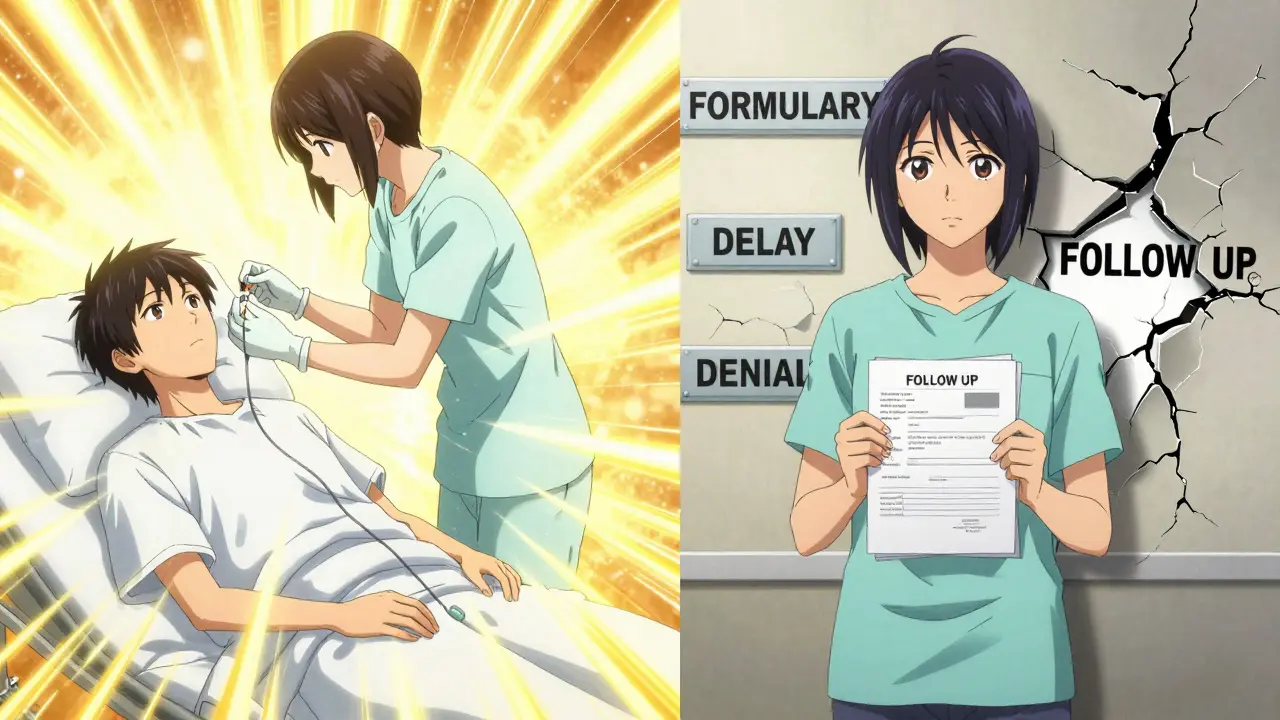
If you’re having a medical emergency - like a heart attack, severe allergic reaction, or uncontrolled diabetes - prior authorization is not required. You get the medication you need immediately. Your insurance will cover it later, as long as it’s medically necessary.But if you’re not in an emergency, don’t assume you’re exempt. A “urgent” situation (like needing a refill on a chronic condition) still requires prior auth. Only true emergencies bypass the system.
Is This Process the Same Everywhere?
No. Prior authorization rules vary by insurer, state, and even pharmacy benefit manager (PBM). Medicare Part D plans have different formularies than private insurers like Cigna or Blue Shield. Some states have passed laws to limit how long the process can take. Others require insurers to approve requests within 24 hours for life-threatening conditions.In New Zealand, where the public health system is fully funded, prior authorization for medications is rare. But if you’re on a private health plan here - or if you’re traveling or living in the U.S. - this system will affect you.
Bottom line: if you’re on insurance, assume any new prescription might need prior auth. Always check.
What’s Changing?
There’s growing pressure to fix the system. Doctors say prior auth takes too long and eats up office hours. Patients say delays hurt their health. In 2023, the American Medical Association called it “a major source of frustration” and urged insurers to simplify the process.Some insurers are starting to use AI to auto-approve common requests. Others are reducing the number of drugs that require prior auth. But for now, the system remains complex - and you need to be prepared.
Does prior authorization mean my insurance doesn’t cover the drug?
No. It just means you need approval before coverage kicks in. The drug is still covered - but only after your doctor proves it’s medically necessary. Once approved, your insurance will pay according to your plan’s rules.
Can I get the medication while waiting for approval?
Yes, but you’ll pay full price. Some pharmacies let you pay upfront and then submit a claim later for reimbursement after approval. This can help if you can’t wait weeks. Ask your pharmacist about cash pricing and reimbursement options.
How long does prior authorization take?
It varies. Standard requests take 3 to 7 business days. Urgent requests - like if you’re at risk of hospitalization - can be approved in 24 hours. Always ask your doctor’s office if they marked it as urgent.
Why does my doctor have to do all the paperwork?
Because they’re the one who prescribed the drug and can best explain why it’s necessary. Insurance companies rely on clinical judgment, not patient requests. Your doctor must provide medical records, diagnosis codes, and sometimes lab results to support the request.
Can I switch to a different drug to avoid prior authorization?
Sometimes. Ask your doctor if there’s another drug on your plan’s formulary that works similarly. Many alternatives exist - especially generics. But don’t switch without consulting your doctor. Some drugs are not interchangeable, even if they treat the same condition.
You might like


Nina Catherine
I just had to go through prior auth for my dad's blood pressure med and it took 11 days. I called the pharmacy every day like it was a job. Seriously, why does this still exist in 2024? My doctor spent 3 hours on paperwork for a $20 generic. 😩
Tommy Chapman
This whole system is just socialism for big pharma. If you can't afford the drug, you shouldn't be on it. Stop expecting insurance to cover every fancy brand-name pill when there's a $3 generic that does the same thing. I've seen people cry over this - I just say 'tough luck.' You want premium care? Pay premium prices. End of story.
Chris Beeley
Let me tell you something about prior authorization - it's not a bureaucratic hurdle, it's a philosophical statement about the commodification of human health. In the U.S., medicine is a transaction, not a right. In Sweden, they don't need this because they treat people as citizens, not balance sheets. But here? We've turned the Hippocratic Oath into a spreadsheet formula. The fact that your doctor has to submit lab results to a third-party algorithm owned by a private equity firm that has no medical license... that's not efficiency. That's dystopia dressed in corporate jargon. And don't get me started on PBMs. They're the real villains. You think the insurer is the enemy? No. It's the middleman who never sees a patient but controls 47% of the drug cost. This isn't healthcare. It's financial engineering with stethoscopes.
Arshdeep Singh
Prior auth isn't the problem - it's the symptom. The real issue is that we let corporations decide what medicine is 'necessary.' Who gave them that power? Not doctors. Not patients. Not Congress. Just CEOs with quarterly earnings targets. Meanwhile, we're stuck in a loop where a diabetic gets denied insulin because 'there's a cheaper option' - but that 'option' causes kidney failure in 30% of cases. We're not saving money. We're just shifting costs to ERs and funeral homes.
James Roberts
Okay, but can we all just agree that the system is a dumpster fire? 🤦♂️ I mean, my mom got approved for her chemo drug after 18 days… and then they changed the formulary and revoked it 3 days later. So now she’s on a 3-month appeal. Meanwhile, the pharmacy keeps calling her saying 'we can't fill this' like she's a criminal. I love how insurers call it 'cost containment' - it's really just 'cost avoidance with paperwork.' And don't even get me started on the fax machines. We have self-driving cars but still fax prescriptions. We're living in a cartoon.
Danielle Gerrish
I just got off the phone with my insurance after my husband’s migraine med got denied. They said 'we need documentation of failed alternatives' - but he’s been on 5 different drugs in the last 2 years! He’s been in the ER twice! I cried in the parking lot. And now I have to beg my doctor to write another letter. I feel like I’m begging for my husband’s life. And they say this is 'protecting patients'? I don’t believe it anymore. This system is designed to make people give up. And too many do.
Jonathan Rutter
I’ve been on the other side of this. I used to work for a PBM. I saw how these decisions were made. 80% of prior auth requests are approved - but only after 3 rounds of back-and-forth. The rest? They’re denied because the algorithm flags 'high utilization' - even if the patient has a rare disease. And guess who gets blamed? The doctor. The patient. Never the system. The real tragedy? The people who never fight back. They just stop taking their meds. And then they end up in the hospital. And guess who pays? Taxpayers. This isn’t about cost control. It’s about shifting blame.
Jana Eiffel
The prior authorization process, while administratively cumbersome, serves a necessary function in the preservation of fiscal responsibility within the broader healthcare ecosystem. It is not an instrument of oppression, but rather a mechanism of evidence-based stewardship. When pharmaceutical expenditures are unregulated, they exert disproportionate strain upon public and private insurance pools, ultimately resulting in premium increases that disproportionately affect lower-income populations. The requirement for clinical justification is not an affront to autonomy, but a safeguard against therapeutic overreach. One must recognize that the system, however imperfect, operates under the ethical imperative of distributive justice.
Freddy King
Look, I get it - prior auth is a pain. But let’s be real: 60% of drugs flagged for prior auth are either duplicates, off-label, or overpriced. The system isn’t broken - it’s working exactly as designed. The real problem? Patients don’t know their formulary. They assume their insurance covers everything. It doesn’t. And doctors? They don’t check either. So now we’re stuck in this loop where people get mad at the system instead of taking 2 minutes to look up their drug on their plan’s website. Also - fax machines? They’re still in use because the EHR systems from 2008 can’t talk to each other. That’s tech debt, not malice.
Robin bremer
i just got my 3rd prior auth denial this month 😭 my anxiety med is now 'not medically necessary' but i've been on it for 8 years?? i feel like my brain is being held hostage by a robot. plz help. #priorauthhell
Jayanta Boruah
The notion that prior authorization is inherently unjust is a fallacy rooted in emotional reasoning rather than economic logic. In societies where healthcare is not commodified, such as in the Nordic model, the state assumes responsibility for cost control. In the United States, the private sector must fulfill this function. The requirement for documentation is not a barrier - it is a filter. It prevents irrational prescribing, which, if left unchecked, would collapse the entire system. The solution is not to abolish prior auth, but to digitize, standardize, and automate it. This is not a moral issue. It is an optimization problem.
Taylor Mead
I think we can all agree this sucks - but the system isn’t evil. It’s just outdated. My doctor’s office uses a portal now that auto-submits most requests. Took them 6 months to train their staff, but now 90% of our prior auths are approved in under 48 hours. The real win? They started using AI to predict which drugs will get denied based on past claims. Now they pre-emptively switch prescriptions. It’s not perfect, but it’s progress. We just need more people pushing for tech upgrades, not just complaining.
Courtney Hain
Prior authorization? It’s not about cost. It’s about control. Did you know that the same company that owns your insurance also owns the pharmacy benefit manager? And that same company owns the AI that auto-declines your prescriptions? And that they’re owned by a hedge fund that’s trying to buy up all the hospitals? This isn’t healthcare. It’s a surveillance state for your medicine. They’re tracking every pill you take. They’re building a profile. And one day, they’ll use it to deny you coverage based on your 'health risk score.' I’ve seen the internal memos. Don’t trust any of this. The system is rigged.