
Blockbuster Patent Expirations 2025 and Beyond: What’s Coming and How It Affects You
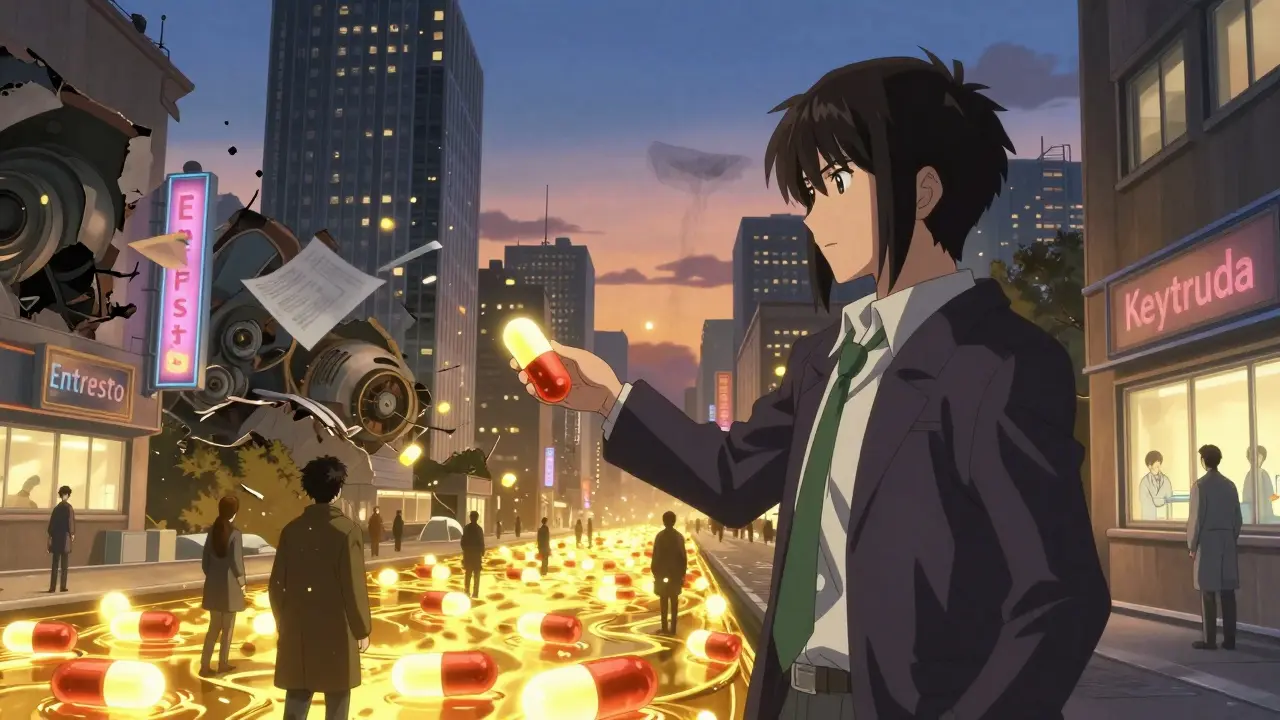
By 2025, the pharmaceutical world is bracing for a tidal wave. Dozens of the most profitable drugs in history are about to lose patent protection, opening the door for cheaper generics and biosimilars. This isn’t just corporate news-it’s going to change how much you pay for medicine, what your doctor prescribes, and even how hospitals manage their supply chains. The drugs hitting the market in the next few years aren’t obscure treatments-they’re the ones millions rely on every day. And the impact? Billions in savings for patients and the healthcare system, but also major upheaval for drugmakers trying to stay ahead.
What Exactly Is a Patent Expiration?
A patent gives a drug company exclusive rights to sell a medicine without competition. That usually lasts 20 years from the date the patent was filed. But because clinical trials take years before a drug even hits the market, companies often get an extra few years of market exclusivity after approval. Once the patent expires, other manufacturers can legally make and sell the same drug under its generic name-at a fraction of the price.
It’s not just one patent per drug. Big brands like Entresto or Keytruda are protected by dozens of patents covering everything from the chemical formula to how it’s packaged and even how it’s taken. These are called patent thickets. But the core patent-the one protecting the actual active ingredient-is the one that matters most. When that falls, the floodgates open.
The 2025-2030 Patent Cliff: Key Drugs and Dates
The next five years will see more blockbuster expirations than any period in history. Here’s what’s coming:
- Entresto (sacubitril/valsartan) - Novartis - U.S. patent expires July 2025. Global sales in 2024: $7.8 billion. This heart failure drug is one of the most important new treatments in a decade. Generics are already in the pipeline, with the FDA approving the first generic version of sacubitril ahead of schedule in October 2024.
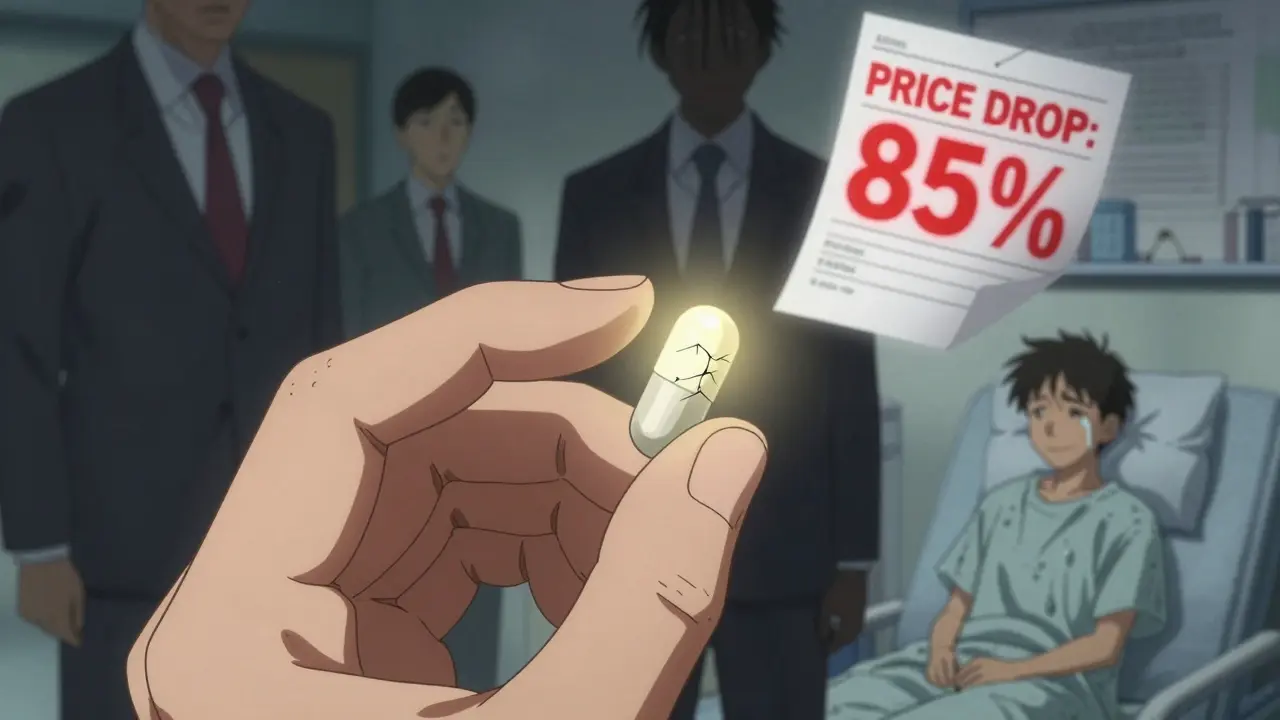
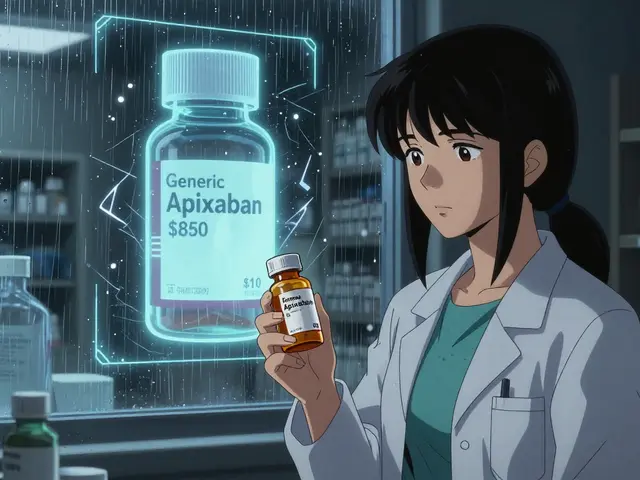
- Eliquis (apixaban) - Bristol Myers Squibb and Pfizer - Key patent expires November 2026. Global sales in 2024: $13.2 billion. This blood thinner is used by over 5 million Americans. Once generics arrive, prices could drop 85% within a year.
- Humira (adalimumab) - AbbVie - First biosimilars entered in 2023, but competition ramps up through 2025. Sales peaked at $21 billion in 2023. Now, over a dozen biosimilars are on the market, cutting prices by 60-70% in many cases.
- Ibrance (palbociclib) - Pfizer - Patent expires March 2026. Used for breast cancer. Global sales: $5.1 billion in 2024.
- Trulicity (dulaglutide) - Eli Lilly - Patent expires late 2026. Diabetes drug with $10.5 billion in 2024 sales. High out-of-pocket costs mean patients will rush to switch once generics are available.
- Keytruda (pembrolizumab) - Merck - Core patent expires 2028. This cancer immunotherapy brought in $29.3 billion in 2024. It’s the single largest revenue source at risk. No direct competitor exists yet, so biosimilars will take years to catch up.
Together, these 65 drugs represent $187 billion in annual global sales at risk between 2025 and 2030. The U.S. market alone accounts for 63% of that value, because drug prices here are far higher than in Europe or Canada.
What Happens When a Patent Expires?
It’s not instant. There’s a process.
First, generic companies must submit an application to the FDA called an ANDA (Abbreviated New Drug Application). They don’t need to repeat expensive clinical trials-they just prove their version works the same. The FDA received 127 ANDAs targeting 2025 expirations in 2024 alone-a 27% jump from the year before.
Once approved, the first generic maker gets 180 days of exclusive sales. After that, dozens more enter. Prices drop fast:
- Small-molecule drugs (like Entresto or Eliquis): 80-90% price drop within 12 months. Generics capture over 90% of the market within two years.
- Biosimilars (like Humira alternatives): Slower uptake. Prices drop 30-40% initially. It takes 3-5 years to reach 75% market share because they’re harder to make and require more testing.
Patients see the difference immediately. A California cardiologist reported patients paying $150-$300/month for Entresto. After generics arrive, that drops to $20-$40. For people on fixed incomes, that’s life-changing.
Who Benefits? Who Gets Hurt?
The winners are clear: patients, insurers, Medicare, and Medicaid. The Congressional Budget Office estimates these expirations will save the U.S. healthcare system $312 billion between 2025 and 2035. That’s $198 billion in savings just from 2025 to 2027.
Pharmaceutical companies? They’re scrambling. Merck is investing $12 billion into next-gen cancer drugs to replace Keytruda’s revenue. Bristol Myers Squibb bought Karuna Therapeutics for $4.1 billion to strengthen its neuroscience lineup ahead of Eliquis’ expiration. Amgen, which relies heavily on biologics, stands to lose 52% of its 2024 revenue from expiring patents.
Generic manufacturers are winning big. Teva, Mylan, and Sandoz are leading the race, with over 140 companies worldwide developing products targeting these expirations. Teva alone has 37 drugs in development.
What This Means for You
If you take one of these drugs:
- Start asking your doctor or pharmacist about generics. Even before the patent expires, many insurers will push you toward cheaper alternatives.
- Check your prescription costs. Many pharmacies will start offering generic pricing months before the official expiration date.
- Don’t assume brand = better. The FDA requires generics to be identical in active ingredients, dosage, strength, and effectiveness.
- Watch for supply issues. The first wave of generics often faces production delays. That’s what happened with Humira biosimilars-shortages caused delays in patient access.
For patients with heart failure, diabetes, or cancer, this isn’t just about cost-it’s about access. Right now, many skip doses because they can’t afford their meds. Once generics arrive, adherence will improve dramatically.
How Healthcare Providers Are Preparing
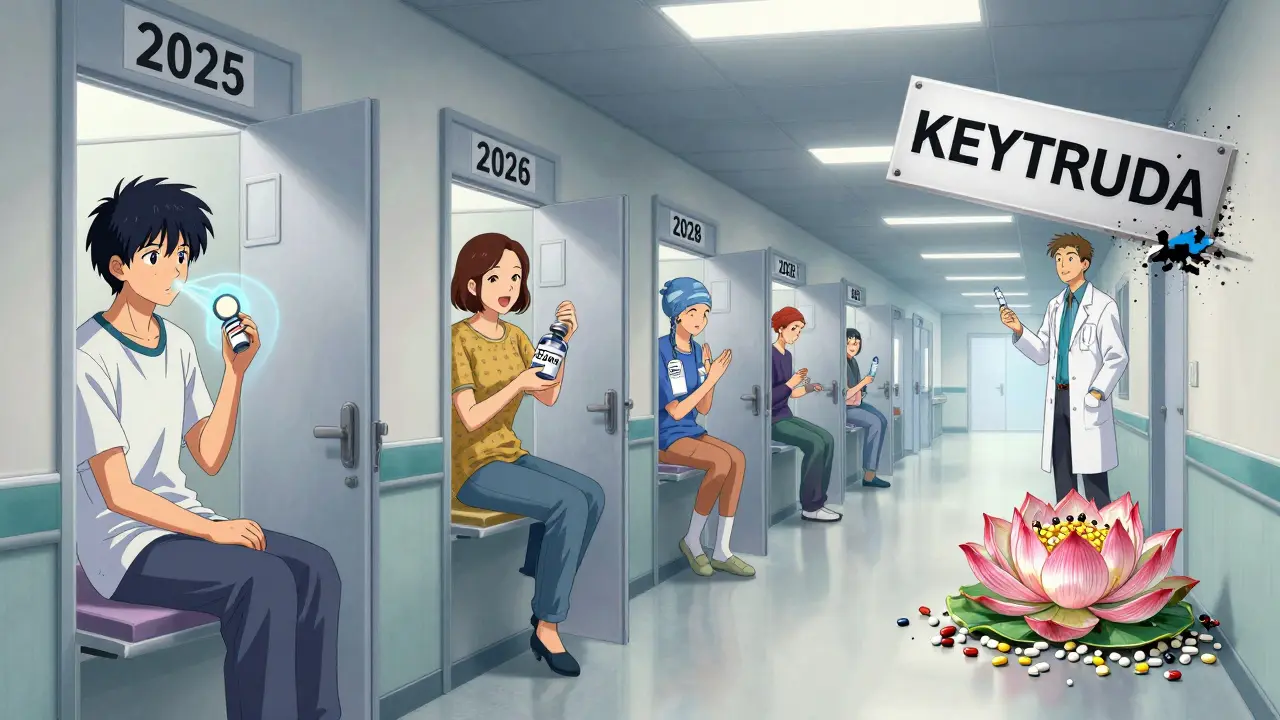
Hospitals and pharmacies aren’t waiting. According to the American Society of Health-System Pharmacists, 87% of hospital pharmacy directors are already preparing for the 2025 expirations. They’re:
- Updating formularies (lists of approved drugs)
- Training staff on switching protocols
- Signing contracts with generic manufacturers ahead of time
- Creating patient education materials
Some hospitals have already negotiated 60% price reductions with pharmacy benefit managers (PBMs) for Entresto, even before generics are available. That’s how seriously they’re taking this.
What’s Next After 2030?
The patent cliff doesn’t end in 2030. New drugs are coming, but they’re expensive. Gene therapies, mRNA treatments, and targeted cancer drugs are the next frontier. But they’re not cheap-some cost over $1 million per patient.
Industry experts are divided. McKinsey believes innovation will replace 65-75% of lost revenue by 2030. Others, like Jefferies, predict consolidation: the top 10 drugmakers could shrink to 6 or 7 by 2035 as smaller companies get bought out.
One thing’s certain: the era of sky-high drug prices for blockbusters is ending. The question isn’t whether generics will win-it’s how fast and how fairly they’ll be distributed.
When will Entresto generics be available?
The core patent for Entresto (sacubitril/valsartan) expires in July 2025 in the U.S. The FDA has already approved the first generic version of sacubitril ahead of schedule in October 2024. Generic versions of the full Entresto combination should hit the market by mid-2025. Prices are expected to drop by 85% or more compared to the brand-name version.
Will my insurance force me to switch to a generic?
Many insurers will automatically switch you to a generic once it’s available, especially if it’s on their preferred drug list. You’ll usually get a notice from your pharmacy or insurer before the change. If you have concerns about switching, talk to your doctor-they can request a prior authorization to keep the brand if medically necessary.
Are biosimilars the same as generics?
No. Generics are exact copies of small-molecule drugs, like pills. Biosimilars are similar-but not identical-to complex biologic drugs made from living cells, like Keytruda or Humira. They’re not interchangeable without a doctor’s approval. Biosimilars take longer to develop, cost more to produce, and face more regulatory hurdles than traditional generics.
Why does Keytruda’s patent expiration matter so much?
Keytruda generated $29.3 billion in sales in 2024 alone-more than any other drug in history. It’s used for over a dozen cancers and has no direct competitor. When its patent expires in 2028, biosimilars will take years to enter the market, but when they do, Merck could lose $15 billion in annual revenue within 18 months. This will reshape cancer care pricing and access globally.
Can I get a generic before the patent expires?
Not legally. Generic manufacturers can’t sell their versions until the patent expires. However, some pharmacies may offer discount programs or patient assistance plans that lower the cost before generics arrive. Also, some insurers may start negotiating lower prices with the brand-name maker in anticipation of competition.
You might like
Gaurav Kumar
Finally! India's generic manufacturers are about to dominate global pharma. 🇮🇳💥 The US pays 5x more for drugs than we do - and now we're the ones making them. Entresto generics? We'll produce them cheaper than your coffee. Let them cry over their $300 bills while we ship millions of pills to the world. #GenericRevolution
David Robinson
I don't care how much it saves. I want my doctor to keep prescribing the brand. Generics are for people who can't afford to be healthy. My insurance already tried to switch me to some weird pill with no logo. I said no. And I'm not alone. People are scared. And they should be.
Jeremy Van Veelen
THIS IS THE END OF PHARMA AS WE KNOW IT. 🌪️ Keytruda - $29 BILLION - gone. In 2028. Imagine the chaos. Merck’s stock will crater. Investors will flee. And the FDA? Still slow. Still bureaucratic. Still letting biosimilars take FIVE YEARS to get approved. This isn’t progress - it’s a slow-motion train wreck. And we’re all on board.
Laura Gabel
Generics are fine but why do we still have to pay for brand names if they're literally the same thing? My mom took Humira for 8 years. Switched to biosimilar. No difference. Now she pays $40 a month. Why did we let corporations charge $2000 for decades? Ridiculous.
jerome Reverdy
The patent cliff is a classic case of market equilibrium kicking in. Big pharma built monopolies on regulatory arbitrage - 20 years of exclusivity, plus 5 more from trial delays, plus patent thickets like legal armor. Now the system’s correcting. Generics aren’t 'inferior' - they’re the natural outcome of R&D amortization. The real story? The supply chain’s gonna buckle. First wave shortages? Guaranteed. And no one’s ready.
Andrew Mamone
This is why I love science 🧬💊. Patents aren’t just about profit - they’re about incentivizing innovation. But once the science is out there? The world should have access. The fact that a heart failure drug can go from $300/month to $20? That’s not a bug - it’s the system working. I’m just glad I’ll be able to afford my meds now. 🙏
MALYN RICABLANCA
I TOLD YOU. I TOLD YOU ALL. Big Pharma is a SCAM. They don't cure you - they keep you on life support for decades. Entresto? Eliquis? Keytruda? They're not miracles - they're cash cows. And now? The cows are coming home. 💥💸 I’ve been waiting for this since 2017. My blood pressure? It’s dropping. My bank account? It’s rising. I’m not sorry. I’m vindicated.
gemeika hernandez
I got my generic Eliquis last month. Same pill. Same results. My doctor said it was fine. I saved $200. I didn’t even notice a difference. Why did we pay so much? I don’t get it. It’s just chemistry. Why is it so expensive? Someone’s lying.
Nicole Blain
This is actually really cool 😊 I’ve been on Trulicity for 3 years. My insurance just emailed me saying they’re switching me to generic next month. I was nervous - but then I read the FDA info. Same active ingredient. Same dosage. Same everything. I’m kinda excited. Like… I’m finally getting a fair deal.
Kathy Underhill
The real tragedy isn't the loss of monopoly profits. It's that we waited so long. We could have had generics for Humira in 2018 if not for aggressive litigation. We could have saved $100 billion already. Instead, we let corporations game the system. Now, when the flood comes - it's too late for many who couldn't afford to wait. This isn't innovation. It's damage control.
Srividhya Srinivasan
I knew it. I KNEW IT. This is all a CIA-backed plot to destroy American medicine. The FDA approved generics? That’s not science - that’s foreign influence. China and India are flooding our market with cheap pills made in underground labs. What’s in them? Who knows? My cousin’s neighbor’s dog got sick after taking a generic. Coincidence? I think not.
Prathamesh Ghodke
Honestly? I’m just happy for the folks who couldn’t afford these drugs before. I work in a clinic in Mumbai. We had a guy with heart failure who skipped doses because Entresto cost 3 months of his salary. Now? His kid’s studying to be a pharmacist. That’s the real win. The patents? They served their purpose. Now let the people breathe.
Stephen Habegger
This is huge. I’ve been waiting for this for years. I work in pharmacy. People cry when they find out they can save 90%. It’s not just money - it’s dignity. You’re not a burden anymore. You’re not choosing between insulin and rent. This? This is healthcare.
David Robinson
You think it’s that simple? My doctor says generics can have different fillers. Different absorption rates. I’ve had patients get sick switching. You think the FDA checks every batch? Nah. They’re overwhelmed. This isn’t freedom - it’s a gamble.