
Pill Splitting Safety: Which Medications Are Safe to Split and Which Are Not

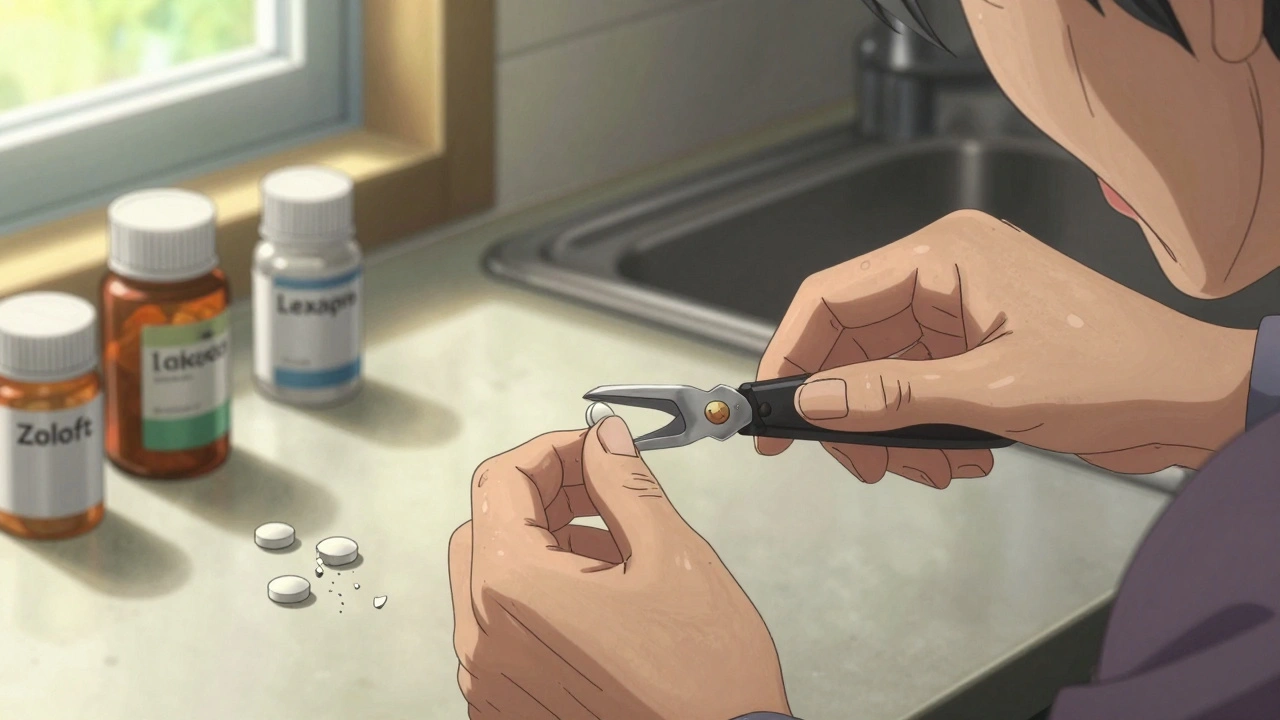
Splitting pills might seem like a simple way to save money or make swallowing easier, but it’s not always safe. Many people do it without knowing the risks - and that’s where things can go wrong. A 2023 survey found that 41% of adults over 65 split their pills without talking to a doctor or pharmacist first. That’s a lot of people guessing when they should be getting clear instructions.
Why People Split Pills
Most people split pills for one of three reasons: cost, difficulty swallowing, or lack of the right dosage. Let’s break it down.Cost is the biggest driver. A 10mg tablet of amlodipine often costs the same as a 5mg tablet. Splitting the 10mg gives you two 5mg doses for the same price - cutting your monthly cost in half. For medications like sertraline or fluoxetine, that can mean saving $150 to $200 a year per prescription. That’s real money, especially on a fixed income.
Swallowing pills gets harder as we age. About 14% of adults over 65 have trouble swallowing tablets. For them, splitting a large pill into two smaller pieces can make a huge difference in sticking to their treatment plan.
And sometimes, the exact dose you need isn’t made. For example, if you need 12.5mg of hydrochlorothiazide but only 25mg tablets are available, splitting is the only practical option - if done correctly.
What Makes a Pill Safe to Split?
Not all pills are created equal. The key is understanding how the medicine is made.Immediate-release tablets are usually safe to split - if they have a score line. That’s the groove you see down the middle. It’s not just for looks. It’s a sign the manufacturer designed the tablet to break evenly. Common examples include:
- Citalopram (Celexa)
- Escitalopram (Lexapro)
- Fluvoxamine (Luvox)
- Sertraline (Zoloft)
- Amlodipine (Norvasc)
- Hydrochlorothiazide
These are all immediate-release formulations. That means the drug is released into your body quickly after swallowing. Splitting them doesn’t change how they work.
But here’s the catch: even scored tablets aren’t always safe. A 2023 FDA review found that 32% of scored tablets still don’t split evenly because of how they’re pressed or coated. That’s why you need a proper tablet cutter - not a knife or scissors.
Medications You Should NEVER Split
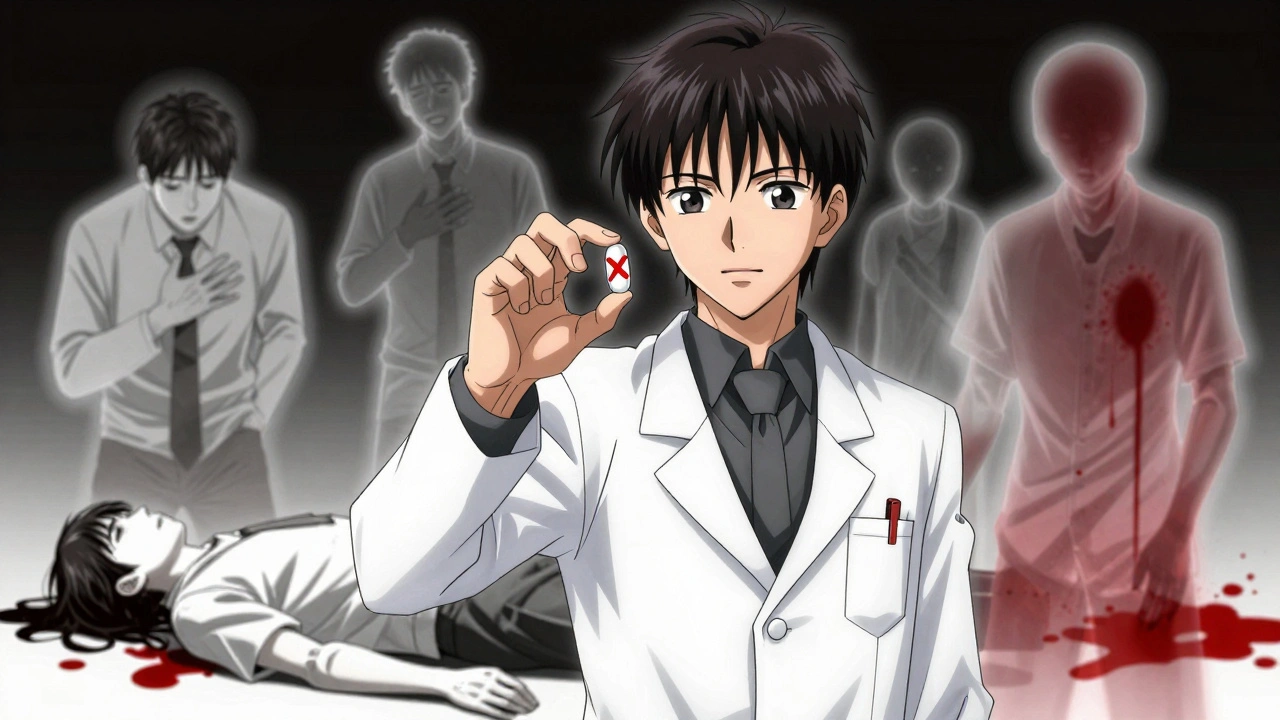
Some pills are dangerous to split. Splitting them can cause serious harm - or even be life-threatening.Extended-release (ER) or controlled-release (CR) tablets are designed to release medicine slowly over hours. Splitting them destroys that mechanism. The entire dose can rush into your system at once. This has led to overdoses with drugs like oxycodone (OxyContin), diltiazem, and metoprolol. In one case, a patient split an ER metoprolol tablet and ended up in the hospital with a dangerously slow heart rate.
Enteric-coated tablets have a special coating that prevents them from dissolving in the stomach. They’re meant to pass through to the intestines. Splitting breaks that coating, which can cause stomach irritation, nausea, or even ulcers. Common examples include:
- Alendronate (Fosamax)
- Aspirin EC
- Omeprazole (Prilosec)
Capsules - especially those with powders or gels - should never be opened or split. You can’t control the dose, and you risk inhaling or spilling a dangerous amount. This includes medications like ciprofloxacin extended-release capsules and many antibiotics.
Hazardous drugs like oral chemotherapy agents or paroxetine (Paxil) can be dangerous to handle. Paroxetine is classified by NIOSH as a hazardous drug because of its reproductive toxicity. Even tiny amounts of dust from a split tablet can be harmful if inhaled or absorbed through the skin.
Dabigatran (Pradaxa) is another no-go. It’s a blood thinner with a very narrow therapeutic window. A 10% dose variation can lead to clots or bleeding. The Institute for Safe Medication Practices added it to their 2023 High-Alert Medications list specifically because of splitting risks.
How to Split Pills Safely
If your doctor or pharmacist says it’s okay to split your pill, here’s how to do it right.Use a tablet cutter. A simple plastic or metal device with a blade and a groove costs less than $10. It holds the pill steady and gives you a clean split. Don’t use a knife, scissors, or your fingers. Studies show that using a proper cutter reduces dose variation from 25-72% down to 8-15%.
Split one pill at a time. Never split your whole month’s supply. Once a tablet is split, the exposed surface starts to absorb moisture and degrade. Potency can drop by up to 35% in just 72 hours. That means your second half might not work as well - or could even be unsafe.
Store split halves properly. Keep them in an opaque, airtight container away from heat and humidity. Replace them every 3 days. Don’t leave them on the counter or in a bathroom cabinet.
Wash your hands. Before and after splitting. Especially if you’re handling hazardous drugs like paroxetine or chemotherapy pills.
Check for crumbling. If the tablet breaks unevenly, crumbles, or doesn’t split cleanly, stop. That’s a sign it’s not meant to be split - even if it has a score line.
What to Ask Your Pharmacist
Before you split any pill, talk to your pharmacist. Ask these questions:- Is this medication approved for splitting in the package insert?
- Is it extended-release, enteric-coated, or a capsule?
- Are there any risks specific to this drug?
- Do you recommend a tablet cutter? Can you show me how to use it?
- Is there a lower-dose version available? It might cost more, but it’s safer.
Most pharmacists (78%) say they routinely advise against splitting unless it’s clearly listed as safe. Don’t assume it’s okay just because you’ve seen others do it.
Cost vs. Risk: Is It Worth It?
Splitting pills saves money - but not always safely.On average, splitting saves patients about $187 per year per medication, according to GoodRx. For a 65-year-old on three split pills, that’s nearly $600 a year. That’s significant.
But the risks are real. The Agency for Healthcare Research and Quality estimates that improper pill splitting causes $287 million in healthcare costs each year in the U.S. from errors, hospital visits, and complications.
And here’s the kicker: many manufacturers now make lower-dose versions. A 5mg amlodipine tablet might cost 35-50% more than a 10mg tablet - but it’s 99.8% accurate. No guessing. No crumbling. No risk of overdose.
For some people, the extra cost is worth the peace of mind. Especially if you have arthritis, shaky hands, or vision problems. A tablet cutter might be too hard to use.
What’s Changing in 2025?
The rules are getting stricter. In March 2023, the FDA required all manufacturers to include splitability info in electronic prescribing labels. By December 2024, this applied to over 1,200 drugs. That means your pharmacy’s system should now flag if a pill isn’t meant to be split.Pharmacies are also rolling out digital tools. Apps from Walgreens, CVS, and others now show you whether your pill can be split, how to do it safely, and even remind you to replace split halves every 72 hours. These tools have cut splitting errors by 29%.
But the biggest shift is coming from drug design. Newer medications are being developed as soluble films, multi-particulate systems, or liquid formulations. These eliminate the need to split pills altogether. Experts predict pill splitting will drop by 25% over the next decade as these alternatives become more common.
Bottom Line: When to Split - and When to Skip It
Pill splitting can be a smart, cost-saving move - but only if you know exactly what you’re doing.Safe to split: Immediate-release tablets with a clear score line, approved by your pharmacist, split one at a time, with a proper cutter, and used within 72 hours.
Never split: Extended-release, enteric-coated, capsules, hazardous drugs, or any pill without clear approval from your doctor or pharmacist.
If you’re unsure, don’t guess. Call your pharmacist. Ask for a lower-dose version. Or ask if there’s a liquid form. Your health isn’t worth the risk of a bad split.
Medication safety isn’t about saving a few dollars. It’s about making sure every dose works exactly as it should - no more, no less.
You might like

Iris Carmen
lol i just crush my zoloft between two spoons and call it a day. no cutter, no worries. been doing it for 5 years and still breathing 😎
Shubham Mathur
People think splitting pills is just about money but its about dignity too. My grandma couldn't swallow a whole pill so she split it to keep her meds down. You wanna lecture her about FDA guidelines? Go talk to her when she's choking on a 20mg tablet while her pension barely covers rent. This isn't a lab experiment its survival
Noah Raines
Y’all are overcomplicating this. If it’s scored and your doc says it’s fine, split it. If it’s ER or coated, don’t. Simple. Also use a cutter. I got one for $7 at Walmart. No need to be a pharmacist to not kill yourself. 😅
Chris Marel
I appreciate how detailed this is. My uncle split his blood pressure pill for years until he had a stroke. They found out later the tablet wasn’t scored properly. I now make sure everyone in my family checks with their pharmacist first. Knowledge saves lives.
Brianna Black
Let me just say - as someone who has spent 17 years in geriatric care - the assumption that pill splitting is a harmless cost-saving hack is not only dangerous, it’s culturally negligent. We treat elderly patients like they’re puzzle pieces to be broken apart for convenience, not human beings who deserve precision in care. The FDA’s 2023 update was a step forward, but systemic change requires pharmacies to offer subsidized low-dose alternatives - not just warn people not to split. We’ve outsourced safety to the consumer, and that’s a moral failure.
When you reduce a person’s dignity to a spreadsheet of drug costs, you’ve already lost the plot.
precious amzy
One must question the epistemological foundations of pharmaceutical pragmatism. Is the act of pill-splitting not a metaphysical compromise - a surrender to the capitalist reduction of health to commodity? The scored tablet, a false promise of equilibrium, mirrors the illusion of control in an age of pharmacological chaos. We do not split pills - we fragment our very ontology in exchange for pennies.
And yet, the very existence of this discourse reveals the grotesque absurdity of modern medicine: a system that produces 10mg tablets but refuses to manufacture 5mg ones - not due to biological constraints, but due to profit margins. The pill is not a medicine - it is a symbol of our surrender to corporate logic.
Maria Elisha
ugh i just take my meds whole. if i can’t swallow it, i get a different one. why is this even a thing?
Morgan Tait
Did you know the FDA doesn’t actually test every single tablet for split accuracy? They just rely on manufacturers’ claims. And who funds those manufacturers? Big Pharma. The real reason they don’t make 5mg versions? Because they make more money off the 10mg ones. The whole pill-splitting debate is a distraction - they want you thinking about how to split it safely, not why the dose options are so limited in the first place. I’ve seen the internal memos. It’s all about profit. Always.
Nikhil Pattni
Okay but let’s be real - most people who split pills don’t even know what extended release means, right? I mean, I’ve seen people split omeprazole capsules and just pour the powder into applesauce like it’s cereal. And then they wonder why they get heartburn. And don’t even get me started on people who split paroxetine and then touch their face - hello, serotonin syndrome and skin rashes. This isn’t just about cost - it’s about people being dangerously clueless. You need a 5mg tablet? Get a 5mg tablet. Stop playing Russian roulette with your nervous system. Also, I have a tablet cutter from Japan that’s precision-engineered - I’ll send you the link if you want. It’s $19.99 but worth every penny. Trust me, I’ve tested 17 brands.
Andrea Beilstein
There’s something sacred about the ritual of taking medicine. The way the pill sits in your palm. The water. The quiet moment before you swallow. Splitting it - even if it’s safe - breaks that rhythm. It turns healing into a chore. A calculation. A hack. We used to trust our doctors. Now we trust a score line and a $10 cutter. I wonder if we’ve lost something deeper than dosage accuracy.
Stacy Tolbert
I split my citalopram every day. I’ve been on it for 12 years. I use a cutter. I store the halves in a tiny glass jar. I’ve never had an issue. But when I told my sister she shouldn’t split hers because it’s coated? She cried. Said I was being controlling. I just want everyone to be safe. I don’t get why people get mad when you care.
Noah Raines
^^^ this. I split my amlodipine too. Same routine. Glass jar. 3-day rule. No drama. You don’t need a PhD to do this right. Just common sense and a $7 tool. Stop overthinking it. And stop shaming people who save money to eat. 🙃