
How to Report Adverse Drug Events to FDA MedWatch: A Step-by-Step Guide

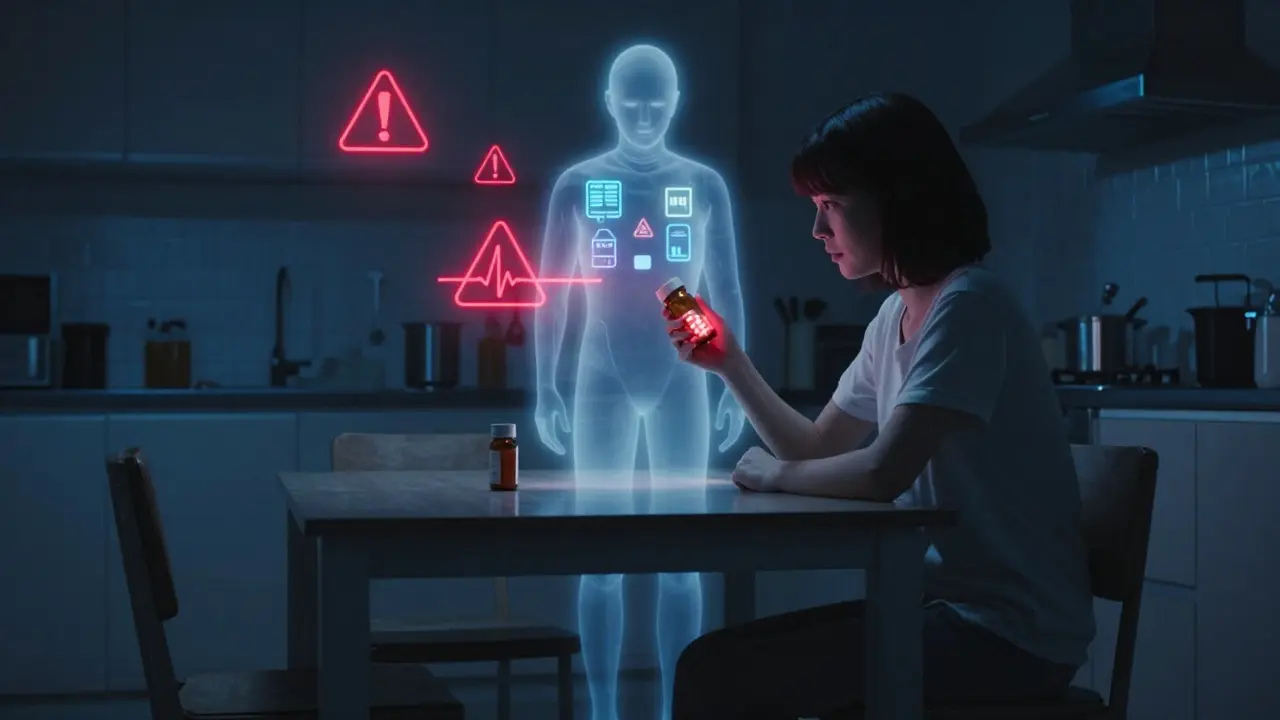
Every year, millions of people take prescription drugs, over-the-counter medicines, and medical devices without issue. But for some, a medication causes an unexpected and harmful reaction. These are called adverse drug events - and they matter. The FDA uses these reports to spot dangers that didn’t show up in clinical trials. If you’ve experienced a bad reaction, reporting it isn’t just helpful - it could save someone else’s life.
What Is MedWatch, Really?
MedWatch is the U.S. Food and Drug Administration’s official system for collecting reports about harmful side effects from drugs, medical devices, and other regulated products. It started in 1993 to make it easier for doctors, pharmacists, and regular people to tell the FDA when something went wrong. Today, it receives about 1.3 million reports each year. That’s more than 3,500 per day.
These reports feed into the FDA Adverse Event Reporting System (FAERS), which helps the agency decide whether a drug needs a stronger warning, a dosage change, or even removal from the market. In 2021, MedWatch data led to 47% of all safety label updates for prescription drugs. One example? A black box warning for SGLT2 inhibitor diabetes drugs after 1,247 reports linked them to a rare but deadly infection called Fournier’s gangrene.
But here’s the catch: experts estimate only 1% to 10% of actual adverse events get reported. That means for every serious reaction that triggers a safety alert, dozens - maybe hundreds - go unnoticed. Your report could be the one that makes the difference.
Who Should Report?
You don’t need to be a doctor to report. Anyone can - patients, caregivers, family members, nurses, pharmacists, or even dentists. The FDA encourages reports from everyone because real-world use is different from controlled clinical trials.
There are two types of reporters:
- Voluntary reporters: This includes patients, consumers, and healthcare professionals. You report because you care - not because the law forces you.
- Mandatory reporters: Drug manufacturers, medical device companies, importers, and hospitals must report serious events within 10 days. They use Form 3500A. This article focuses on voluntary reporting - the kind you can do.
If you’re unsure whether an event is reportable, ask yourself: Was it unexpected? Did it happen after taking the product? Could it have been caused by the drug? If yes, report it. You don’t need to prove causation. The FDA will sort that out.
How to Report: Step by Step
There are three ways to submit a report. All are free, confidential, and available 24/7.
Option 1: Online - Fastest and Recommended
Go to FDA.gov/MedWatch and click “Report a Problem.” You’ll see two forms:
- Form 3500 - For healthcare professionals (doctors, nurses, pharmacists). It has 45 fields, including lab results, medical history, and drug dosing.
- Form 3500B - For patients and consumers. It’s simpler, with 30 fields. Skip the medical jargon - just tell your story.
Here’s what you need to have ready before you start:
- Patient’s first name, age, sex (no full Social Security number needed - initials or medical record number are fine)
- Exact name of the drug or device (brand and generic if you know both)
- When you started and stopped taking it
- When the reaction started and how long it lasted
- A clear description of what happened (e.g., “I developed a rash after 3 days,” or “I passed out 2 hours after taking my pill”)
- Any hospitalizations, ER visits, or doctor’s notes related to the event
- Your contact info (email or phone - this is how the FDA may follow up)
It takes 15 to 20 minutes to complete. The form auto-saves every 30 seconds, so you won’t lose your work if your internet drops. After you submit, you’ll get an email confirmation within 21 days.
Option 2: Phone - For Those Who Prefer Talking
If filling out a form feels overwhelming, call the MedWatch hotline: 1-800-FDA-1088. It’s staffed 24/7. In 2023, 95% of calls were answered within 30 seconds.
A trained representative will ask you the same questions as the online form. You can report in English or Spanish. They’ll type your report into the system and send you a confirmation number.
Option 3: Mail or Fax - Still an Option
You can download Form 3500 or 3500B from the FDA website, print it, fill it out by hand, and mail it to:
FDA MedWatch
5600 Fishers Lane
Rockville, MD 20852-9787
Fax: 1-800-FDA-0178
This method takes longer - sometimes weeks for processing - but it works if you don’t have internet access.

What Counts as a Reportable Event?
The FDA defines an adverse event as any unintended, harmful medical occurrence that happens after taking a product - even if you’re not sure it was caused by the drug.
Examples of reportable events:
- Severe allergic reaction (swelling, trouble breathing)
- Unexplained liver damage or jaundice
- Heart palpitations after starting a new medication
- Severe dizziness leading to a fall
- Birth defects in babies whose mothers took a drug during pregnancy
- Drug interactions that weren’t listed on the label
- Over-the-counter painkillers causing stomach bleeding
Even if you think the reaction was “mild,” report it. A single report might not seem important, but 50 similar reports from different people can trigger a safety review.
Don’t report vaccines - they go to VAERS (Vaccine Adverse Event Reporting System). Don’t report animal medications - those go to the Center for Veterinary Medicine. Stick to human-use drugs, devices, and cosmetics.
What Happens After You Report?
Your report goes into FAERS - a database used by FDA scientists to detect patterns. They don’t investigate every report individually. Instead, they look for clusters: “Are 10 people reporting the same rare side effect from the same drug?”
If a pattern emerges, the FDA may:
- Add a new warning to the drug label
- Require a Risk Evaluation and Mitigation Strategy (REMS)
- Issue a public safety alert
- Request more studies from the manufacturer
- Remove the drug from the market
You won’t get a personal update. But if your report helps trigger a change, you’ll know - because you’ll see it in the news or on the drug’s packaging.
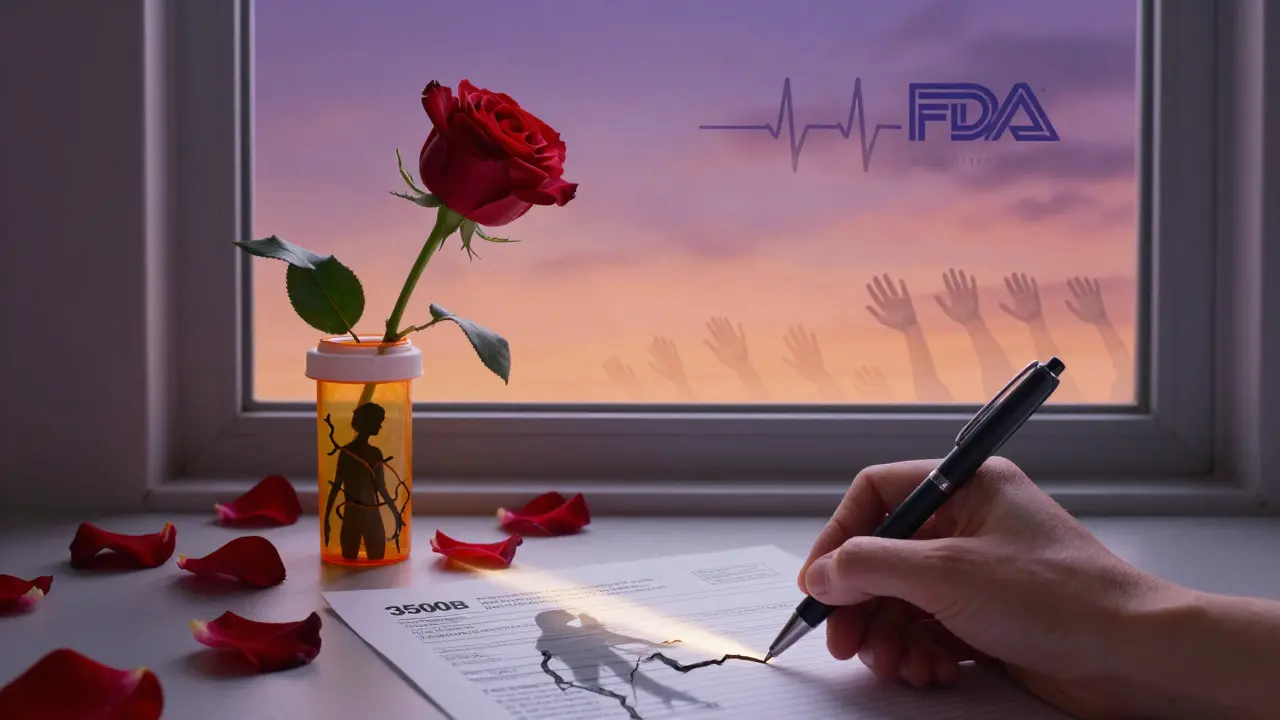
Common Mistakes and How to Avoid Them
Most people don’t report because they think:
- “It’s not serious enough.” - Wrong. Mild reactions are the early warning signs. The FDA needs to know about them before they become deadly.
- “I’m not a doctor.” - You don’t need to be. Your lived experience is valuable data.
- “The form is too long.” - Use Form 3500B. It’s designed for non-professionals. Skip the medical terms - just describe what happened in plain language.
- “I don’t have records.” - You don’t need them. Just give dates, times, and symptoms. The FDA doesn’t require lab reports or prescriptions.
One of the biggest complaints? The form doesn’t let you upload medical records. That’s true. But you can describe the records in detail - e.g., “My ER report said my ALT levels were 3x normal.”
What’s New in 2026?
MedWatch is getting smarter. In 2023, the FDA launched an AI assistant pilot that auto-fills form fields using clinical notes. By 2025, all hospitals will be required to report electronically. And in 2024, the FDA started a “MedWatch Everywhere” campaign - placing QR codes on prescription bags at major pharmacies so patients can report with one scan.
There’s also a new mobile app in testing. It lets you report in under 5 minutes using voice-to-text. You can describe your reaction aloud, and the app turns it into a complete form.
These changes aim to fix the biggest problem: underreporting. Right now, 78% of healthcare workers say they don’t report because it takes too much time. The FDA knows this. And they’re working to fix it.
Why Your Report Matters
Imagine a drug that causes a rare but deadly rash. In clinical trials, only 1 in 10,000 people had it. But after it hits the market, 1 in 500 do. Without reports, the FDA never finds out. People keep getting hurt. Then, one patient reports: “I got a rash after taking Drug X.” Then another. Then ten. Then a hundred.
That’s how safety alerts happen. That’s how labels change. That’s how lives are saved.
You don’t need to be a scientist. You don’t need to be a doctor. You just need to care enough to speak up. Your report isn’t just paperwork. It’s a lifeline.
You might like
tia novialiswati
Just reported my weird rash after starting that new blood pressure med! 🌟 Took like 18 minutes online-way easier than I thought. FDA actually replied with a confirmation email within a week. Feels good to know I might help someone else avoid this mess. You don’t need to be a doctor to make a difference. Just care enough to click ‘Submit.’ 💪❤️
Lillian Knezek
They’re using this to track us. I read somewhere MedWatch data gets sold to insurance companies. That’s why they want you to report-it’s not about safety, it’s about flagging ‘high-risk’ patients so they can raise your premiums. 😈 I didn’t report my side effects. I’m not giving them ammo. Stay vigilant, folks.
Christopher Brown
If you're not a licensed clinician, your report is noise. The FDA doesn't need your anecdote. They need data from controlled studies. Stop wasting their time.
Khaya Street
Interesting guide, but why is reporting so US-centric? In South Africa, we don’t even have access to these forms. The system assumes everyone has broadband, a computer, and English fluency. It’s exclusionary by design. A global health tool should be more inclusive.
Christina VanOsdol
Okay, but let’s be real: the FDA’s FAERS database is a garbage fire. I’ve dug into it. Over 60% of reports are incomplete. Half don’t even list the drug’s generic name. And the AI auto-fill? It misreads ‘ibuprofen’ as ‘ibuprofen sodium’ 30% of the time. 🤯 You think you’re helping? You’re just adding noise to a broken system. Report? Yes. But don’t expect miracles.
Brooke Exley
Yessss! I reported my cousin’s reaction to that new diabetes pill last year-and now it has a black box warning! 🎉 You think your story doesn’t matter? It’s the quiet ones that change the game. Every report is a brick in the wall that protects the next person. Keep showing up. Keep speaking up. You’re not just a patient-you’re a guardian. 💖✨
Nick Hamby
There is a profound ethical dimension to this process. The act of reporting is not merely bureaucratic-it is an ontological assertion of human dignity in the face of systemic opacity. When we choose to document harm, we refuse to let suffering be anonymized, commodified, or erased. The FDA’s system, flawed as it may be, becomes a vessel for collective moral responsibility. To report is to say: ‘I saw this. I will not let it vanish.’ And in that simple act, we reassert the primacy of the individual over the algorithm.
kirti juneja
Just did it! Used the phone line-1-800-FDA-1088. The lady was so sweet, spoke in Hindi too when I mixed words. Took 7 minutes. She said, ‘Your story matters.’ Tears came. 💕 I didn’t know I could do this. Now I’m telling my whole family. India needs this too. Maybe next, they’ll make a Hindi version. 🙏
Haley Gumm
Wait, so you’re telling me the FDA doesn’t even verify if the drug you reported was actually taken? No pill bottle photos? No pharmacy records? So… anyone can report that their cat got cancer from aspirin? And they accept it? 🤦♀️ This isn’t safety. It’s a joke. A chaotic, unverified, emotional dumpster fire. Why do people think this does anything?
Shalini Gautam
Why does the FDA care about US citizens only? In India, we have thousands of people suffering from bad drug reactions, and we have ZERO reporting system. The government doesn’t even track it. Meanwhile, Americans are bragging about their ‘MedWatch’ like it’s some kind of moral victory. Wake up. This isn’t about safety-it’s about privilege.
Timothy Haroutunian
Look. I tried to report. I really did. I sat there for an hour. Filled out Form 3500B. Then my internet died. I restarted. Got halfway. Then my dog jumped on the keyboard. Then my kid yelled ‘I’M HUNGRY!’ Then I got a call from my boss. Then I cried. Then I gave up. And now I’m just mad. This system is designed to exhaust you. It’s not a tool-it’s a test of endurance. And if you pass, congrats. You get a confirmation email. That’s it. No thanks. No follow-up. Just… silence. Why are we expected to do this? Why isn’t it automatic? Why isn’t the system built for humans? I’m not a bureaucrat. I’m a person who got sick. And I’m tired.
Ashley Johnson
OMG I just realized-I reported my reaction to metformin and now I’m on the FDA’s ‘high-risk’ list?? I think they’re tracking me. I got a weird email yesterday saying ‘We noticed your pattern.’ Like… what?! I’m not a criminal! I just had a stomach ache! This is scary. I’m deleting my account. No more reports. I’m done. They’re watching. They’re always watching.
Dominic Punch
As someone who works in global health policy, I can say this: MedWatch is one of the most underappreciated public health tools we have. The fact that a single mom in rural Ohio can report a reaction and it potentially saves a life in Tokyo? That’s the power of decentralized data. Yes, it’s imperfect. Yes, it’s slow. But it’s real. And it works. Don’t dismiss it because it’s messy. Fix it. Report. Share. Advocate. This isn’t charity-it’s civic duty.
Valerie Letourneau
As a Canadian, I find it fascinating that the FDA has such a robust, publicly accessible system. In Canada, we rely on Health Canada’s spontaneous reporting portal, which is far less user-friendly and has no public data transparency. I have shared this guide with my colleagues here-perhaps we could adopt elements of MedWatch’s model. The emphasis on patient voice, clarity of form, and 24/7 accessibility are commendable. Well done, FDA.