How to Request Written Medication Instructions You Understand


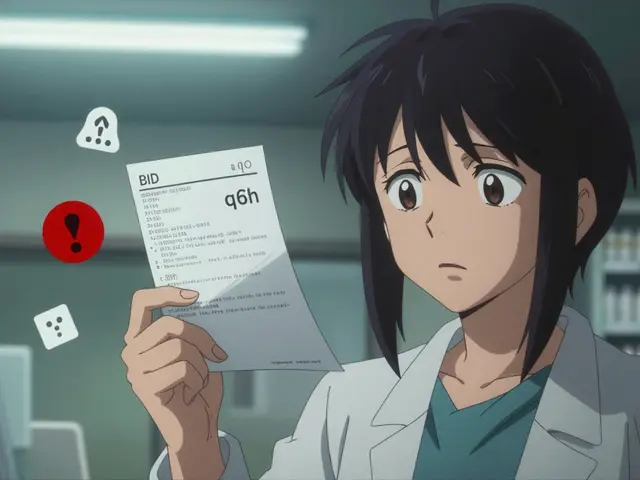
Imagine picking up a new prescription for a heart condition. The pharmacist hands you a slip of paper with tiny text, medical abbreviations like "q.i.d." and "p.o.", and no clear explanation of what happens if you miss a dose. You nod, take the pills home, and realize three days later that you’ve been taking them at random times. This isn’t just frustrating; it’s dangerous. According to the Institute for Safe Medication Practices, a nonprofit organization dedicated to preventing medication errors, unclear instructions contribute to 63% of medication errors in the U.S. Yet, despite this risk, there is currently no federal law requiring pharmacies to provide standardized, easy-to-understand written instructions with every prescription.
The good news? You have the right to change this dynamic. While the system is imperfect, patients who know how to advocate for themselves are significantly more likely to receive clear, actionable guidance. This guide breaks down exactly how to request written medication instructions that make sense, backed by your legal rights and proven communication strategies.
Your Right to Clear Information
Many patients assume that if a doctor prescribes a drug, the instructions will automatically be clear. Unfortunately, that’s not always the case. However, several authoritative frameworks establish your right to understandable care. The American Medical Association (AMA) Code of Medical Ethics, the ethical guidelines for physicians in the United States states that patients have the fundamental right to receive information about their treatment alternatives, including benefits, risks, and costs, in a way they can understand. This extends to medications.
Furthermore, many healthcare facilities adhere to a Patient Bill of Rights, a document outlining the entitlements of patients within a healthcare setting. For example, Tennessee Oncology’s Patient Bill of Rights explicitly grants patients the right to "receive information in a manner, format, and/or language that is easily understood." Similarly, AmerisourceBergen’s patient rights document guarantees the right to education in a language you understand. When you walk into a pharmacy or clinic, you are entitled to ask questions until you feel confident. If the jargon doesn’t land, it’s not your fault-it’s a communication gap that needs bridging.
Why Standardized Instructions Matter
You might wonder why getting a simple sheet of paper is such a big deal. The difference between a standard label and a plain-language guide can mean the difference between recovery and hospitalization. A study published in JAMA Internal Medicine found that poor medication understanding contributes to $528 billion in annual healthcare costs due to medication-related hospitalizations.
Currently, the U.S. lacks a unified standard for medication instructions. In contrast, Canada mandates that all prescription labels use plain language at no higher than a 6th-grade reading level. The UK requires patient information leaflets that meet specific readability standards. In the U.S., practices vary wildly. A survey by the National Community Pharmacists Association, an association representing independent community pharmacists found that while 78% of independent pharmacies provide written instructions, only 42% use templates that meet health literacy standards. Large chains like CVS and Walgreens have made strides with one-page guides, but readability levels still range from 6th grade to nearly college-level complexity. This inconsistency puts the burden on you, the patient, to ensure clarity.
| Region/System | Requirement Level | Readability Standard | Consistency |
|---|---|---|---|
| United States (Federal) | No mandatory plain language requirement | Varies widely (Grade 6-12+) | Low |
| Canada (Provincial) | Mandatory plain language | Max Grade 6 | High |
| UK (NHS) | Mandatory patient leaflets | Specific readability metrics | High |
| U.S. Chain Pharmacies | Voluntary standardized guides | Varies (Grade 6-11) | Moderate |
Step-by-Step: How to Get Clear Instructions
Knowing your rights is step one. Putting them into practice requires a specific approach. Research from the University of Illinois College of Pharmacy identified a five-step protocol that achieved an 89% success rate in obtaining clearer instructions. Here is how you can apply it:
- Ask to speak with the pharmacist directly. Don’t settle for answers from a technician if you’re confused. In many chain pharmacies, technicians are trained to escalate complex questions to the licensed pharmacist. Say, "I’d like to review my new medication with the pharmacist to ensure I understand the dosing schedule."
- Cite your right to understandable information. Use specific language. Instead of saying "Explain this," try: "I’m exercising my right to receive education in a language I understand. Can we go over these instructions together?" This signals that you are informed and serious.
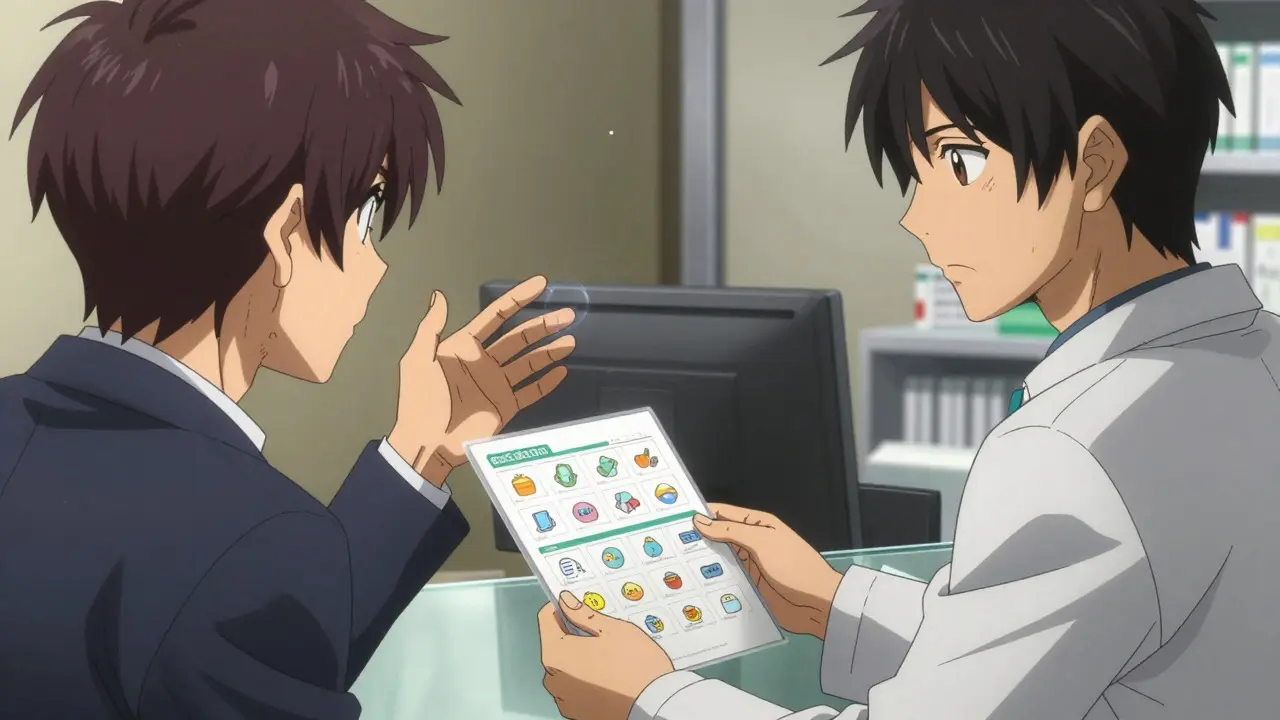
- Request a specific format. Ask for a visual schedule or a one-page summary. Studies show that visual aids improve adherence by 42% for complex regimens. You might say, "Do you have a visual chart or a simplified one-page guide for this medication?"
- Perform a 'read-back' verification. This is crucial. Repeat the instructions back to the pharmacist in your own words. "So, I take one pill with breakfast and one with dinner, even if I skip a meal, correct?" This technique reduces errors by 63%, according to Johns Hopkins Medicine research.
- Document the interaction. Let the staff know you are noting this for your medical records. Surveys indicate that 58% of pharmacies are more likely to provide detailed written instructions when patients mention documentation.
Timing and Context: When to Ask
When you ask matters as much as how you ask. The optimal time to request detailed instructions is during the initial dispensing of a new prescription, not during refills. A National Pharmacist Workload Study found that 87% of pharmacists report having more time for patient education during the first fill. Once the prescription is established, interactions often become transactional-grab the bag, leave. Use that first encounter to set the foundation for your understanding.
If you have limited English proficiency, federal law is on your side. Title VI of the Civil Rights Act of 1964 requires recipients of federal funding (which includes most hospitals and many clinics) to provide language assistance. A Centers for Medicare & Medicaid Services (CMS) report found that 92% of pharmacies provide translated instructions when specifically requested using the phrase: "I need medication instructions in [Language] per federal law." Don’t assume they will offer it; ask for it explicitly.

Leveraging Technology and New Tools
The landscape is shifting rapidly. With the pending Patients' Right to Know Their Medication Act (H.R. 1173), legislation aiming to mandate standardized, plain-language medication instructions, industry players are innovating ahead of regulation. Companies like Meds 2.0 are developing digital platforms that generate personalized, plain-language guides, now used by over 1,200 pharmacies.
Major chains are also adapting. Walgreens announced plans to include scannable QR codes linking to video instructions in 20 languages by late 2024. CVS has rolled out systems that generate pictogram-based instructions. If your pharmacy offers digital tools, ask for them. They often provide clearer, more engaging information than static paper sheets. Additionally, check if your Part D plan provides culturally appropriate medication information, as CMS now requires this for its beneficiaries.
What to Do If You Hit a Wall
Sometimes, despite your best efforts, the communication fails. Maybe the pharmacist is rushed, or the clinic staff dismisses your concerns. Here is how to handle those situations:
- Switch pharmacies. If one location consistently fails to communicate clearly, find another. Independent pharmacies often have more flexibility to customize instructions than large chains.
- Contact your prescribing provider. The doctor or nurse practitioner who wrote the prescription shares responsibility for ensuring you understand the treatment. Call their office and ask for a nurse to clarify the instructions.
- Use third-party resources. Look up the medication on trusted sites like the FDA’s consumer information pages or WebMD. Bring these printed materials to your next appointment and ask, "Does this match what you prescribed?"
- File a complaint if necessary. If lack of communication leads to an adverse event, document everything. You can file a complaint with the state board of pharmacy or the facility’s patient advocacy department.
Advocating for yourself isn’t rude; it’s essential. Healthcare providers appreciate patients who are engaged because it leads to better outcomes. By knowing your rights, asking the right questions, and demanding clarity, you transform from a passive recipient of care into an active partner in your health. Start with your next prescription. Ask for that one-page summary. Your health depends on it.
Do I have a legal right to written medication instructions?
While there is no single federal law mandating standardized plain-language instructions for all prescriptions, you do have rights under the AMA Code of Medical Ethics and various Patient Bills of Rights adopted by healthcare facilities. These documents guarantee your right to receive information in a manner you can understand. Additionally, some states have stricter regulations requiring clear written instructions.
What should I do if the pharmacist uses medical jargon I don't understand?
Stop and ask for clarification immediately. Use phrases like, "Can you explain that in plain English?" or "Could you write that out without abbreviations?" You have the right to ask questions until you fully understand the dosage, timing, and potential side effects. Don't be afraid to admit confusion; it ensures your safety.
Is it okay to ask for a visual medication schedule?
Yes, absolutely. Visual schedules, charts, or apps can significantly improve adherence, especially for complex regimens involving multiple medications. Many pharmacies now offer these tools. Asking for a visual aid is a proactive step toward managing your health effectively.
How can I get medication instructions in my native language?
Under Title VI of the Civil Rights Act, federally funded healthcare providers must offer language assistance. Explicitly state, "I need medication instructions in [Language] per federal law." Most major pharmacies and hospitals have access to translated materials or interpreter services to facilitate this.
What is the 'read-back' method and why is it important?
The read-back method involves repeating the medication instructions back to the pharmacist or doctor in your own words to confirm accuracy. For example, "So I take this twice a day with food." This technique helps catch misunderstandings immediately and has been shown to reduce medication errors by up to 63%.
Are online medication guides reliable?
Guides from reputable sources like the FDA, Mayo Clinic, or WebMD are generally reliable for general information. However, always cross-reference with your specific prescription. Individual factors like other medications or health conditions may alter how you should take a drug. Use online guides as supplements, not replacements, for professional advice.
What legislation is changing medication instruction laws in the US?
The Patients' Right to Know Their Medication Act (H.R. 1173) is a bipartisan bill introduced in 2023 that aims to mandate one-page, professionally printed, easy-to-understand instructions with every prescription. While not yet law, it reflects growing pressure for standardized, plain-language medication communication across the country.
You might like