
Insomnia and Sleep Changes from Antidepressants: Practical Tips

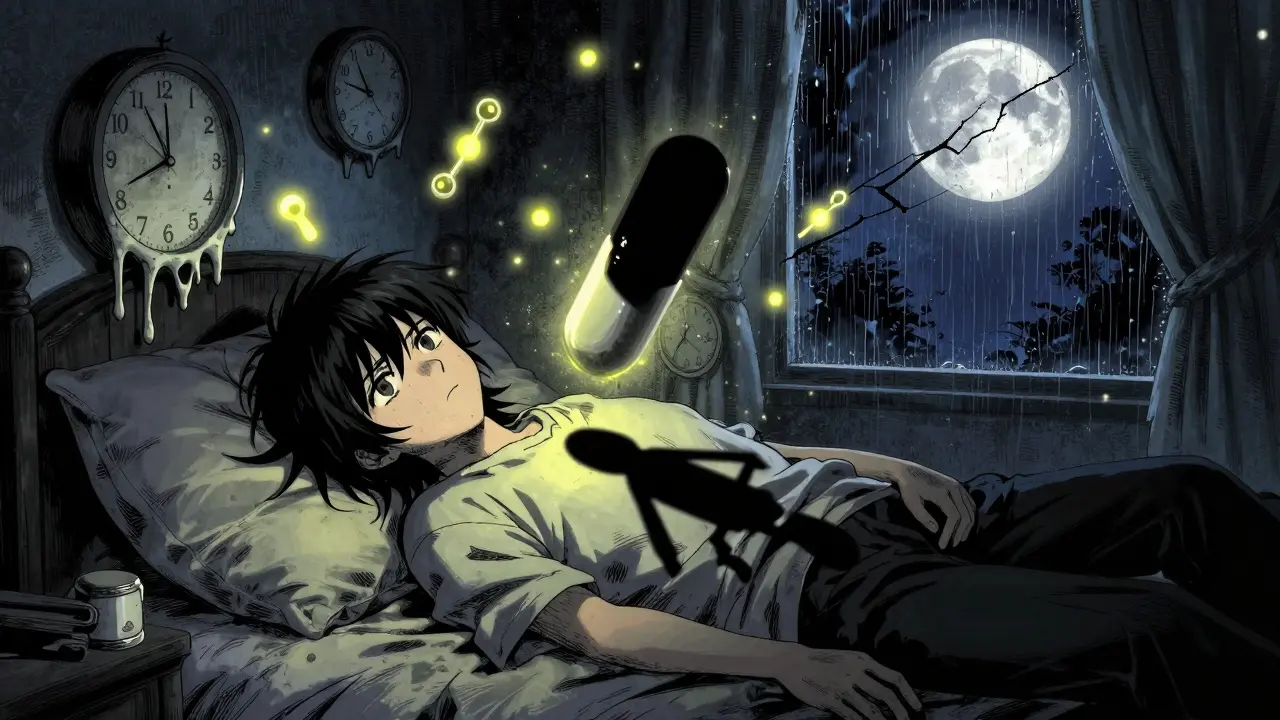
When you start an antidepressant, you expect your mood to improve. But for many people, the first thing that changes isn’t their sadness-it’s their sleep. Some can’t fall asleep. Others wake up at 3 a.m. and can’t get back down. A few feel so tired during the day they can’t function. This isn’t rare. Insomnia and sleep changes from antidepressants happen to more than half of people in the first few weeks of treatment.
It’s not a mistake. It’s a side effect built into how these drugs work. Antidepressants don’t just fix your mood-they mess with the chemicals in your brain that control sleep. Serotonin, norepinephrine, dopamine-these aren’t just "feel-good" chemicals. They’re the switches that turn your sleep cycle on and off. When you change their levels, your sleep architecture shifts. REM sleep drops. Deep sleep might go up or down. You might toss and turn more. And for some, this lasts weeks before things settle.
Why Some Antidepressants Keep You Awake
Not all antidepressants affect sleep the same way. SSRIs like fluoxetine, sertraline, and paroxetine are the most common, but they’re also the most likely to cause insomnia. Why? Because they boost serotonin, which suppresses REM sleep and delays the start of it. Studies show fluoxetine can cut REM sleep by up to 29% in the first week. That’s not just a number-it means your brain doesn’t get the restorative, dream-heavy sleep it needs. And without that, you feel wired, even if you’ve slept 7 hours.
One 2023 study of over 18,000 patients found that 78% of people on fluoxetine had trouble sleeping in the first two weeks. Sertraline? Around 65%. Compare that to mirtazapine, where 81% of users reported better sleep. The difference? Mirtazapine blocks certain serotonin receptors instead of boosting levels. That actually helps you fall asleep faster and stay asleep longer. It’s why doctors often recommend it for people with depression who also struggle with insomnia.
Then there’s bupropion. It doesn’t touch serotonin at all. Instead, it amps up norepinephrine and dopamine. That’s great for energy and motivation-but terrible for sleep. If you’re already struggling to sleep and add bupropion to an SSRI, your insomnia risk jumps 2.4 times. The FDA issued a warning about this combo in 2022. It’s not a myth. It’s data.
The Sleep-Friendly Alternatives
If sleep is your biggest problem, your antidepressant choice matters more than you think. Here’s what the research says works best:
- Mirtazapine (15-30 mg): Increases total sleep time by nearly an hour. Reduces time to fall asleep by 28 minutes. Works best taken at night. Side effect? Next-day grogginess. If you take more than 30 mg, it’s almost guaranteed.
- Trazodone (25-50 mg): A low dose is one of the most commonly prescribed sleep aids for depression. It cuts nighttime wakefulness by 37%. But it’s not a sleeping pill. At higher doses, it can cause dizziness, dry mouth, and next-day "hangover" effects.
- Agomelatine: Not available everywhere, but it’s a game-changer where it is. It works like melatonin, resetting your body clock. A 2024 study showed it improved sleep continuity better than escitalopram. REM sleep stayed almost normal-unlike SSRIs.
- Amitriptyline (TCA): Old school, but still used. It increases deep sleep and reduces REM. Good for people who wake up too early. But it can cause weight gain, dry mouth, and heart rhythm issues in older adults.
Here’s the thing: none of these are perfect. Mirtazapine helps you sleep but makes you feel sluggish. Trazodone helps you fall asleep but might leave you foggy in the morning. Agomelatine is clean but hard to get. The goal isn’t to find a drug with zero side effects-it’s to find the one that fits your sleep pattern.
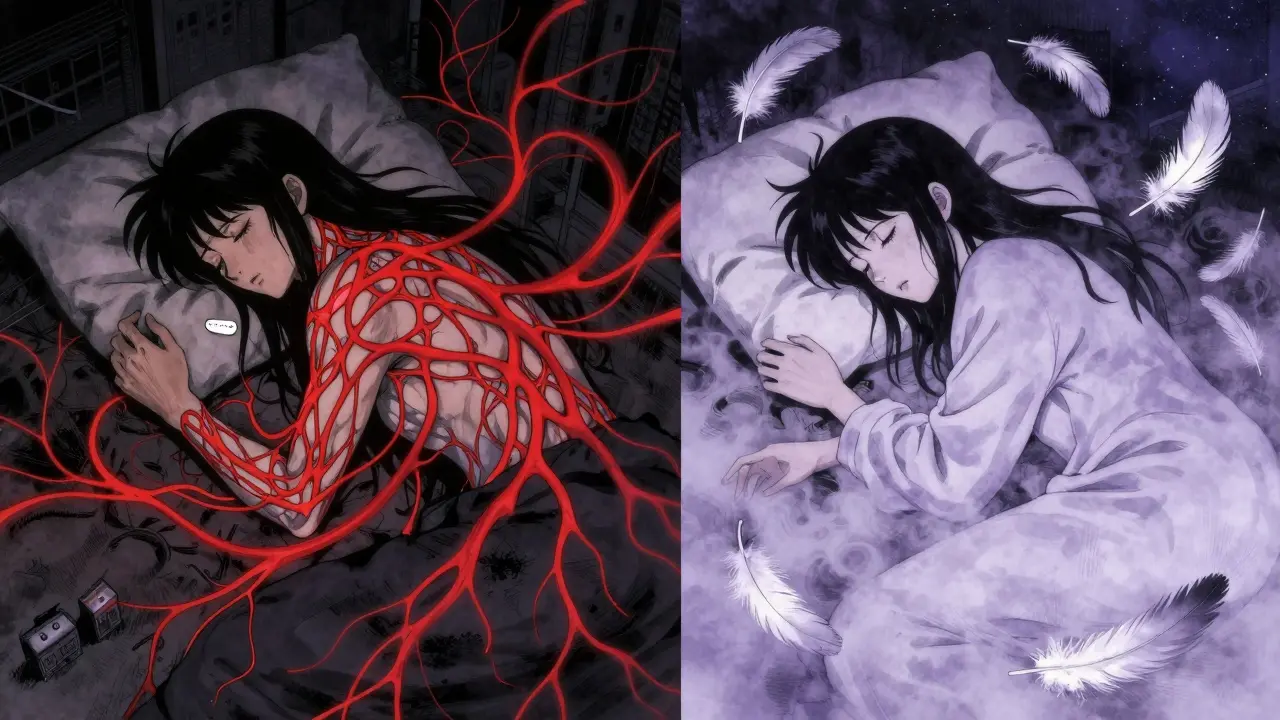
Timing Is Everything
When you take your pill matters as much as which one you take. If you’re on an SSRI and you take it at 8 p.m., you’re asking for trouble. These drugs are activating. They increase alertness. Taking them in the evening? That’s like drinking coffee after dinner.
Studies show that taking SSRIs before 9 a.m. reduces insomnia risk by 41%. That’s not a suggestion-it’s a clinical recommendation. If you’re on fluoxetine or sertraline, take it with breakfast. No exceptions.
On the flip side, sedating antidepressants like mirtazapine or trazodone should be taken 2-3 hours before bed. Why? Because they need time to peak in your bloodstream. If you take trazodone at 11 p.m., it might not kick in until 1 a.m., and you’ll still be awake. Take it at 8 p.m., and you’ll drift off naturally.
Even small shifts make a difference. One 2021 trial found that patients who moved their SSRI from nighttime to morning improved their sleep efficiency by 22% in just two weeks.
What to Do When Sleep Gets Worse Before It Gets Better
Here’s the brutal truth: for SSRIs, insomnia often gets worse before it gets better. It peaks around day 3 to 7. Then, slowly, your brain adjusts. By week 3 or 4, most people see improvement. But if you panic and stop the medication, you’re stuck in a loop. You’ll feel worse emotionally, and your sleep won’t fix itself.
What to do instead?
- Keep a sleep diary for two weeks. Write down when you go to bed, when you wake up, how many times you woke up, and how rested you felt. This isn’t fluff-it helps your doctor spot patterns.
- Don’t drink caffeine after noon. Even tea or chocolate can delay sleep.
- Get sunlight within 30 minutes of waking. Natural light resets your body clock. It’s free, and it works.
- Try a 10-minute walk after dinner. Movement helps regulate sleep drive.
- If you’re awake for more than 20 minutes, get up. Go sit in a dim room. Don’t check your phone. Just sit. This breaks the anxiety loop.
Some people swear by splitting their SSRI dose-half in the morning, half in the early afternoon. It’s not officially approved, but a University of Michigan trial launched in March 2024 is testing it. Over 40% of Reddit users report this helps. Talk to your doctor before trying it, but it’s an option worth exploring.

When to Call Your Doctor
Not every sleep problem is normal. Some signals mean it’s time to switch or adjust:
- You’re having vivid dreams or acting out your dreams (kicking, yelling, punching). This could be REM sleep behavior disorder, worsened by SSRIs.
- Your legs won’t stop moving at night. Restless legs syndrome is triggered by 65% of SSRIs.
- You feel more anxious or agitated than before. That’s not improvement-that’s akathisia.
- Your insomnia lasts longer than 4 weeks. If it’s still bad after a month, the drug isn’t matching your sleep profile.
If any of these happen, don’t wait. Ask about switching to mirtazapine, trazodone, or agomelatine. Or ask if a lower dose might help. Sometimes, cutting fluoxetine from 40 mg to 20 mg cuts insomnia in half.
What’s New in 2026
The field is changing fast. Zuranolone (Zurzuvae), approved in 2023, is the first antidepressant specifically designed to improve sleep within days. In trials, it cut insomnia symptoms by 54% in two weeks. It’s expensive, but it’s a sign of where things are headed.
Genomind launched a $349 genetic test in 2025 that looks at 17 genes linked to sleep regulation. It can predict whether you’ll get insomnia from fluoxetine, or if mirtazapine will make you too sleepy. It’s not perfect, but it’s real. More psychiatrists are using it now than ever before.
The National Institute of Mental Health is funding $14.3 million in research to personalize antidepressant timing based on your circadian rhythm. Imagine a future where your pill schedule isn’t just "take in the morning"-but "take at 7:15 a.m. because your melatonin drops at 6:48 a.m." That’s not sci-fi. It’s coming.
For now, the best advice is simple: match the drug to your sleep problem. If you sleep too much? SSRIs might help. If you can’t sleep at all? Skip fluoxetine. Try mirtazapine or trazodone. Time it right. Track it. And don’t give up too soon. Sleep changes take time-but they can get better.
Do all antidepressants cause insomnia?
No. While SSRIs like fluoxetine and sertraline often cause insomnia, especially in the first few weeks, other antidepressants like mirtazapine, trazodone, and agomelatine are actually prescribed to improve sleep. The effect depends on the drug’s chemical action-not all antidepressants are the same.
How long does insomnia last after starting an SSRI?
Insomnia from SSRIs typically peaks between days 3 and 7, then gradually improves. For most people, sleep quality returns to normal-or even improves-by week 3 to 4. If it doesn’t, the drug may not be the right fit for your sleep profile.
Is mirtazapine better than an SSRI for sleep?
For people with insomnia-predominant depression, yes. Mirtazapine increases total sleep time by about 50 minutes and reduces time to fall asleep by nearly 30 minutes, according to clinical trials. SSRIs often do the opposite. But mirtazapine can cause daytime drowsiness, so it’s not ideal for everyone.
Can I take a sleep aid with my antidepressant?
Over-the-counter sleep aids like melatonin or diphenhydramine (Benadryl) can be used short-term, but they’re not a long-term solution. Prescription sleep aids like zolpidem should be avoided unless absolutely necessary-they can interact with antidepressants and increase fall risk. The best approach is to adjust the antidepressant itself, not add another drug.
Why does my doctor want me to take my SSRI in the morning?
SSRIs increase alertness by boosting serotonin and norepinephrine. Taking them in the evening can delay sleep onset and reduce sleep quality. Studies show taking them before 9 a.m. cuts insomnia risk by 41%. It’s not just a suggestion-it’s backed by clinical data.
You might like
John Smith
SSRIs are basically the brain’s version of an energy drink with a side of insomnia. You think you’re getting better but your body’s just screaming for mercy at 3 a.m. I took sertraline for six weeks and it felt like my brain was running a marathon on caffeine while my body was buried under a pile of wet blankets. No wonder people quit. It’s not weakness-it’s pharmacology gone rogue.
Shivam Pawa
Interesting how mirtazapine helps sleep but makes you feel like a zombie next day. In India we call it ‘sleep with a price’. Some days I’d rather be awake and anxious than asleep and useless. But hey, if your depression is loud enough, even a zombie state feels like peace.
Diane Croft
Just wanted to say thank you for this post. I’ve been on trazodone for three months and my sleep finally feels human again. It’s not perfect but it’s enough. You’re not alone if you’re struggling.
Donna Zurick
So true about timing. I switched my SSRI from night to morning and my sleep efficiency jumped. No more 2 a.m. panic sessions. Just simple math: if it keeps you awake, don’t take it when you want to sleep. Duh.
Dean Jones
Let’s not romanticize this. Antidepressants aren’t magic. They’re chemical sledgehammers thrown at a system that’s already fragile. The brain doesn’t ‘adjust’-it scrambles to survive. REM suppression isn’t just a side effect-it’s a structural rewrite. We talk about ‘improvement’ like it’s a smooth upgrade, but it’s more like reprogramming your nervous system with a rusty screwdriver. And yes, some people get better. But many just learn to live with the ghosts in their sleep architecture. The real tragedy isn’t the insomnia-it’s that we’ve normalized this as collateral damage.
Betsy Silverman
I started on fluoxetine and thought I was going crazy because I couldn’t sleep. Turned out my doctor just hadn’t asked about sleep at all. It took me 8 weeks to mention it. Don’t be like me. Ask. Push. Even if you think it’s ‘just’ insomnia. It’s not just sleep-it’s your whole recovery.
Ivan Viktor
So let me get this straight. We’re being told to take a drug that turns your brain into a caffeine-fueled alarm clock… and then we’re supposed to be grateful when the side effects aren’t worse? I’m just here for the popcorn.
Zacharia Reda
Splitting the SSRI dose? That’s wild. I’ve been doing it for two months. Half at 8 a.m., half at 1 p.m. Sleep went from ‘train wreck’ to ‘meh, okay’. Not FDA approved? Doesn’t matter. If it works and your doc doesn’t shoot you down, why not? Reddit’s got more real-world data than some clinical trials.
Jeff Card
My insomnia got worse the first week. I almost quit. But I stuck with it. Week 3? I slept 7 hours straight for the first time in months. It’s not instant. It’s not fair. But it can get better. Don’t give up before the real change starts.
Matt Alexander
Take SSRIs in the morning. Take mirtazapine at night. Simple. No magic. Just science. Do that and you’re already ahead of 80% of people.
Stephen Vassilev
Have you considered that the entire pharmaceutical industry is designed to keep you dependent? Zuranolone? Genetic tests? These aren’t breakthroughs-they’re profit engines. The real solution is sunlight, grounding, and reducing EMF exposure. But you won’t hear that from Big Pharma. They profit from your sleeplessness. Wake up.
Helen Brown
They say melatonin helps. But what if your body already makes too much? What if your pineal gland is being manipulated by satellites? I’ve read studies. They’re funded by drug companies. I stopped taking everything. Now I sleep on the floor. It’s working. Better than any pill.
John Cyrus
If you’re taking antidepressants and still having sleep issues you’re just weak. People in the 80s didn’t have this problem. They didn’t have smartphones either. Just go to bed. Stop overthinking. Sleep is simple. You’re making it complicated because you’re too soft.
Sharon Lammas
It’s funny how we treat sleep like a broken machine. But sleep isn’t a switch-it’s a conversation. Between your body, your mind, your past, your stress, your light, your rhythm. No pill fixes that. Not really. We just learn to muffle the noise. Maybe that’s all we can do. And maybe that’s okay.