
Managing Pediatric Medication Side Effects at Home: A Parent's Guide


Quick Safety Checklist
- Use oral syringes, never kitchen spoons.
- Keep all medicines in original child-proof containers.
- Store medications at least 5 feet high and locked.
- Keep a written log of doses and reactions.
- Have the Poison Control number (1-800-222-1222) saved in your phone.
Spotting Common Reactions
Not every reaction is an emergency, but you need to know what's typical. Gastrointestinal issues are the most frequent, with stomach upsets appearing in about 42% of cases and diarrhea in 28%. You might also notice central nervous system changes; for instance, while some kids get drowsy, others experience hyperactivity. A strange but real example is Diphenhydramine (found in many allergy meds). While it usually makes adults sleepy, about 15% of children react with extreme hyperactivity. If your child is suddenly running circles around the room without getting tired, document exactly how long it lasts and what they're doing so you can tell your pediatrician.
Skin reactions are also common, with rashes appearing in roughly 23% of pediatric cases. Most of these are mild, but the key is monitoring the surface area and the speed at which they spread. If a rash appears suddenly alongside swelling or breathing issues, that's a different conversation entirely.
Handling Stomach Issues and Nausea
When a medicine triggers nausea or vomiting, the instinct is often to stop the medication or force-feed water. Instead, try a gradual approach. If your child vomits, wait 30 to 60 minutes before introducing any fluids. Start with tiny amounts-about 5 to 10mL of an oral rehydration solution every five minutes. If they keep it down, you can slowly increase the amount.
For ongoing tummy troubles, stick to a bland diet. Many doctors suggest the BRAT method: Bananas, Rice, Applesauce, and Toast. These are easy on the stomach and help firm up stools if diarrhea is an issue. Also, check the label for "take with food." About 28% of parents miss this instruction, which often leads to avoidable stomach pain. Feeding your child a small snack before a dose can often eliminate the nausea entirely.

The Danger Zones: When to Call 911
While most side effects can be handled at home, some are red flags. You should seek immediate emergency care if you notice any of the following:
- Respiratory Distress: If an infant is breathing more than 40 times per minute or a child over one year is breathing more than 30 times per minute.
- Severe Allergic Reactions: Hives covering more than 10% of the body, swelling of the face or lips, or sudden wheezing.
- High Fever: A temperature climbing over 102°F (38.9°C) that doesn't respond to standard fever reducers.
- Persistent Vomiting: More than three episodes of vomiting that prevent the child from keeping any fluids down.
| Symptom | Home Management | Call Doctor/911 |
|---|---|---|
| Mild Rash | Cool compress, monitor spread | Facial swelling or hives >10% body |
| Nausea | Bland diet (BRAT), small sips | Persistent vomiting (>3 episodes) |
| Drowsiness | Ensure safety/rest, track duration | Unable to wake or extreme lethargy |
| Mild Fever | Hydration, prescribed fever reducer | Temperature > 102°F (38.9°C) |
Preventing Dosing Errors
Many "side effects" are actually the result of dosing mistakes. Research shows that 78% of parents misinterpret dosing instructions. The most common mistake is confusing a "teaspoon" (5mL) with a "tablespoon" (15mL), which can lead to a 300% overdose. Never use a kitchen spoon. Instead, use a Oral Syringe with 0.1mL increments for the most accurate measure.
Another common trap is stopping medication too early. This is especially true for Antibiotics. Some parents stop the course as soon as the child feels better to avoid further side effects. However, doing this causes treatment failure in nearly 29% of bacterial infections. Always finish the full course, usually 7 to 14 days, even if the symptoms are gone.
Safe Storage and Administration
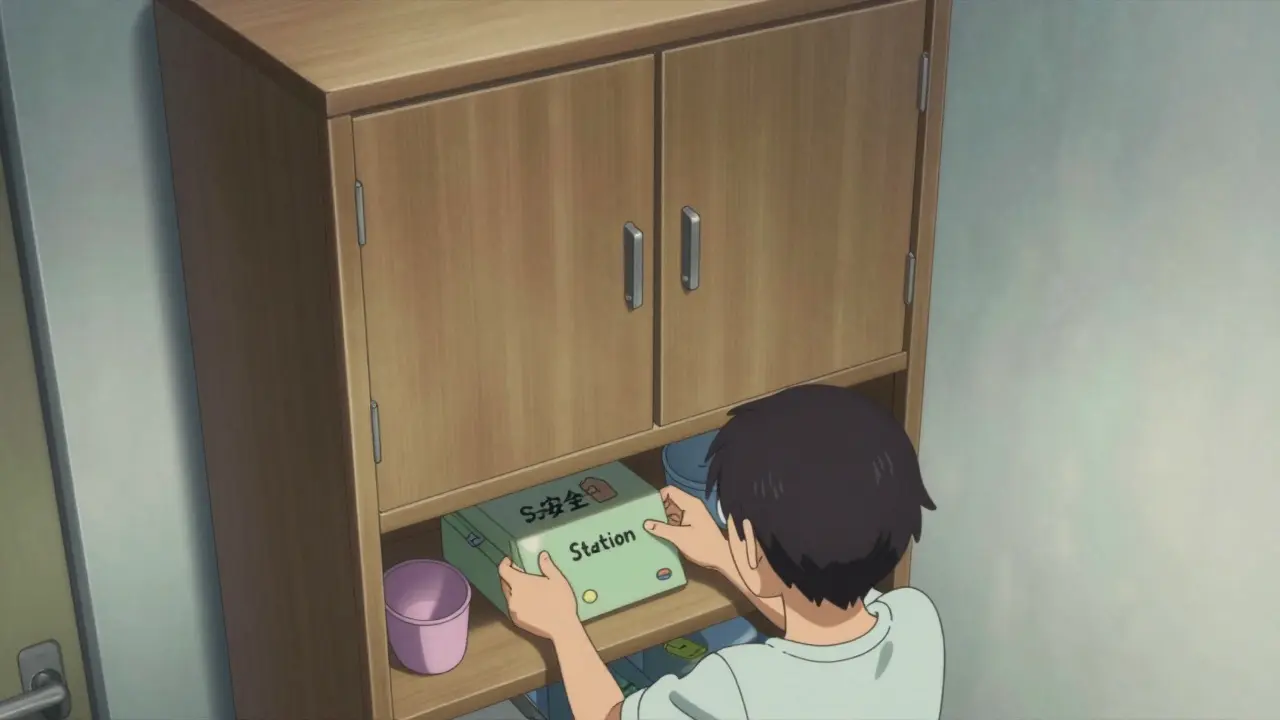
Accidental ingestion is a major risk in homes with young children. The gold standard for storage is the "up and away" rule: keep medications in cabinets at least 1.5 meters (5 feet) high and ensure they are locked. This simple change can reduce accidental poisonings by 65%. Whatever you do, don't move medicine into a different container to make it "easier" to use. Transferring meds to non-childproof bottles increases poisoning incidents by 41% because kids can open them easily.
To stay organized, keep a medication log. Record the exact time the dose was given and any reaction that followed. If you're unsure about a dose, a quick pro tip is to take a photo of the label and the measured syringe before administering. This creates a visual record you can share with your doctor during a telehealth visit if something goes wrong.
Helping Kids Take Their Medicine
For older children who struggle with pills, don't force them. Try a graduated practice approach. Start by having them swallow tiny candies like Nerds, then move up to Mini M&Ms over a couple of weeks. This method has an 89% success rate for kids aged 8 to 12. For those using liquid meds, keep an eye on storage. About 89% of liquid medications need to be kept between 68-77°F to stay stable, and many require refrigeration. If the medicine gets too hot or too cold, it can break down and potentially cause more irritation or lose its effectiveness.
What should I do if my child has a mild rash after a new medication?
If the rash is mild and your child is otherwise acting normal, you can use a cool compress and monitor the area. However, you should call your pediatrician to report the reaction. Seek emergency care immediately if the rash is accompanied by swelling of the lips, tongue, or throat, or if the hives cover a significant portion of the body.
Can I stop giving antibiotics if the side effects are too harsh?
You should never stop antibiotics without consulting your doctor. Stopping early can lead to the infection returning or the development of antibiotic-resistant bacteria. If the side effects (like diarrhea) are severe, your doctor may suggest a probiotic or a different medication, but the current course usually needs to be completed to ensure the bacteria are fully cleared.
Why is my child hyperactive after taking an allergy medication?
Some children have a paradoxical reaction to certain medications, such as diphenhydramine. While these drugs typically cause drowsiness in adults, about 15% of children experience hyperactivity. This is a known pediatric reaction. Document the behavior and the duration of the hyperactivity and contact your pediatrician to see if an alternative medication is more appropriate for your child.
What is the best way to measure liquid medicine?
Always use the measuring device that comes with the medication, preferably an oral syringe. Avoid using kitchen spoons, as they vary significantly in size and lead to frequent dosing errors. An oral syringe allows for precise measurement, even down to 0.1mL, which is critical for infants and small children.
Where is the safest place to store medications in a house?
The safest place is in a locked cabinet located at least 5 feet (1.5 meters) above the ground. This prevents children from reaching the medicine and reduces the risk of accidental ingestion. Always keep medications in their original child-resistant packaging to provide an extra layer of safety.
Next Steps for Parents
If your child is starting a new medication, spend ten minutes setting up your "safety station." This means clearing a high shelf, finding your 1mL oral syringe, and saving the Poison Control number. If you notice any reaction, no matter how small, write it in your log. If you're feeling overwhelmed, many pediatric offices now offer telehealth consultations, which can be a faster way to get professional guidance on whether a side effect is normal or requires a clinic visit.
You might like

Stephen Luce
Dealing with sick kids is honestly the worst feeling in the world. It's so heartbreaking to see them feel unwell and then have to worry if the medicine is making it worse. I really appreciate the reminder about the oral syringes because it's so easy to just grab a spoon when you're exhausted at 3 AM.
Timothy Burroughs
imagine actually using a kitchen spoon in 2024 lol some people just dont want to be safe and then wonder why their kid is acting crazy... common sense isnt so common anymore i guess
Srikanth Makineni
BRAT diet works every time
jack hunter
theres always some gude trying to tell us what to do with our kids. the idea that a child is just a small adult is such a reductive philosopy anyway. plus who really trust these stats... like 28 percent of parents miss a label? seems laughable if you actually pay attention to thinggs
Brady Davis
Oh sure, let's just give them a handful of Nerds to "train" them for pills. Because nothing says medical recovery like a sugar rush and dental decay. Absolutely genius plan right there.
Jay Vernon
Keeping the medicine high up is a great tip! 🚀 My kids are like little monkeys and find everything. Thanks for sharing! 😊
Ethan Davis
The Poison Control number is great but you gotta wonder why these meds have so many "side effects" anyway. It's probably just a way for big pharma to push more "corrective" drugs once the first one messes you up. The whole system is rigged to keep kids dependent on chemicals from birth.
Danielle Kelley
Big Pharma is literally poisoning our children with these substances! They don't want you to know the real risks, only the "manageable" ones. Wake up people!
Michael Flückiger
Now now, let's stay positive!!! While the system has flaws, the doctors really do want the best for our little ones... and using the right tools makes all the difference!!!
shelley wales
I totally agree that staying positive is key! It can be so scary when your child has a reaction, but having a clear plan like the one mentioned here really helps take the panic out of the situation. We've all been there and we'll get through it together!
Grace Lottering
Pure greed. Purely greed.
GOPESH KUMAR
The paradox of pediatric reaction is an interesting intellectual point, yet the author treats it as a mere curiosity. One must understand that biology is not a linear progression from child to adult, but a complex series of metabolic shifts. The failure to emphasize the biochemical reason for the 15% hyperactivity rate in diphenhydramine is a missed opportunity for true enlightenment, although the practical advice remains superficially adequate for the average parent who doesn't care about the 'why'.
Dhriti Chhabra
It is indeed most prudent to maintain a detailed log of all medications administered to one's children. This practice ensures that there is no ambiguity when communicating with healthcare professionals and promotes a standard of care that is both systematic and safe for the wellbeing of the child.
Nikhil Bhatia
Too many words for just saying 'don't use a spoon' and 'keep it high up'.