
Medication Reminder Apps and Digital Tools for Better Adherence


Every year, nearly half of the people living with chronic conditions around the world forget to take their medicine exactly as prescribed. That statistic might sound manageable until you look at the price tag: the U.S. healthcare system alone loses between $100 and $289 billion annually due to this gap. Here is the hard truth-traditional methods like handwritten notes or simple alarms simply do not work well enough for complex schedules. Digital tools have stepped in to fix this broken loop, turning smartphones into powerful adherence assistants.
The Science Behind Digital Adherence
When researchers started analyzing why patients miss doses, they realized it wasn't always stubbornness. Often, it was cognitive overload. A 2003 report by the World Health OrganizationWHO identifies medication non-adherence as one of the leading causes of hospitalization and poor clinical outcomes globally laid the groundwork for this shift. By 2025, the landscape had matured significantly. According to a systematic review published in JMIR mHealth and uHealth, mobile applications designed specifically for medication management are showing effect sizes of Cohen's d = 0.40. To put that in plain terms, that is more effective than motivational interviewing sessions or standard educational pamphlets.
The mechanism works differently than you might expect. It isn't just a notification popping up on your screen. Modern apps track patterns. They learn when you typically sleep, when you commute, and what barriers arise. For example, if you consistently snooze a pill alarm at 8:00 AM but take it at 9:00 AM, the app adjusts its prediction. This dynamic adjustment capability is a major differentiator from old-school alarm clocks.
Major Players in the Market
By May 2025, there were approximately 1,200 medication management apps available across major stores, yet a few stand out for reliability and user trust. The top five platforms account for roughly 63% of all downloads, according to Sensor Tower data.
| App Name | Primary Strength | User Rating | Key Feature |
|---|---|---|---|
| Medisafe | All-in-one management | 4.7/5 (iOS) | Medicard® bottle scanning |
| MyTherapy | Comprehensive health logs | 4.6/5 (Android) | Multi-drug tracking |
| Round Health | Voice-activated reminders | 4.5/5 | Smart device integration |
| CareZone | Family sharing options | 4.3/5 | Pediatric focused tools |
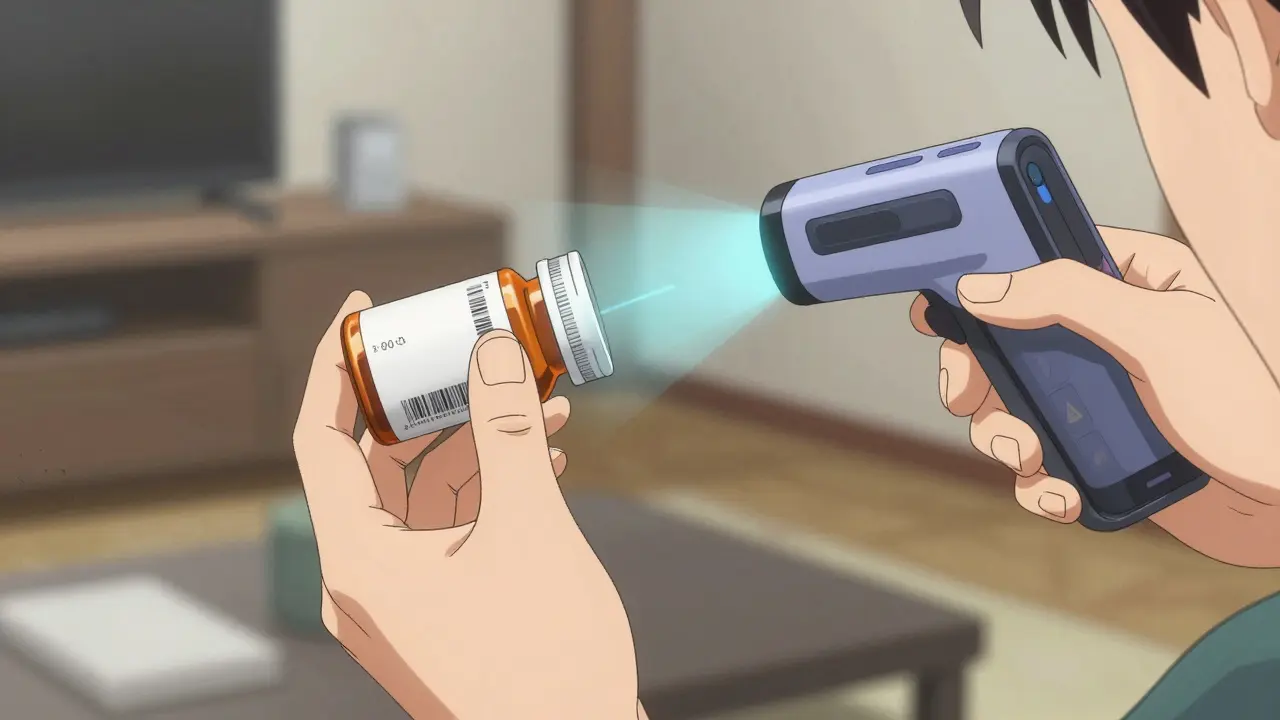
MedisafeOne of the earliest dedicated platforms launched in 2012, now widely used for general compliance remains a heavyweight because it solves the initial setup friction. Many users struggle with typing out complex regimens. Medisafe introduced barcode scanning early on. You can scan a pill bottle, and the app automatically populates the drug name, dosage, and frequency. In 2023, they added HL7 FHIR integration capabilities. This means the app can theoretically talk to your doctor's electronic health record (EHR) systems securely. That interoperability is still rare among competitors.
Condition-Specific Versus General Solutions
You might wonder if a "one-size-fits-all" app is sufficient. Research suggests otherwise. While general apps cover broad needs, condition-specific tools yield better results for targeted groups. In the 2025 JMIR review, researchers analyzed 14 apps. Nine of those were tailored to specific diseases, such as hypertension or diabetes. Four were exclusively built for hypertension management. Patients using these specialized tools often engage more deeply because the educational content aligns directly with their diagnosis.
For instance, a MedApp-CHDA study protocol designed for coronary heart disease patients featuring tailored educational content focuses on post-acute cardiac care. It doesn't just remind you to take a statin; it explains how that statin lowers plaque buildup in your arteries. This contextual knowledge drives self-efficacy. If a patient understands why they are taking the pill, they are statistically more likely to comply with the regimen long-term.
Effectiveness Data and Real-World Proof
Sales pitches are easy to ignore, but hard data tells a convincing story. A 2023 evaluation by the National Institute for Health Research (NIHR) looked at nine studies involving 1,159 total patients. The result? Patients using reminder apps were twice as likely to report taking medications as prescribed compared to control groups who didn't use them. However, researchers also noted variability. About 5 of those 9 studies showed small effects, attributing this to differences in patient demographics. Older patients, for example, sometimes felt less confident navigating the interface. This highlights that while the technology works, the user experience must remain accessible for seniors.
In another significant trial conducted by the National Institutes of HealthNIH tracks biomedical and public health research, funding large-scale adherence studies in federally qualified health centers (FQHCs), Medisafe users saw a 43% improvement in medication adherence compared to only 10% in the control group. This massive gap appeared even in medically underserved populations, challenging the assumption that lower-income or rural communities cannot benefit from digital literacy requirements. The study noted very low attrition rates, proving that once set up, the habit sticks.
Technical Integration and Security Standards
As a regular user, you probably don't worry about encryption protocols. However, when choosing an app, the security of your medical history matters. Most reputable platforms follow HIPAA compliance standards, utilizing AES-256 encryption for data at rest and TLS 1.2+ for data in transit. This ensures that if your phone is stolen, your prescription history remains unreadable.
Furthermore, connectivity with broader healthcare systems is evolving. Many providers are moving toward interoperable standards like Fast Healthcare Interoperability Resources (FHIR). As of their 2023 platform update, some leaders integrated these APIs. Why does this matter? Eventually, your pharmacist could push a refill schedule directly to your app, saving you from manual entry errors. Currently, however, most users still manually enter their prescriptions upon starting the service. Initial setup takes about 22 minutes on average, based on the 2023 NIH study data. Most participants finished setup after a single 15-minute training session, suggesting a steep but conquerable learning curve.
Trends Shaping the Future
We are looking at a technological explosion right now. The global market for these solutions was valued at $2.8 billion in 2024 and is projected to hit $7.3 billion by 2029. Innovation is no longer limited to buzzers and beeps. We are seeing Artificial Intelligence predict missed doses before they happen.
For example, Medisafe released an AI-powered adherence prediction tool in June 2025. Preliminary data showed a 15% improvement in sustained engagement. Beyond software, hardware is catching up. The Digital Medicine Society predicts that 35% of medication reminder apps will incorporate smart pill bottle connectivity by 2027. These connected devices open or close lids that track ingestion physically. While we aren't there entirely yet, the trajectory is clear. The next generation won't just ask if you took the pill; it will know.
Implementation Challenges to Watch
No solution is perfect, and barriers exist. The primary disadvantage across platforms remains the inconsistency in effectiveness across different demographics. Users aged 65 and older show adoption rates of only 29%, compared to 68% for adults aged 18-49. Battery drain is also a genuine complaint reported by 23% of negative iOS reviews for top apps. Additionally, occasional notification failures were cited in 31% of negative Google Play reviews. If you rely on the app as your only trigger, these glitches could be dangerous.
If you are considering these tools, start with the basics. Choose an app that allows customization of timing and frequency. Look for high ratings regarding help resources, as Medisafe scored 4.2/5 in 2024 assessments, while smaller apps often score below 3.0 due to poor multilingual support. Remember, a tool is only useful if you actually understand how to use it daily.
Do medication reminder apps actually improve health outcomes?
Yes, multiple studies confirm this. A meta-analysis in JMCP (2020) found that mobile apps had a Cohen's d effect size of 0.40 for adherence improvement, which is higher than traditional interventions like motivational interviewing. Specific trials, such as the NIH 2023 study, showed a 43% improvement in adherence for users in underserved settings.
Are my personal health details secure in these apps?
Most major apps adhere to HIPAA compliance standards. They typically use AES-256 encryption for data stored on their servers and TLS 1.2+ for data moving over the internet. Always check the privacy policy to see how they handle data retention and sharing.
Can these apps connect with my doctor's records?
Integration varies by provider. Advanced platforms like Medisafe offer HL7 FHIR integration capabilities, allowing them to link with Electronic Health Record (EHR) systems. However, full interoperability across all hospitals is still developing, so many users must currently enter prescription details manually.
Which app is best for elderly users?
Elderly users face steeper adoption challenges, with only 29% adoption compared to younger demographics. Apps with larger fonts, voice activation, and simplified interfaces like Round Health or CareZone are often rated highly for senior friendliness. Family sharing features also allow relatives to help manage reminders remotely.
How much time does it take to set up a medication app?
Based on NIH 2023 data, medically underserved patients required an average of 22 minutes for initial setup and configuration. However, 87% completed the process without assistance after a single 15-minute training session. Once set up, basic functionality mastery usually happens within 3-5 uses.
You might like


Christopher Beeson
It is truly terrifying how humanity relies on these digital leashes to function properly without falling apart completely. We used to manage our lives without constant surveillance algorithms watching every breath we take while swallowing synthetic compounds. Now we need a machine to tell us when to eat poison to survive another day in this concrete jungle. The statistic about billion-dollar losses is merely the tip of the iceberg regarding human fallibility. Cognitive overload isn't just a buzzword anymore it is the defining disease of the modern era. They say dynamic adjustment capabilities exist but really what that means is an algorithm guessing your habits based on data theft. It feels invasive even if it saves money for the insurance companies profiting off our sickness. The old alarm clocks were honest about their limitations unlike these software solutions pretending to understand biology. Scanning pill bottles sounds efficient until the barcode fails and you spend more time fixing the app than taking the medicine. Why trust a server farm with the history of your mental health vulnerabilities when you can just keep a calendar. Most doctors cannot read these reports so why bother syncing the data into a useless black hole. This trajectory towards smart pill bottles suggests a future where consent becomes obsolete for basic biological functions. We are losing autonomy faster than we realize because convenience is the bait they use to catch us. I wonder who owns the data when the company goes bankrupt and sells your prescription history to the highest bidder. It is a slippery slope that starts with reminders and ends with total dependency on corporate benevolence.
This is just my two cents on the situation before anyone tries to argue logic over emotion again.
Rod Farren
The FHIR integration specs are definitely the most critical component here for scalability across different EHR systems. When we talk about AES-256 encryption standards, we are essentially mitigating the risk vectors associated with unauthorized access points in mobile architectures. HL7 standards usually create friction during the initial onboarding phase for providers who lack proper API documentation. You see similar issues with TLS handshakes failing in older network environments which causes packet loss during sync operations. The Cohen d effect size mentioned earlier indicates statistical significance but sample sizes often remain too small for broad generalization. Clinicians need robust reporting tools to visualize adherence patterns beyond simple binary completion flags. Latency in notification delivery could be a major bottleneck if the backend infrastructure doesn't support high throughput events. Security protocols are vital but usability metrics often get deprioritized in favor of compliance checkboxes. Real-time analytics allow for predictive modeling of non-adherence risks before the patient misses a critical dose window. Integration with pharmacy networks would close the loop significantly better than manual entry workflows.
Cara Duncan
Honestly i think having family share options makes everything feel way less lonely and scary especially for seniors 🥺💊.
Sharon Munger
sticking to the basics helps reduce anxiety about new tech adoption among vulnerable groups
Julian Soro
Great point about the latency issues affecting real-time notifications for critical medication windows. I have seen many patients abandon the tools simply because the alerts arrive five minutes after the ideal window closes. Ensuring the backend supports high throughput is essential for maintaining trust in the system. User experience design needs to account for older interfaces that might struggle with complex rendering tasks. Accessibility features like larger fonts should be standard rather than an optional upgrade path for everyone.
Owen Barnes
The discusion reguarding medicatin complianse is extremely important for public health initatives across the nation. Recieveign proper treatment timely allows patients to maintain their quality of life without unnecessary hospital admissions occurring frequently. The cost benifits outlined in the article are substansial and should not be ignored by policy makers planning future care infrastructures. However implemintation requires careful consieration of how elderly demographics interact with touchscreen devices daily. If the interface recieve confusions it defeats the entire purpose of digitizing the reminder proces for medication management. We must ensure that data privcey remains a top priority when handling sensitive medical histories through third party platforms. Interopereblity with Electronic Health Records can streamlene processes but introduces significant vulnreabilities if not secured correctly. Many seniors prefer physical remnders over digital ones due to familiarity with traditional methods and less battery drin concernes. Education programs should accompany app deployment to ensure users feel empowered rather than overwhelmed by complex menu structures. Family members can assist with setup to bridge the gap between technical requirements and user capability effectively. Trust is paramount when asking patients to store their diagnosis and dosage information on cloud servers indefinitely. Without clear transparency policies users may hesitate to adopt these tools regardless of their proven effectiveness rates. Research shows that understanding the reason behind a drug improves long term adherence behaviors significantly. Contextual education modules within apps should be prioritized to enhance self efficacy among chronic condition sufferers. Continued monitoring of attrition rates will help developers refine retention strategies for diverse user populations globally.
Cullen Zelenka
That is actually a very hopeful perspective on bridging the gap for older adults using technology. I believe that with better training sessions these barriers can be overcome quite successfully in the near future.
Russel Sarong
The potential for improvement is absolutely massive!!! We cannot ignore the life-saving capabilities of these systems anymore!!! Every missed dose could mean a preventable hospital stay!!! Waiting until someone suffers unnecessarily when the solution is right here is unacceptable!!!