
Specialty Pharmacy: Dispensing Generic Specialty Drugs and the Provider's Role

Whether a drug is a brand-name pioneer or a newer generic alternative, the delivery system remains the same. Many people think a "generic" means it's simple, but in specialty care, the molecule might be cheaper, but the management remains intense. For instance, a patient transitioning from a branded biologic to a Biosimilar-which is essentially the generic version of a complex protein-based drug-still needs the same rigorous monitoring and dosing schedules. The provider's job is to ensure that this transition doesn't disrupt the patient's stability.
The Essential Role of the Specialty Pharmacy Provider
A Specialty Pharmacy is not just a retail store with a different name. It is a specialized distribution channel designed for high-cost, high-complexity medications. Unlike your neighborhood pharmacy, these providers are built around a high-touch service model. They handle the "heavy lifting" of healthcare logistics, which includes managing Risk Evaluation and Mitigation Strategies (REMS)-strict FDA protocols that ensure the benefits of a risky drug outweigh its potential harms.
When dispensing generic specialty drugs, the provider's role shifts from procurement to clinical coordination. They don't just check the dose; they act as a bridge between the doctor and the patient. This involves a structured workflow that looks more like a medical clinic than a store:
- Insurance Navigation: Managing the grueling prior authorization process, which often remains just as complex for generics as it is for brands.
- Clinical Assessment: Verifying that the patient understands the administration route, whether it's a subcutaneous injection or an IV infusion.
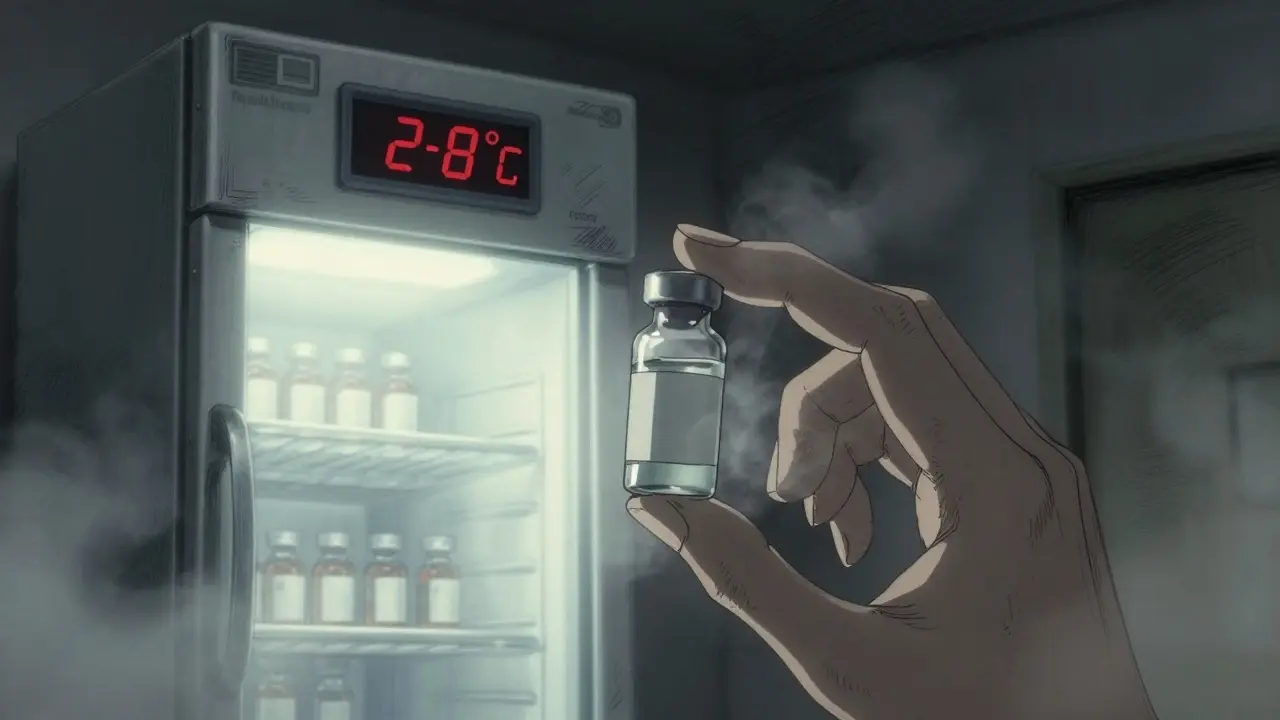
- Cold Chain Management: Ensuring the drug stays within a precise temperature window (usually 2-8°C) from the warehouse to the patient's front door.
- Adherence Coaching: Calling patients to remind them of refill dates and monitoring for adverse reactions.
This level of care is why 68% of patients prefer staying with the same pharmacy when switching to a generic. They aren't paying for the pill; they are paying for the relationship with a care team that knows their medical history.
Comparing Retail vs. Specialty Dispensing for Generics
There is often confusion about why a generic specialty drug can't just be picked up at a retail pharmacy. The answer usually comes down to a "distribution mandate." If a manufacturer decides a drug must go through a specialty channel, that rule applies regardless of whether the drug is branded or generic. The molecular complexity of biologics means they can't be swapped on a whim like a generic ibuprofen would be.
| Feature | Retail Pharmacy | Specialty Pharmacy |
|---|---|---|
| Average Turnaround | ~1.2 Days | ~7.2 Days |
| Patient Onboarding | Minimal (Profile creation) | Extensive (Clinical intake) |
| Delivery Method | In-person pickup/Mail | Specialized cold-chain shipping |
| Clinical Focus | General medication safety | Disease-specific expertise (e.g., Oncology) |
| Data Requirements | 5-7 data elements | 12-15 data elements |
As the table shows, the "efficiency" of a retail pharmacy is a trade-off. While you get your meds faster, you lose the specialized monitoring required for high-risk therapies. For a patient on a generic oncology drug, a 1.2-day turnaround is meaningless if the drug arrives at the wrong temperature or without the proper administration training.

The Biosimilar Shift and the Provider's Challenge
The landscape is changing rapidly with the rise of Biosimilars. These are the functional equivalents of brand-name biologics. New CMS rules now require Medicare Part D plans to cover all FDA-approved biosimilars, which means providers are seeing a massive surge in generic specialty volume. It's predicted that biosimilar volume will jump by 40% by 2026.
This shift puts a strain on providers. They have to handle a higher volume of prescriptions while maintaining the same "white-glove" service. One of the biggest hurdles is the prior authorization process. Even for a generic, insurers often demand extensive documentation to prove the patient is a fit for the drug. To combat this, many providers are adopting "Real-Time Prescription Benefit" technology, which has been shown to cut authorization delays by over three days.
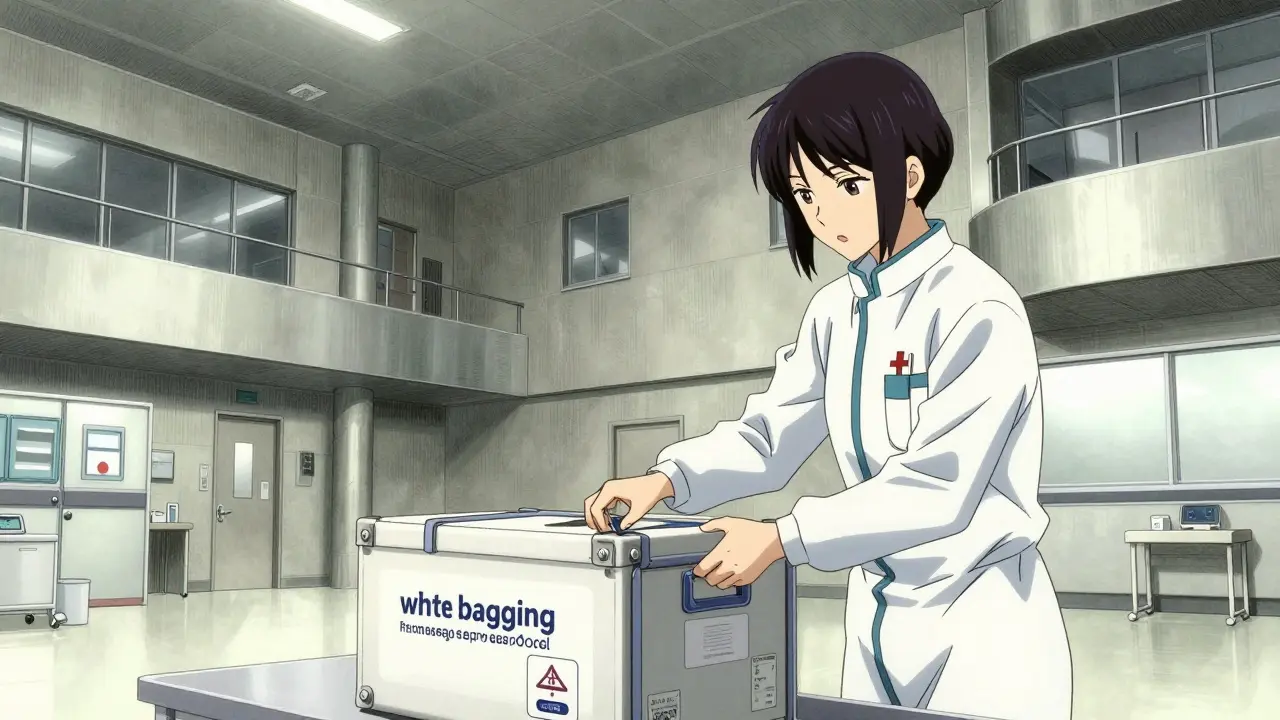
Providers are also adapting to new delivery models like "white bagging" and "brown bagging." In these scenarios, the specialty pharmacy ships the drug directly to a doctor's office or hospital rather than the patient's home. This accounts for about 27% of the volume and is becoming a preferred method for both branded and generic specialty drugs to ensure the medication is administered by a professional.
Navigating the Patient Experience: The Good and the Bad
From a patient's perspective, the transition to a generic specialty drug is a mixed bag. On one hand, the cost may drop. On the other, the friction of the specialty pharmacy system remains. Some patients report frustration when a generic switch leads to a different pharmacy with higher copays or slower shipping. However, the clinical value is undeniable. When a provider maintains a consistent care team-nurses and pharmacists who know the patient's specific reaction to a drug-the patient's confidence in the treatment increases.
The real value is found in the specialized knowledge. A pharmacist specializing in Hepatitis C or Cancer can spot a potential drug interaction that a general retail pharmacist might miss. This expertise is the primary reason why health systems are increasingly trying to bring specialty dispensing in-house. They want to consolidate all prescriptions to reduce the risk of dangerous interactions, which is a significant concern when dealing with potent specialty generics.
Looking Ahead: The Future of Generic Specialty Dispensing
We are moving toward a world where the label "generic" refers only to the price, not the process. As specialty drugs are projected to make up 61% of global pharmaceutical sales by 2028, the infrastructure of specialty pharmacies will become the backbone of chronic disease management. The focus is shifting from the drug itself to the service model surrounding it.
For providers, the goal is clear: integrate technology to remove the administrative hurdles of prior authorizations and double down on the human element of care. Whether it's a brand-name biologic or a cost-effective biosimilar, the need for a dedicated patient care coordinator and a temperature-controlled shipping line remains constant. The provider's role is to ensure that the shift toward generics doesn't lead to a shift away from quality care.
Why can't I get my generic specialty drug at a regular pharmacy?
Many specialty drugs, even generics, have mandatory distribution programs. This means the manufacturer requires them to be handled by a specialty pharmacy due to the need for cold-chain storage, complex administration training, or strict FDA REMS monitoring that retail pharmacies aren't equipped to provide.
What is the difference between a generic and a biosimilar in specialty pharmacy?
Traditional generics are chemically identical copies of small-molecule drugs. Biosimilars are the "generic" versions of large-molecule biologics. Because biologics are grown in living cells, biosimilars are not identical but are "highly similar" and provide the same clinical result.
How long does it typically take to receive a specialty generic medication?
On average, it takes about 7.2 days from the time the prescription is received to when it's ready for delivery. However, this varies by disease; for example, oncology drugs may take closer to 8.7 days due to more complex verification and insurance needs.
Do generic specialty drugs still require prior authorization?
Yes, in most cases. Insurance companies often treat generic specialty drugs with the same level of scrutiny as branded ones because of the high cost and clinical risk involved. Providers must still submit detailed clinical data to justify the use of the medication.
What is "white bagging" in the context of generic specialty drugs?
White bagging is when a specialty pharmacy dispenses a medication and ships it directly to a healthcare provider's office or clinic, where it is then administered to the patient. This ensures the drug is handled correctly by professionals before it reaches the patient.
You might like

Becca Suttmiller
It's reassuring to see the emphasis on the clinical relationship over just the cost of the drug.
Clint Humphreys
Isn't it just convenient how the 'distribution mandate' magically keeps these generics away from local pharmacies, almost as if the pharmaceutical giants are just coordinating to maintain a chokehold on the supply chain to ensure that no matter who is dispensing, the profit margins remain protected through these specialized channels that they basically control from the shadows, and while the friendly face of a specialty pharmacist is nice, we really have to analyze why the systemic barriers are so high for something that's supposed to be a 'cheaper' alternative for the patient.
Scott Lofquist
Actually, most people don't even realize that 'biosimilar' is basically a marketing term to make us feel better about non-identical proteins 🙄. The whole system is rigged to keep us dependent on these 'specialty' hubs 🤡.
Rim Linda
Omg the wait times are literally insane!! 😱 7 days for a generic?? That's just cruel 😭💔
Princess Busaco
I find it absolutely quaint that anyone believes the 'clinical coordination' excuse when in reality it's just a glorified way to justify an absurdly slow turnaround time that would be considered a failure in any other industry, and frankly, the idea that a patient 'prefers' a specialty pharmacy is likely just a result of Stockholm Syndrome developed through the grueling prior authorization process that makes them feel grateful for the bare minimum of assistance from a care team that is likely just reading from a script provided by the insurance company anyway.
Clare Elizabeth
so glad we have these options now!! its all about staying positive and getting the right care no matter where it comes from keep going everyone 🌟
rupa das
distribution mandates are just a way to keep prices high even for generics
Billy Wood
Get those meds!!! Stay strong!!! Keep fighting!!!
Mary Johnson
Cold chain management is just a cover for tracking where every single dose goes. They want to know exactly who is taking what and when. It's all about control. The FDA REMS protocols are just a way to keep a database of 'high risk' individuals. Wake up people, the 'white glove' service is just a velvet glove over an iron fist of surveillance!
S.A. Reid
One must concede that the ontological distinction between a generic small-molecule drug and a biosimilar is profoundly significant, yet the current discourse tends to conflate the two for the sake of simplicity. It is truly a fascinatng, if somewhat disheartening, reality that the administrative architecture of our healthcare system is designed with such delightful inefficiency. I find the notion of 'white bagging' to be an intriguing logistical compromise, though it hardly addresses the systemic opacity of pharmaceutical pricing structures.
Ikram Khan
This is such a huge eye-opener! 🤯 I had no idea the difference between generics and biosimilars was that deep! Thanks for sharing this! ✨
Olivia Lo
The phenomenological experience of the patient is clearly being mediated by the systemic constraints of the specialty pharmacy's infrastructure. We must recognize that the adherence coaching described is not merely a clinical utility but a form of behavioral regulation that seeks to align the patient's bodily autonomy with the rigid requirements of the pharmacological regimen. This intersection of bioethics and logistics creates a tension where the 'relationship' mentioned is actually a structured dependency. In the context of biosimilars, the shift is not merely chemical but conceptual, altering how we perceive the 'original' versus the 'copy' in a way that mirrors the broader societal move toward simulation and reproducibility. The logistical burden of the cold chain serves as a physical manifestation of the fragility of these biological constructs. Furthermore, the prior authorization process operates as a gatekeeping mechanism that reinforces the hierarchy of the medical-industrial complex. By streamlining this through real-time technology, we are not necessarily increasing access but rather optimizing the machinery of exclusion. The move toward in-house dispensing is a logical progression of vertical integration, ensuring that the health system captures the full value chain of the patient's illness. Ultimately, the 'service model' is a euphemism for a highly managed clinical pathway that prioritizes risk mitigation over individual patient preference. The dichotomy between retail and specialty is a reflection of the stratified nature of modern medicine. It is a complex dance of regulatory compliance and clinical necessity. We are essentially witnessing the professionalization of the delivery process to a degree that makes the drug itself almost secondary to the system of its administration. This is the new paradigm of healthcare.
Tabatha Pugh
Most of you don't even understand how prior authorizations actually work. I've seen the back-end of these systems and it's way more about the pharmacy's contract with the PBM than any 'clinical assessment' of the patient.